








From 2035, it will no longer be possible to sell new cars with internal combustion engines in the European Union. Not all manufacturers are ready for such a change.
Road transport accounts for nearly 1/5 of total greenhouse gas emissions in the EU and, unlike other sectors, it is not recording any significant decline. The Fit for 55 package is intended to contribute to change in this area, introducing a requirement to reduce average emissions from new cars by 55% from 2030 and by 100% five years later. This means that from 2035, it will not be possible to sell new cars with internal combustion engines in the EU.
– The automotive market will change; there will be more electric cars on offer, and they will be more affordable – says market expert Rafał Bajczuk. However, not all companies are ready for such a rapid transformation.
– For several years now, transport has been the largest source of greenhouse gas emissions in the European Union. In Poland, it is still the energy sector, due to the fact that our energy mix is still based mainly on coal. However, on an EU-wide scale, the biggest problem is transport, 70% of which is road transport. The rest is shipping and aviation, and rail transport is of marginal importance – explains Rafał Bajczuk, an analyst at the Foundation for the Promotion of Electric Vehicles and the European Federation for Transport and Environment (Transport & Environment).
According to the European Parliament, transport is the only sector in which no significant reduction in greenhouse gas emissions has been recorded since 1990. Moreover, in 2019, the average emission level from new cars rose to 118.5 g CO2/km, after a steady decline in previous years. According to data from the European Environment Agency, road transport accounts for a total of 19.35% of total greenhouse gas emissions in the EU (for comparison, aviation and shipping generate less than 3.5%). Although the number of electric cars is growing rapidly every year, they still account for a small percentage of newly registered vehicles. Data from PZPM and ACEA indicate that in the second quarter of this year, electric BEVs accounted for 7.5% of EU registrations (hybrids for 19.3%, and petrol cars for 41.8%).
This problem is to be addressed by Fit for 55, a package of economic and legislative reforms aimed at combating climate change, which the European Commission presented in mid-July. It is intended to help achieve the goal of reducing greenhouse gas emissions by at least 55% by 2030 (compared to 1990 levels). By 2050, the EU intends to achieve net-zero emissions.
Among the most important assumptions of Fit for 55 is, among others, the revision of the directive on alternative fuels infrastructure, as well as the amendment of the regulation setting CO2 emission standards for passenger cars and vans. The latter is intended to accelerate the development of zero-emission transport by requiring a 55% reduction in average emissions from new cars from 2030 and 100% five years later.
– We view the EU’s plans to reduce emissions from new cars to zero by 2035 very positively – says the analyst. – Manufacturers will be required to sell more and more zero-emission cars year after year. In practice, these will be battery electric cars. There is also the possibility of selling hydrogen-powered cars, but experience and current technological development show that manufacturers are not moving in this direction. Electric cars are currently the technology that is developing, and investment plans related to the construction of subsequent lithium-ion battery factories show that all manufacturers are moving towards electrification.
In his opinion, however, not all automotive companies are prepared for this transformation.
– As with all major technological changes, there will likely be losers in this process, but new manufacturers will also enter Europe – emphasizes Rafał Bajczuk. – Importantly, Poland has a good foundation to make its mark on this market. We are currently the largest producer of lithium-ion batteries for the automotive sector. We are also the largest producer of electric buses in Europe, and this is the direction that will develop.
In Poland, at the end of June this year, a total of nearly 27,000 electric passenger cars were registered. In the first half of the year, their number increased by over 8,200 units, i.e., by 150% compared to the same period a year earlier, according to the Electromobility Meter launched by PZPM and PSPA.
– The automotive market will change; there will be more electric cars on offer, and they will also be more affordable because they will be mass-produced in dedicated plants. The biggest change will concern how we charge these cars and how we obtain fuel for them. Now, the average driver pulls into a gas station once a week or every two weeks to refuel their car. In the case of electric cars, most charging operations will take place at a parking space at home or at work – says the Transport & Environment expert. – Consumers will also feel this in their bills, because energy for electric cars is much cheaper. If we compare a petrol car and an electric car charged from a home socket, the price difference reaches 90% in favor of the latter.
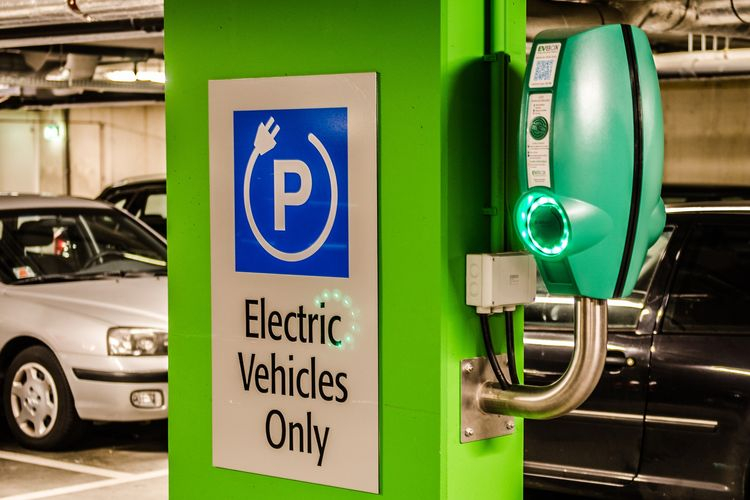
However, this involves the need to accelerate the expansion of charging infrastructure. Today, its lack is pointed out by consumers and experts as one of the most important barriers to the development of electromobility in Poland.
– In the proposal for changes to the alternative fuels infrastructure directive, the European Commission has proposed binding targets for the development of charging infrastructure for electric cars. This infrastructure must appear on a massive scale – both high-power infrastructure for fast charging of cars on longer routes, and low-power chargers in places where we live and work – lists Rafał Bajczuk.
There is one more proposal from the European Commission included in the Fit for 55 package that concerns transport. According to the assumptions, it is to be included in the EU Emissions Trading System for CO2. This should also accelerate the process of transport electrification.
– Including transport in the EU Emissions Trading System will mean that drivers, when buying petrol, will pay an additional fee for the emission allowance. This system is to start no earlier than 2025, and for the first few years, the price of emissions will be low enough that drivers will practically not feel this price at gas stations – says the expert. – This change is intended to ensure that the entire fuel industry contributes to this system, because the profits from it are to accelerate the energy transformation and the transition to ecological transport. However, the EC’s main instrument to make transport greener is the aforementioned obligations imposed on manufacturers. The ETS system for transport plays a rather secondary role.
The European Union Emissions Trading System (EU ETS) is the world’s first and largest CO2 emissions trading market. It regulates about 40% of total greenhouse gas emissions in the EU and covers about 11,000 power plants and manufacturing facilities in the EU. Its goal is to limit CO2 emissions in industry by requiring companies to hold a permit for every ton of carbon dioxide emitted. Companies must purchase such permits through auctions.
Source: Newseria