








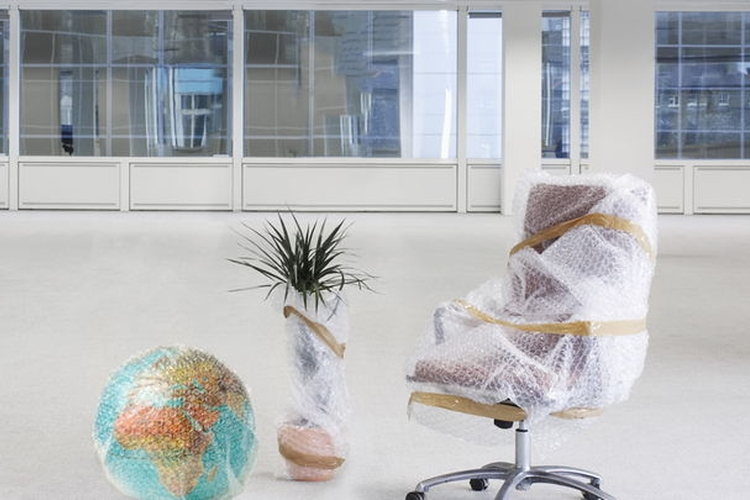
Big Heavy Ugly – this is how non-standard parcels are referred to in the transport industry. Logistics operator DB Schenker is launching the Parcel+ service in Poland.
Due to pandemic-related trade restrictions, a large portion of customers have shifted their shopping online. In 2020, over 400,000 more loads were transported by road in Poland than in the previous year. However, not all shipments are easy to handle; some deviate from the parameters required by courier companies and require an individual approach. The market situation became an incentive for DB Schenker to launch a special offer. For non-standard parcels, the logistics operator has introduced the new DB SCHENKERparcel+ service.
– Parcel+ is a solution dedicated to customers in Poland whose items are difficult to pack and cannot be sent in standard-shaped cartons. We are aware that the transport of certain goods can pose difficulties. Alcohol, liquids, or ADR LQ, such as hairsprays or cosmetics, require appropriate safety precautions. Our drivers and employees are trained to carry out such services, and our terminals are properly prepared – explains Piotr Gola, Head of Revenue and Product Management North & East Europe at DB Schenker.
A parcel has many names
Parcels commonly considered non-standard – with irregular shapes and unusual dimensions – as well as ADR LQ shipments or those with sensitive contents, pose a challenge in transport. To transport dangerous goods, a number of requirements must be met. Customers looking for a permanent partner for deliveries must meet various standards, for example, regarding the proper preparation of the shipment for transport. This is due not only to safety concerns but also to the increasing automation of the goods sorting process. Sorters are usually adapted to traditional, cubic packaging.
The Parcel+ service is intended for goods up to 30 kg, with irregular shapes or protruding elements. At DB Schenker, such parcels are handled in a separate process with manual handling, which guarantees high safety standards. Therefore, it does not require a standardized way of packaging the shipment. BHU items are often valuable goods. The service, carried out under transport law, provides a greater guarantee of liability in the event of damage, which the operator minimizes.
In the terminals, parcels are handled in a separate zone. However, when it comes to distribution, the extensive and dense DB Schenker network is used, and parcels are transported together with groupage shipments. They travel along with pallets, and where a large vehicle cannot reach, deliveries are carried out using vans. Additionally, to enhance shipment safety, dedicated parcel cages are used.
Source: DB Schenker