In order to create a coherent and efficient transport system, it is necessary to reduce the distance between old and new European Union members, also in terms of the development of transport infrastructure – both linear and point-based, as well as the quality of transport modes, which will undoubtedly translate into equalizing the economic level of individual regions. In the TSL sector, this translates into the quality of services provided and cost reduction, and thus the competitiveness of enterprises in the global market. It is becoming important to extend good and proven technological and organizational solutions throughout the EU.
Without systemic coherence and full interoperability of transport infrastructure and transport systems, achieving many of the goals of the European Union’s economic and social integration will be difficult. Actions to develop logistics infrastructure, such as intermodal and conventional terminals or warehouse facilities served by rail transport, are necessary to achieve the goals indicated in the EU transport policy.
Bearing in mind the intensification of future mobility activities, on March 28, 2011, the European Commission adopted the White Paper – Roadmap to a Single European Transport Area – Towards a competitive and resource efficient transport system. It set out the directions for the sustainable development of the European economy, which are indicated in economic development policies and transport policy. The main areas of sustainable development are:
– economic,
– social,
– ecological,
– spatial.
The social area covers issues related to the functioning of society in the context of social ownership and the supply of and access to public goods. The spatial plane concerns spatial planning and the territorial organization of individual regions. The economic aspect, on the other hand, touches upon the problems of the economic efficiency of economic and market processes as well as external and internal costs of production, service, and consumption processes.
The European Union aims to create a single transport area, and at the same time create an economical transport system. Balancing the transport system is possible to achieve, among other things, through proper infrastructure development planning. This document assumes an increase in the market share of freight transport by rail or inland waterway. Increasing the efficiency of the transport system is of key importance for the development of trade between European Union countries and the mobility of Union citizens, which has an impact on balancing the standard of living between all its countries. Such a direction of action contributes to the balanced development of individual sectors of the economy, including transport. The need to improve the efficiency of the Polish transport system results from:
– increasing global economic, trade, and therefore transport competition, rising oil prices, and the persistent dependence of human and freight transport systems on this raw material,
– high invasiveness to the environment, which consequently leads to significant environmental pollution, especially by road transport, which also has an impact on climate change,
– increasing congestion in road transport, contributing to congestion in systems and deteriorating transport accessibility in cities and regions,
– insufficient use of environmentally friendly modes of transport, such as rail or inland waterway, and at the same time unequal treatment of all.
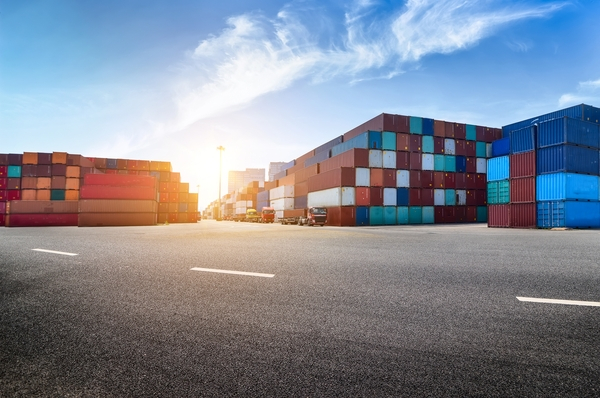
These conditions are of significant importance for the operating costs of economies. It is estimated that transport processes account for about 20% of production costs. Therefore, well-functioning transport systems are important for the level of general operating costs of enterprises. According to global trends, more and more goods are arriving in Poland in containers. Forecasts indicate that by 2020, the number of container transshipments in our ports will significantly exceed 3.5 million TEU per year. Meanwhile, more than 60% of containers are transported in our country by the most burdensome means of transport, i.e., trucks. Rail transport of small batches of containers – due to long delivery times and an insufficient number of regular connections – was until recently unacceptable for most customers. The appearance of new proposals on this market regarding the organization of transport was an important element in changing the approach of customers to using rail transport. Furthermore, the increase in the number of rail transport orders is influenced by a number of factors such as rising rates in road transport, caused by the introduction of an electronic toll system in 2011, the increasing weight of containers, rising fuel prices, as well as pro-ecological recommendations indicated in the European Union’s transport policy.
The conditions regarding the possibility of using transport infrastructure by individual modes of transport, which have a significant impact on handling cargo flows generated by seaports, create space for new solutions in building supply chains with the participation of rail transport. As the experience of Western European ports shows, the growing scale of intermodal unit transshipments cannot be handled only by road transport. Such a solution would generate very high investment costs related to the construction of roads with appropriate capacity. Intermodal solutions and an increased role for rail are necessary. The growing share of rail in intermodal transport is shown by statistics from the last few years.
We are observing a dynamic increase in the volume of intermodal units, but to maintain the current pace of development of this segment, it is necessary to adapt not only the linear infrastructure but also to build modern intermodal terminals operating in a network system. The terminal infrastructure network should cover the entire country. Regulation (EU) No 913/2010 of the European Parliament and of the Council of 22 September 2010 concerning a European rail network for competitive freight indicates that the maximum distance from the terminal and the point of destination of transshipment in an intermodal system should not be greater than 150 km. An important element that may influence the growth dynamics is ensuring adequate (and in sufficient quantity) rolling stock and traction.
The network layout of terminal operations will ensure better organization and greater use of the transshipment capacities of individual facilities. For the transport time of intermodal units from the place of dispatch to the place of receipt, the following are of key importance: location, functional layout of the given transshipment infrastructure, and technical equipment. When looking for a place for logistics infrastructure, it is necessary to examine the issues affecting the efficiency of its operation. Depending on the type and purpose of the future facility, we must choose the right property that meets the expected parameters. The choice of property in terms of its size and access to rail infrastructure, such as stations or sidings, good location in relation to roads, and access to utilities, affect the amount of costs for future investments. We will take into account other criteria for choosing a property for planned investments in warehouse facilities, railport terminals, conventional terminals, intermodal terminals, and public loading points. Before starting the selection of a property, preliminary market analyses should also be carried out to determine potential customers, as well as cargo flows that can be handled by the future logistics infrastructure. Proper recognition of parameters and selection criteria is of great importance for the success of the investment process itself and the necessary investment funds, which will translate into the profitability of the entire project. When choosing a property for transshipment terminals, we should be guided by the principle that they should be located near stations or active sidings with a well-developed track layout. Planning investments in the construction of all types of transshipment terminals with unshaped and unstable cargo flows should be assumed in stages. At the planning and economic analysis stage, it is worth considering:
– the number of working days per year for the transshipment base,
– selection of transport and transshipment systems,
– road and rail layout,
– administrative and technical facilities,
– transshipment capacity of the container terminal,
– type of intermodal transport units handled,
– spatial and functional layout of the designed base,
– purpose and size of handling and storage yards,
– layout of traffic lanes for transport vehicles and loading equipment,
– size of parking zones.
The implementation of a terminal investment depends on such criteria as:
– length of loading tracks,
– their maximum use for transshipment of intermodal units,
– total area for the transshipment base,
– costs of purchasing loading equipment,
– work safety factor,
– daily and annual terminal efficiency,
– number of storage lanes for intermodal units along the loading front1.
The choice of solutions will be reflected in the functioning of the terminal and will translate into its transshipment capacity. The terminal should be designed to handle the current number of loading units – both at average and peak efficiency, and also to be adapted to increase the number of units in a given period of time.
Analysis at the concept and design stage is a supporting tool and allows, among other things, for setting priorities in actions aimed at minimizing investment risk and allows for determining the relationship between assumed investment outlays, which also translates into the size and equipment of future terminals, as well as the results obtained. Detailed criteria for evaluating the choice of property can be divided into four areas:
1. Market criterion – illustrates the socio-economic situation, determines the demand and supply for a terminal investment in a given area and in a given period of time. In response to market demand, the search for a suitable property should start with this criterion.
2. Technical criterion – includes factors such as: shape of the property, utility connections, access to a public road, distance from an expressway, road load capacity, viaduct clearances, access to a railway line, possibility of connecting to the network, number of tracks at the served station, and distance from it.
3. Spatial and socio-environmental criterion. All planning documents should be analyzed, starting from national documents to local law acts and auxiliary documents creating the spatial policy of the area, as well as documents indicating forms of nature and environmental protection, protection of urban layouts, archaeological areas, monument protection, etc. The criterion also refers to the social environment of the selected area, understood as the neighborhood, i.e., neighboring buildings, as well as the existence of transport companies in the vicinity, or areas covered by special economic zones.
4. Organizational and legal criterion – indicating the analysis in terms of the form of ownership of the property, claims to the property, court proceedings, property rights. Most of this information will be obtained on the basis of electronic land and mortgage registers, which, in accordance with Art. 25 of the Act of July 6, 1982, on land and mortgage registers and mortgages, are kept in an IT system.
However, most of the information regarding the second and third of the above-mentioned criteria can be found using publicly available geospatial information, such as spatial information systems containing layers of both plot numbers, planning designation, utility networks, as well as other IT systems that allow for quick data acquisition. Each location of an intermodal terminal should be analyzed both in terms of the volumes that can be achieved and the choice of the most optimal property. For the further development of rail intermodal transport in Poland, it is necessary to select appropriate locations for the construction of terminals. It is important that these are places that constitute contact points for various modes of transport, and that they have easy access to road and rail routes, and that the area shows production potential. The current demand for intermodal services in Poland is caused by the development of terminal infrastructure of Polish seaports and the increase in trade between the European Union and China, using the New Silk Road, as well as the transport practice of the European Union.
1 M. Nader, A. Kostrzewski, Basic assumptions of the structure of the design procedure for a transshipment center for intermodal transport, “Eksploatacja”, No. 10/2014.
The article comes from the magazine LOGISTYKA 1/2019.
The e-edition of the magazine is available in our offer!