









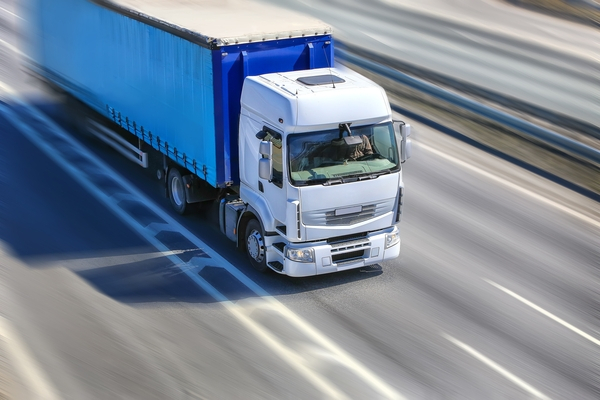
Control authorities in European Union countries have begun testing devices that use DSRC (Dedicated Short-Range Communication), a technology that allows for the remote reading of key parameters from smart tachographs in heavy goods vehicles.
– This will allow for faster, more effective selection of trucks for inspection where tampering has occurred. Thanks to the use of DSRC technology and pre-selection, the effectiveness of roadside inspections across Europe will certainly increase significantly – emphasizes Piotr Żółty, an expert at the INELO Group, which provides equipment for control authorities.
Even before the introduction of the Mobility Package, the European Commission was looking for ways to increase the efficiency of roadside inspections in terms of detecting tachograph tampering. This most often involves failing to record driving time, which allows drivers to drive longer than regulations permit. This increases the risk of dangerous situations on the road, endangering the health and lives of other road users as well. Work at the European Commission on implementing DSRC technology has been ongoing since 2012.
– The solutions were prepared over a long period. This did not happen overnight. DSRC technology has been in practical use since June 2019, when first-generation smart tachographs began to be installed in new heavy goods vehicles. Since then, every new truck has an antenna that allows control authorities equipped with the appropriate devices and software to remotely download data from the tachograph – explains Piotr Żółty.
Effective inspections immediately?
Roadside inspections in the community have been given until August 2024 to equip themselves with devices that enable remote data transfer. Using DSRC technology, accumulated information from a passing vehicle can be downloaded in less than a second. This is a small data packet – 19 parameters informing whether any problems have been recorded in the tachograph. This encoded data goes to the inspector’s computer, and after decoding, it gives them a quick answer as to whether tampering may have occurred. If so, the vehicle is stopped for inspection, and the road authorities then download the full data from the tachograph and potentially impose penalties. The remotely collected data informs, among other things, whether driving occurred without a driver card inserted, whether speed and driving were recorded, whether there are errors suggesting tampering, and what the vehicle’s current activity is. For example – if the vehicle is moving and the inspector sees a rest activity in the remotely downloaded data at that time, it is known that fraud has occurred.
– Until now, it was necessary to stop a truck and only then check if tampering was occurring. Now, thanks to remote parameter reading and pre-selection, it will be known which vehicle is suspicious. This should significantly increase the effectiveness of roadside inspections, and honest carriers will not be stopped and will not lose time – notes Piotr Żółty. – Already today, control authorities equipped with devices for remote tachograph reading can conduct more effective inspections.
Control authorities are testing DSRC technology
Roadside inspections are not waiting until August 2024, but are already checking how the tools work. INELO Group devices have already been tested by control authorities in the Netherlands, Poland, the Czech Republic, Slovenia, Romania, and Lithuania, and in the near future, the Danes and Latvians will do the same. This company’s solutions for inspecting heavy goods vehicles are used by 41 inspection agencies from 22 countries. Now, a module has been added to the Tachoscan Control software that enables the reading of data from DSRC antennas and their visualization on the inspector’s computer. For this, there must also be devices with antennas that will communicate with the vehicle and download the data.
– We have three scenarios. The antenna can be installed on a gantry or a pole by a motorway or expressway. And the inspector is, for example, 5 km away and checks which trucks are suspicious to decide whether to stop them. Some vehicles specifically drive on side roads to avoid checkpoints, but there is a way for that too. The antenna is set up on a stand, and in this way, trucks are checked outside of main transport routes. A mobile antenna can also be used in a roadside inspection vehicle. We then download the data, for example, while driving in front of the vehicle, verify it, and decide on an inspection. Our software works with antennas from all manufacturers available on the European market – emphasizes Piotr Żółty. – We have ready-made solutions, we are talking to inspection agencies across Europe, analyzing their needs, and proposing tools for testing. The feedback we have is positive. Everything is working smoothly.
Second-generation smart tachographs
The pre-selection system based on tachograph data will be developed, among other things, thanks to the new regulations of the Mobility Package. Second-generation tachographs will appear. They will be mandatory in new vehicles from August 2023. In the case of used vehicles, if a carrier wants to perform international transport, they will have to replace the tachograph on their own. This will take place in two stages. In trucks produced before June 2019, tachographs will need to be replaced by the end of 2024, and in newer ones by August 2025. In this way, all vehicles performing international transport after August 2025 will be equipped with second-generation smart tachographs. Then, thanks to DSRC technology, road authorities will have access not to 19, but to as many as 25 parameters. The data downloaded from the new tachograph will tell the inspector whether there has been a violation of continuous, daily, weekly, and two-weekly driving times, as well as whether there were disturbances in recording the vehicle’s position. Inspectors will have even more knowledge about whether a vehicle should be stopped.
– In Poland, DSRC technology was tested on the A1 motorway. According to the inspectors, on average, data was read from eight trucks every hour. They admitted that in many cases, the parameters indicated violations. The number of vehicles equipped with smart tachographs will continue to grow because, in international transport, trucks are replaced on average every four years. The number of such vehicles is growing rapidly; it may already be around 50% – believes Piotr Żółty. – According to the European Commission, DSRC technology is intended to be one of the elements that will increase the effectiveness of inspections without the need to hire more inspectors. If trucks were stopped randomly until now, the efficiency could not have been high. Thanks to DSRC, the detection of tachograph tampering will increase, which will mean that fewer carriers will decide to violate the regulations.
Source: Inelo