










Almost 50 expert presentations, over 350 participants, 840 minutes filled to the brim with extremely attractive substantive content and engaging activities, enabling above all the establishment of valuable business relationships – yesterday, the two-day celebration of the logistics industry came to an end. The 15th, jubilee edition of the Polish Logistics Congress eLOGISTICS2021, under the slogan: New Era is loading, has gone down in history, leaving behind inspiration for further development, ideas for overcoming business problems, and many valuable new contacts.
No one needs to be convinced of the growing importance of logistics in the reality surrounding us. This field, like many others, must face dynamic and often unpredictable changes that we are all witnessing. What innovative solutions in the field of automation and robotics are used in warehouses? What trends in intelligent mobility support the development of urban areas? How to ensure sustainable development and an ecological approach in logistics? What challenges does the development of e-commerce pose to logistics and what technologies allow for effectively responding to these challenges? Are artificial intelligence, the Internet of Things, and digitalization just buzzwords or rather an indispensable element of logistics development? These and many other questions were answered by the speakers of the Polish Logistics Congress eLogistics2021, which took place on May 19 and 20 in an online format. The Congress was organized by Łukasiewicz – Institute of Logistics and Warehousing, and the Partners were: Media Logistyka and the Soul & Mind agency.
New Era is loading
The Congress was opened by Damian Kołata, the event’s Master of Ceremonies, who works daily as E-commerce Operations Director for Poland and Eastern Europe at FIEGE. After introducing the history of the PKL Logistics and presenting this year’s program, he invited Dr. Marcin Kraska, Vice President of the Łukasiewicz Research Network, to the stage.
– The crisis related to the pandemic, apart from many problems that Polish companies had to face, also gave many impulses for positive changes – for the automation of processes and the development of digitalization – said M. Kraska, referring to the theme of the Congress.
A moment later, the Director of Łukasiewicz – ILiM appeared on the main stage, who welcomed all speakers, exhibitors, and participants of the Congress and invited them to the first substantive presentation, which was delivered by Prof. Hans-Christian Pfohl, Chairman of the Research Committee of the European Logistics Association and member of the ELA Board, who has been associated with the Logistics Congress for years.
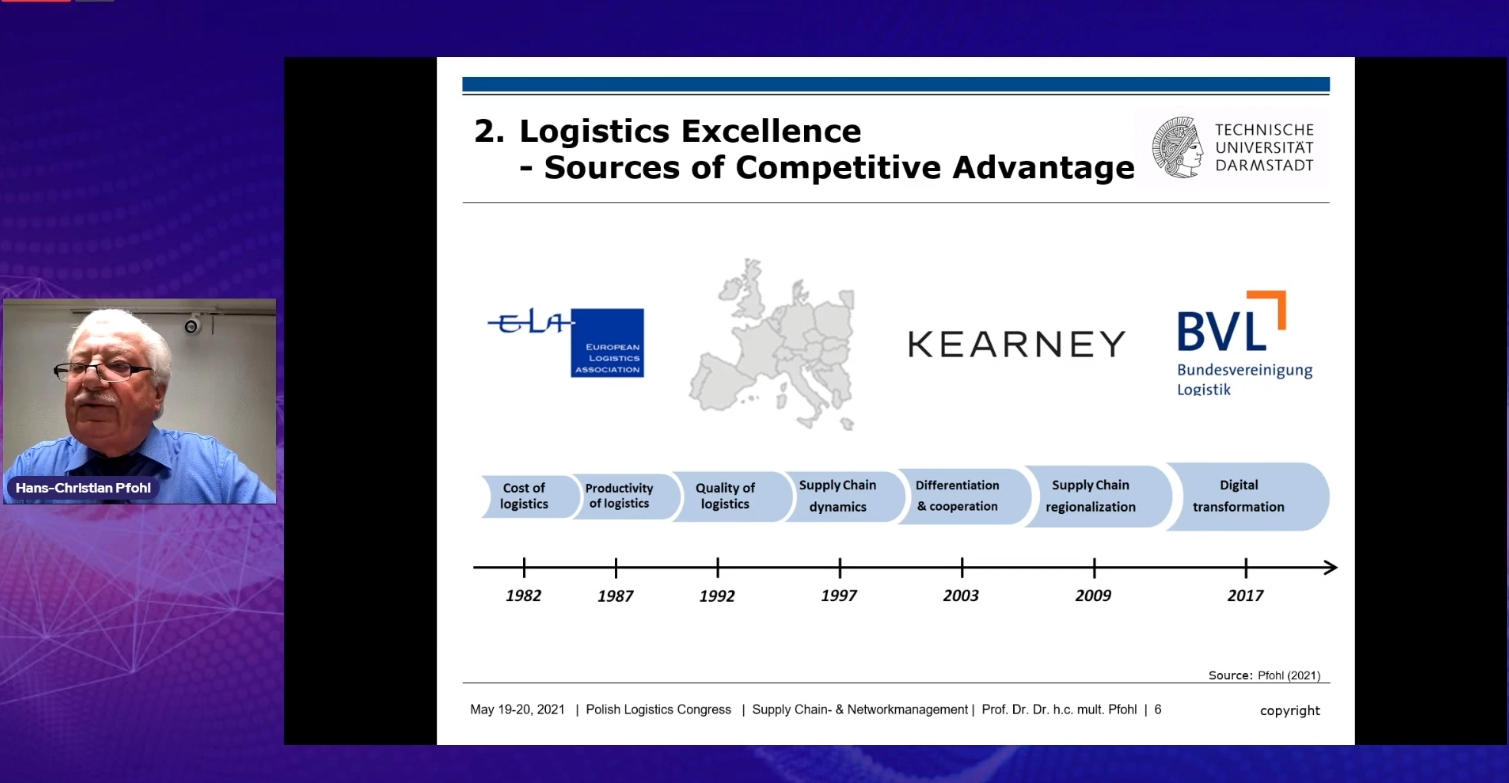
– Over the years, the ways of achieving competitive advantage among companies have changed. In 1982, when we conducted the first research on logistics excellence, the most important thing was reducing the costs of running a business – says Prof. Hans-Christian Pfohl. – In subsequent years, cost-cutting was no longer enough; it was necessary to invest in logistics efficiency. Later, new key factors for business development appeared: service quality, supply chain dynamics, cooperation, regionalization of supplies, digital transformation.
The next foreign speaker on the main stage was Geert Verbelen, Consultant and project leader at the Flanders Innovation Cluster for Logistics, who in a half-hour presentation talked about how important the development of Flanders, a geographical region located in Belgium, France, and the Netherlands along the North Sea coast, is for logistics. This region, due to its location, excellent connectivity, low rental costs for space, and a high level of innovation, constitutes a “logistics fortress of the future,” ready to withstand subsequent, recurring disruptions of global supply chains.
– Companies must prepare for recurring disruptions in supply chains. Such as difficult deliveries at the beginning of the pandemic, the blockage of the Suez Canal. We must move from a “just-in-time” philosophy to “just-in-case” – explains Geert Verbelen.
Many participants were eagerly waiting for the next speaker. Professor Wojciech Czakon from the Jagiellonian University led a presentation on managerial myopia titled “Why is it so easy to be short-sighted? Behavioral traps of strategic thinking,” based on the results of his research and a book that was recently released on the market (we already talked to Prof. Czakon about the problem of managerial myopia in an interview titled “A superhero only works in comics”). A fascinating presentation, full of concrete examples (Why did Tesco withdraw from the Polish market? Why did Netflix become so popular? What influenced the spectacular collapse of Nokia?), analysis of mistakes made, and good advice for managers managing organizations.
– By not seeing a competitor, we allow them to build their offer completely freely, improve it, and eventually reach our customers better. Through a cognitive error, fatal in its consequences, we build a deadly enemy behind our backs. – says Prof. W. Czakon.
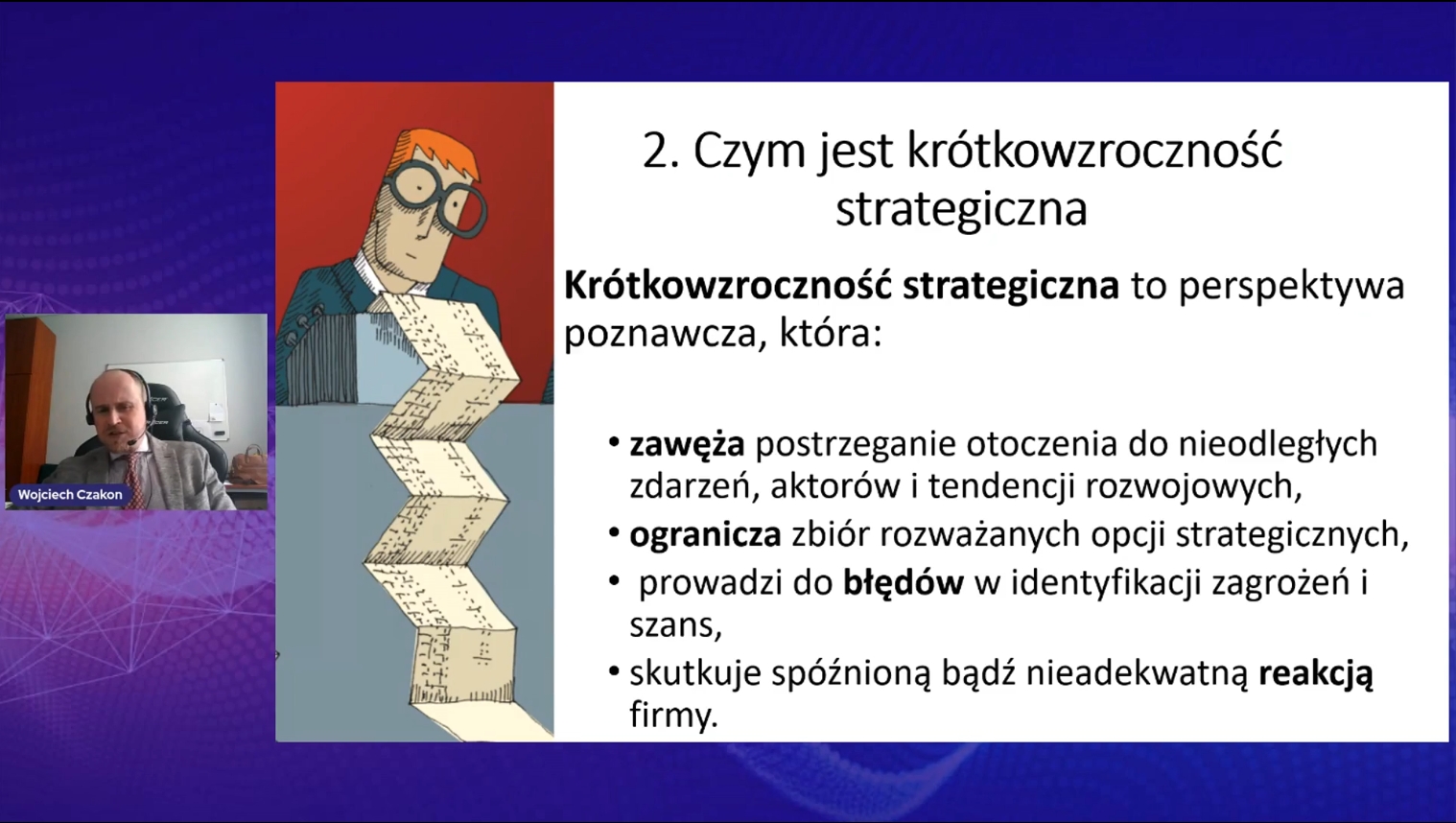
A moment later, Damian Kołata, the event’s Master of Ceremonies, invited six experts to a virtual debate: Katarzyna Czuchaj-Łagód from MobileInstitute, Dr. hab. Arkadiusz Kawa from Łukasiewicz – ILiM, Jakub Gierszyński from Sephora, Prof. Wojciech Paprocki from the Warsaw School of Economics, Wiesław Majewski from WM Projekt, and Adam Tomczak from X-press Couriers. The experts answered questions related to the automation of warehouse processes, ecological aspects of e-commerce, last-mile problems, and the future of logistics.
– The problem is packaging in e-commerce, of which there is simply too much. But also the use of an airplane instead of a ship or delivery by courier instead of to a parcel locker – says Dr. hab. Arkadiusz Kawa from Łukasiewicz – ILiM, answering a question about ecology in e-commerce.
The experts pointed to a large discrepancy between customer expectations (more ecological products, and cheaper and faster delivery) and the capabilities of operators (introducing new pro-ecological solutions requires additional financial outlays).
– Operators cannot afford to subsidize the business. Will consumers, therefore, be ready to take on the costs associated with introducing eco-solutions in logistics? – asks Prof. Wojciech Paprocki from the Warsaw School of Economics rhetorically.
Just after the debate, the organizers invited everyone for a short break. Participants moved to virtual booths, where they took part in contests, established business contacts, familiarized themselves with exhibitors’ offers, and discussed topics raised in the plenary session and during the expert debate.
Logistics today
After the plenary session, networking, and an interesting expert debate, parallel thematic sessions began: Warehouse Logistics (stage A), IT in Logistics (stage B), and Service Logistics (stage C). The warehouse session was dominated by the topic of automation of warehouse processes and internal transport. Artur Thomas from Jungheinrich presented the latest solutions and the basics of implementing transport systems. Trendy in warehousing and innovations, such as seemingly unconventional forms of delivery in cities, including underground transport, were explained by Zbigniew Smyczyński from P3 Logistics Park. Wiesław Majewski, an expert at WM Projekt, in a presentation titled “Warehouse automation – a trendy trend or a real need,” answered questions: can there be an alternative to automation? Where is the human in all this – their work and pay? What conditions must be met for this business to pay off?
– There is no automation that meets all requirements and fits everyone. Systems are tailor-made, according to the client’s needs, and only such a model of implementing an automation project makes sense – said W. Majewski in a discussion with Aleksander Niemczyk, the session moderator, at the end of the warehouse session.
Meanwhile, in the parallel IT in logistics session, participants discussed the changing role of IT systems in logistics management, the validity and conditions for implementing artificial intelligence solutions in business management in the mobility and logistics sectors, and the impact of the pandemic on the development of individual sales sectors in Poland.
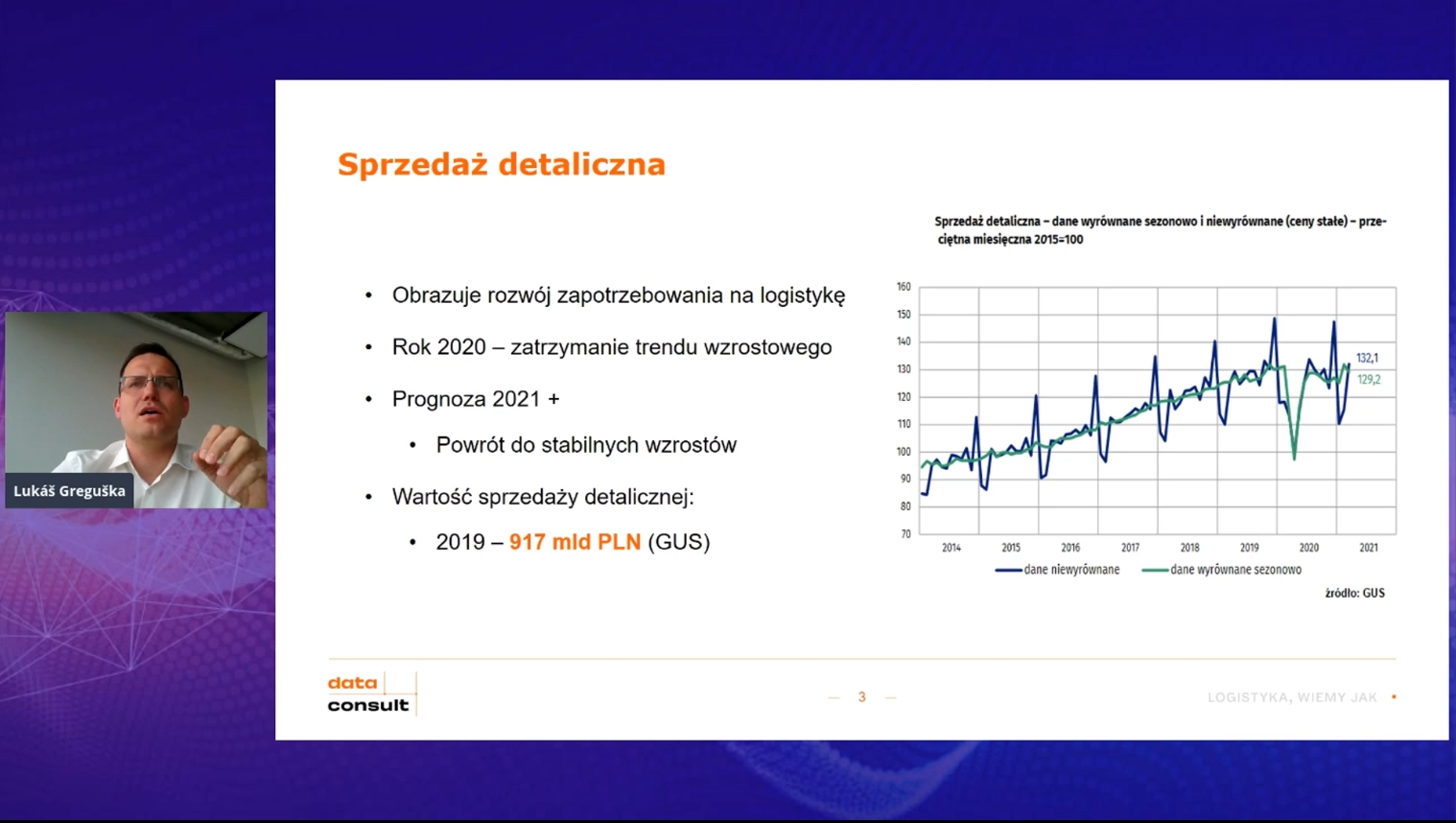
– Retail sales value grew linearly until 2020, when the coronavirus pandemic appeared. However, logistics “managed” and returned to the right development path – says Lukas Greguska, Vice President of the Board of DataConsult S.A. – At the same time, we are observing an increase in the dynamics of e-commerce in Poland from an 8.4% share in retail sales before the pandemic to 32-35% now.
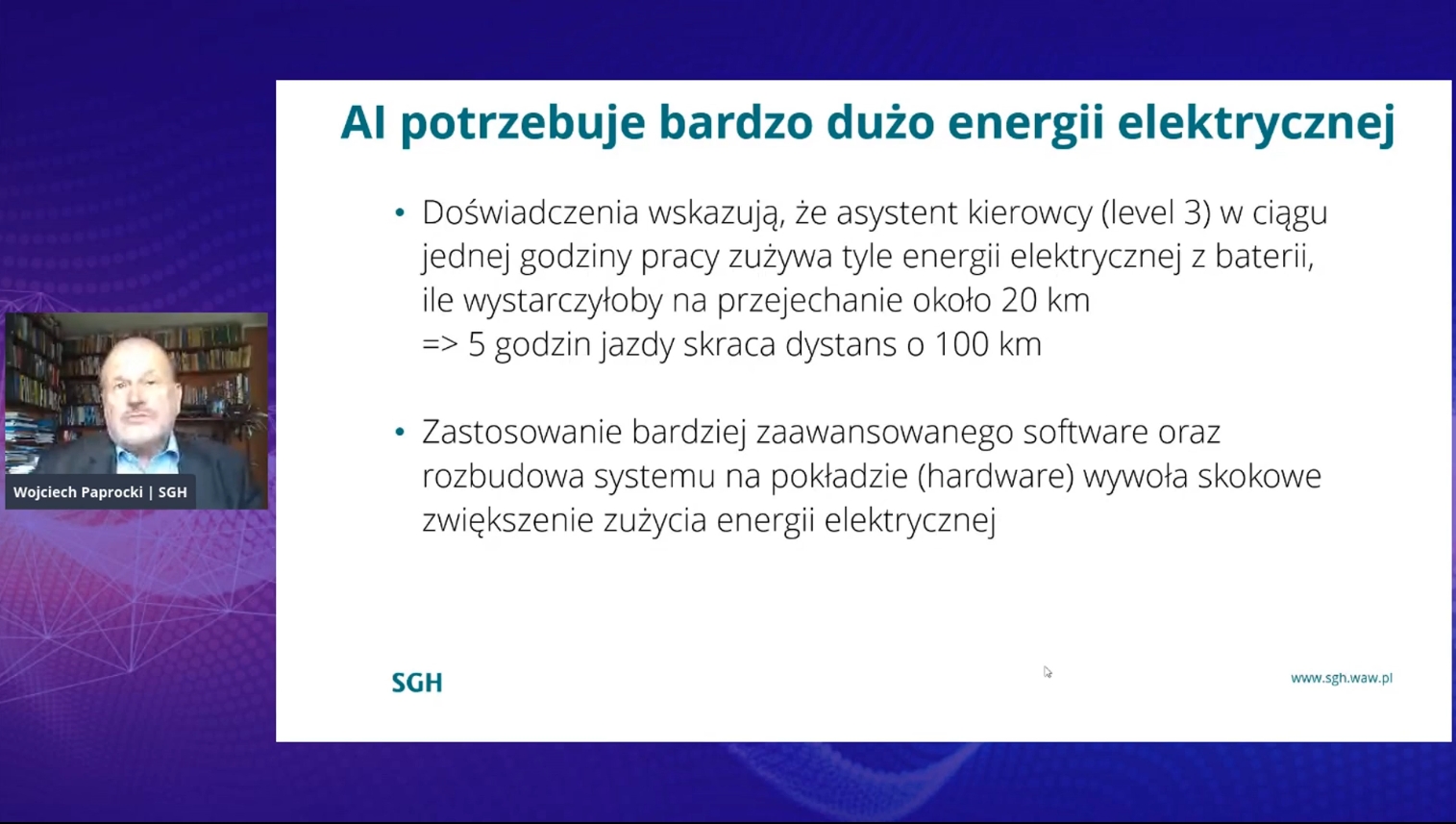
The IT in logistics session sparked several interesting but surprising questions, which later served as a basis for discussion with the session moderator, Adam Koliński from Łukasiewicz – ILiM. “Is warehouse automation possible without investing in machines? And can the process of automating the flow of goods be carried out only with the use of machines?” – asked Grzegorz Prorok from Consafe Logistics in his presentation. “Why in the modern world do we try to use modern technologies, like artificial intelligence, in situations where analog solutions cope well? Why do we invest in AI in driver assistant systems, since artificial intelligence is very energy-intensive and shortens the range of an electric car?” – echoed Prof. Wojciech Paprocki. The experts pointed out that the most obvious answer is not always the best when we take into account all economic factors.
In the third thematic session titled “Service Logistics,” Jadwiga Żurek, Sales Director at Arvato Supply Chain Solutions, appeared with a presentation “What influenced the metamorphosis of the logistics industry in the last decade?”.
– The COVID-19 pandemic caused a rapid development of the e-commerce industry, and this in turn forced logistics operators to change their logistics service model – Jadwiga Żurek presented the characteristic features of traditional logistics compared to e-commerce logistics.
The type of packaging used, the characteristics of the warehouse, the method of inventory, the number of SKUs, or the way of handling the last mile – the differences between traditional logistics and e-commerce logistics can be so significant that they require a completely different approach to individual elements of the supply chain. Customers have increasingly higher requirements, they want to receive goods faster and faster, and they pay more and more attention to the ecological aspects of the product. For manufacturers, this usually involves incurring higher and higher costs. The transport service is also of great importance – both the last mile and delivery to the warehouse or specific transport orders.
– Customers are currently willing to pay much more for a well-executed transport service. “Standard” solutions in the current situation are losing their validity. Truly dedicated solutions are necessary. Better – not cheaper! – explains Cezary Ewertowski, another speaker in this session.
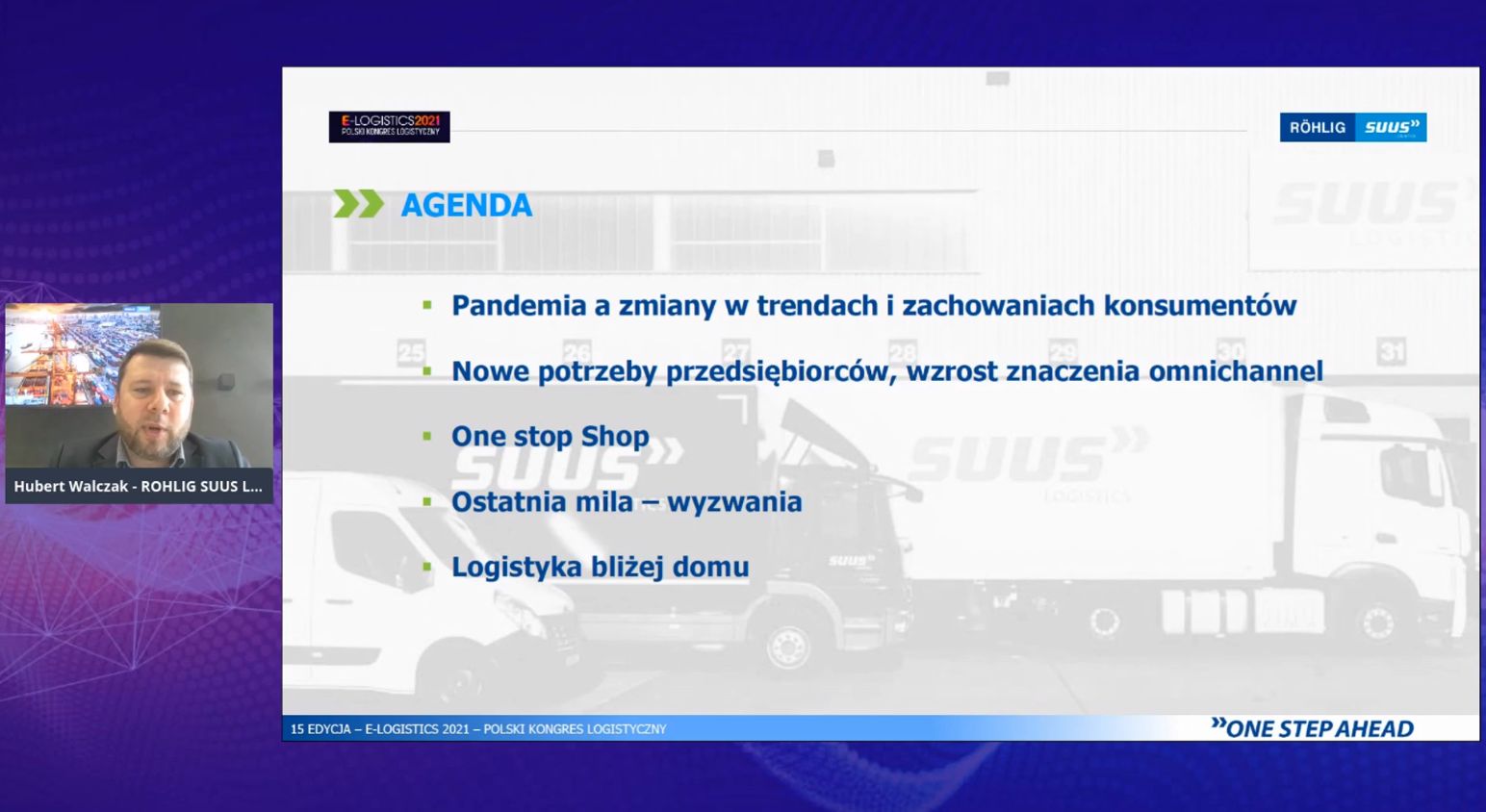
Similar conclusions flowed from the presentation of Hubert Walczak, Head of E-Commerce at ROHLIG SUUS Logistics S.A., who is responsible for the long-term strategy of the e-commerce segment on a daily basis:
– Customers currently pay attention to product availability, delivery security, and shortened lead time. 40% of respondents are willing to pay extra for same-day delivery! – says Hubert Walczak from ROHLIG SUUS Logistics.
The first day of the Polish Logistics Congress was concluded by a speech by Michał Woroch, a traveler and photographer, who in a fascinating way talked about how to logistically plan the trip of a lifetime on the example of his year-long journey through both Americas. M. Woroch together with his friend, Maciej Kamiński (both use wheelchairs), drove a specially prepared Landrover Defender from Tierra del Fuego to Alaska. The expedition lasted 371 days, and preparations for it and the construction of the car took over 2 years. During the expedition, they traveled 65,000 km and visited 15 countries. The expedition was awarded the most prestigious awards in the travel world: “Feat of the Year” Kolosy 2019 and “Travel of the Year” in the National Geographic Travelers poll. You can familiarize yourself with the idea and course of this expedition on the project’s website Wheelchairtrip.

Logistics challenges in the modern world
This is how we reached the second day of the eLogistics2021 Congress, in which parallel thematic sessions reigned supreme, focused on the hottest logistics topics of this spring. We started Thursday morning with sessions: Logistics in the city, Logistics in Poland, and Global supply chains. At the beginning, Paulina Golińska-Dawson, moderator of the Global supply chains session, introduced the first speaker: Jacek Pucher, Innovation Manager at DB Schenker, who talked about how to be prepared for today’s (and future) challenges.
– Logistics operators must become masters of adapting to a changing environment. They cannot become an extinct species. Automation and digitalization are very helpful in meeting this – convinces Jacek Pucher, presenting the assumptions of the digital strategy at DB Schenker.
Meanwhile, in the Urban Logistics session, a presentation on the EiT Urban Mobility project began. Traian Urban, Director of EIT Urban Mobility, talked about how to support startups that intend to implement innovative services in the area of urban logistics institutionally and financially, and presented the idea of the EiT Urban Mobility project and the effects it is to bring. Over 70% of Europe’s inhabitants live in urban areas, generating 85% of the gross domestic product (European), while consuming 60-80% of energy. The overarching goal of the project is to find effective solutions to urban problems and ensure opportunities for sustainable economic growth for Europe in the area of urban mobility (We already wrote about this project in an article titled “EiT Urban Mobility as support for innovative urban logistics solutions”).
Urban mobility, this time in a slightly different dimension, was also the topic of a speech by Bartosz Dziugiel from Łukasiewicz – Institute of Aviation. Can we imagine the mass use of drones in urban space? What are the costs and purpose of such an undertaking? Is urban air mobility a song of the future? The representative of Łukasiewicz – IL explained in a fascinating way what should be paid attention to when designing it.
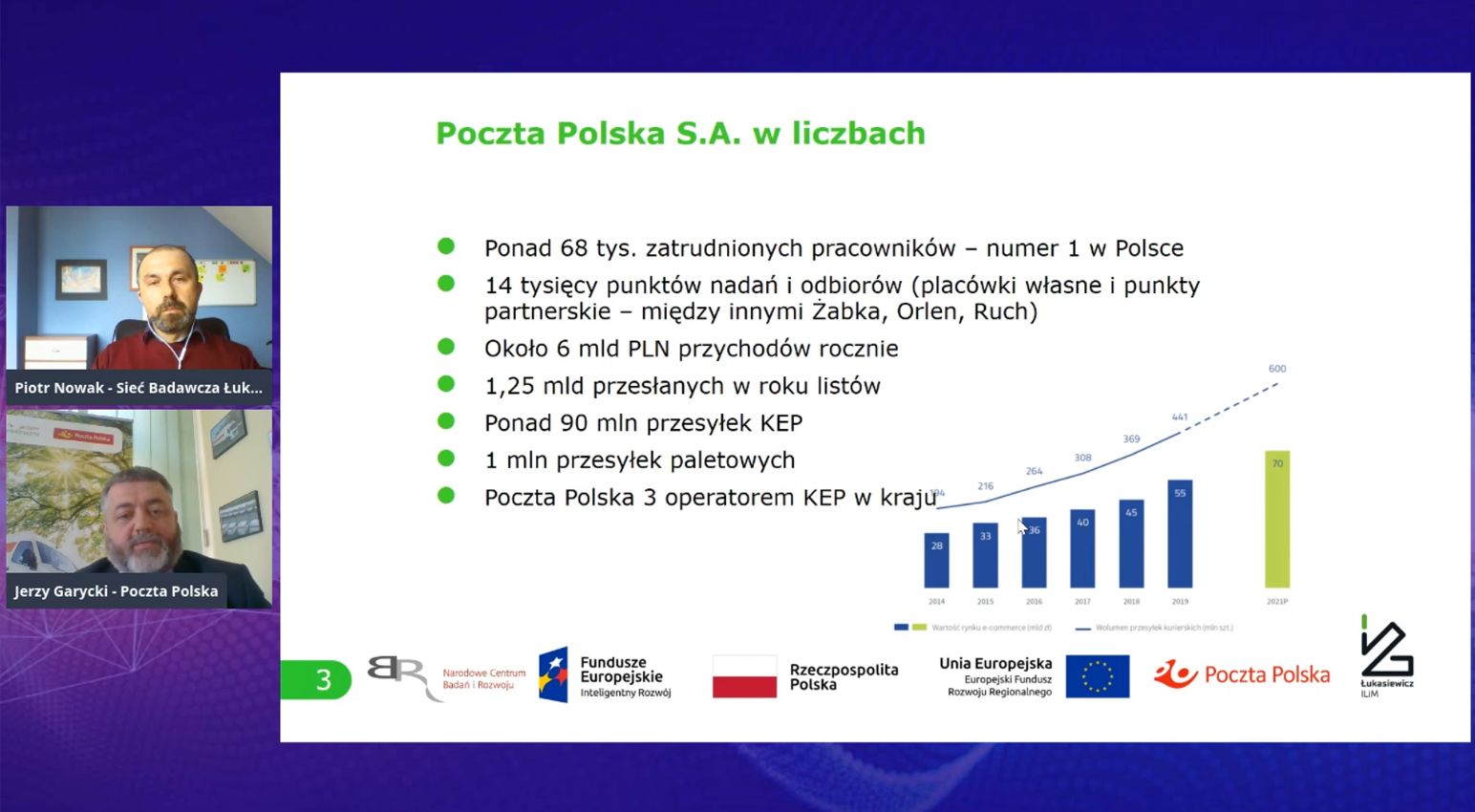
In the Logistics in Poland session, Dr. Piotr Nowak from Łukasiewicz – ILiM together with Jerzy Garycki from Poczta Polska presented the use of modern identification techniques, based on RFID, in the work of Poczta Polska. Łukasiewicz – ILiM is developing a prototype of a distributed distribution network using modern solutions based on this very technology.
Another presentation and another significant project worth noting. In September 2019, the SPROUT research project started, addressing the topic of urban mobility transformation. The project is implemented by a consortium of 29 partners from Europe, the United States, China, and Israel. SPROUT was the topic of the next presentation in the Logistics in Poland session.
– It is impossible to create a universal urban logistics model for all cities – their specificity must be taken into account – M. Kirchner together with W. Żuchowski from Łukasiewicz – ILiM drew attention to the importance of implementing IoT solutions in six cities as part of SPROUT.
The SPROUT project and the use of IoT in urban logistics are also the topic of an article that originally appeared in the Logistyka magazine, and which can also be read on our portal: “A sustainable response to changes in urban mobility”.
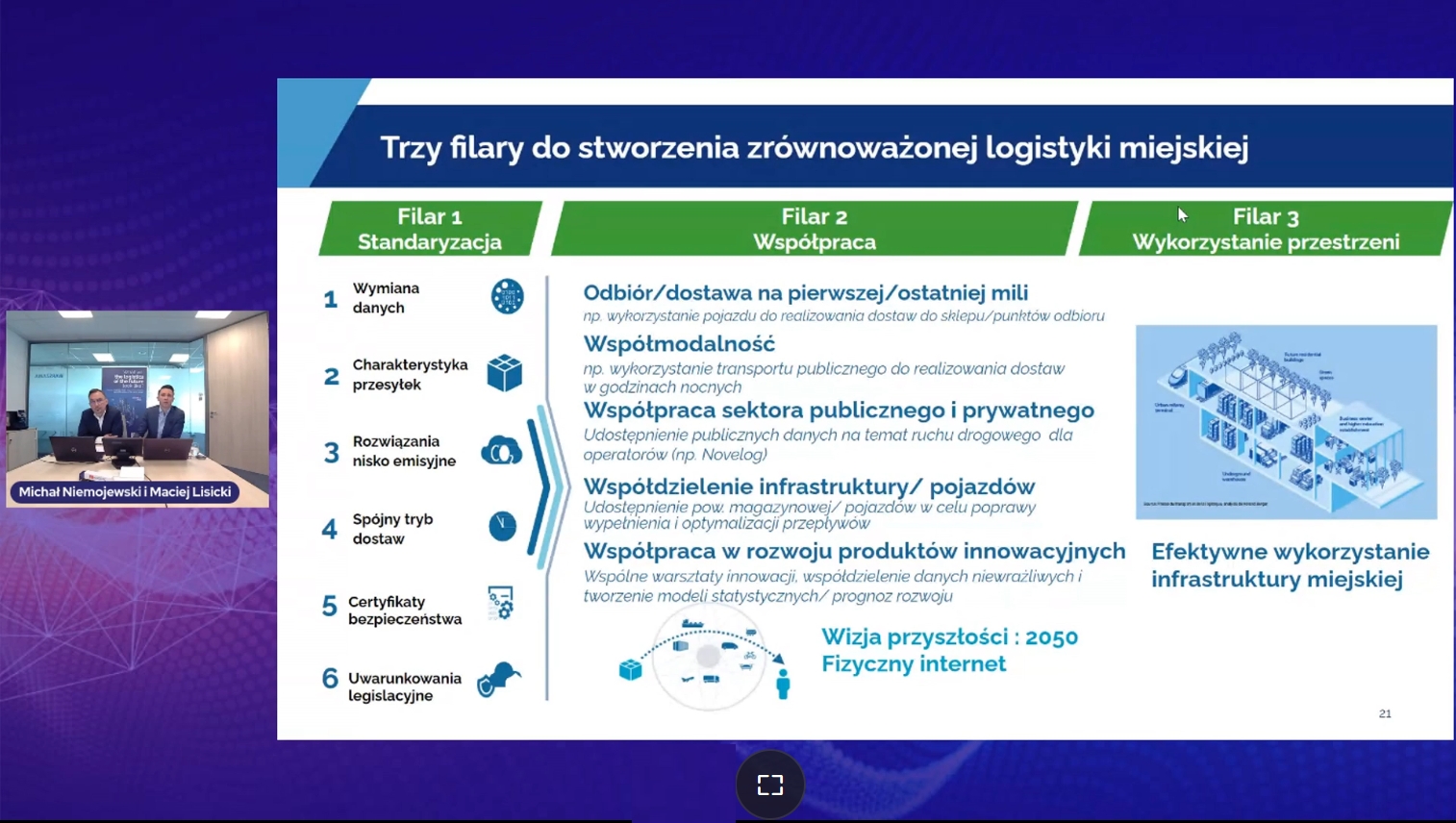
Modern metropolises struggle with problems resulting from their rapid development, such as excessive car traffic, traffic jams, noise, smog, environmental degradation, deterioration of housing conditions, and access to public services. This situation raises many questions about the future of cities, including Polish ones, and the quality of life of residents, about the vision of leaders and innovative solutions that could restore the proper perspective of a city created for people and not for cars. How to design cities to reduce their negative impact on the environment? Which implementations should have priority and where is the place for logistics in all this? Is sustainable urban logistics in Poland even possible?
– Integration of transport networks, the creation of urban microhubs, and deliveries using a low-emission fleet are the basic factors for the development of ecological services in urban agglomerations – explain the speakers from FM Logistic: Michał Niemojewski and Maciej Lisicki.
A very interesting presentation on intelligent solutions for Smart Port Gdynia was presented by Bogusław Śliwczyński, Rector of the College of Logistics.
– The development strategy of the Port of Gdynia includes improving cargo flow, eliminating bottlenecks and congestion in heavy road traffic, timeliness of cargo delivery, and improving safety and comfort of transport for the Tri-City – says B. Śliwczyński. – Among the system solutions in Smart Port Gdynia, digital notification at the terminal, intelligent traffic management, and a parking space management system stand out.
In parallel, the Global supply chains session is ongoing, in which Mirosław Antonowicz and Sebastian Jarzębowski from the Kozminski University talk about the New Silk Road, as a project of a system of transport connections from China to Europe, which creates a huge opportunity for the development of global supply chains.
– Since the launch of the Belt and Road Initiative in 2013, China has directly invested over 80 billion USD in over 70 countries participating in the project – such data was cited by M. Antonowicz.
A moment later, Michał Szaniawski, Director of the Analysis Office of the Central Communication Port (CPK), appeared on stage, who talked about what opportunities the construction and launch of the CPK will give to Poland and the region.
– How to successfully implement such an ambitious project? – asks the session moderator at the end of the presentation about CPK.
– We must cooperate with the best international partners. Wanting to be the best, you have to work with the best – replied the speaker, M. Szaniawski.
The first part of the thematic sessions is ending, during which one more important event took place: the premiere of the new report “Logistics in Poland,” prepared by ManPowerGroup in partnership with Łukasiewicz-ILiM, which we had media patronage over.
– Lack of adequate support from IT systems, a shortage of qualified staff, and too high logistics costs are the main brakes on the development of logistics in Poland and challenges faced by companies operating in this area. 134 respondents (freight forwarding companies, carriers, operators, etc.) took part in the survey of companies operating in the logistics area – says Tomasz Walenczak from ManPowerGroup. – At the same time, as many as 80% of respondents taking part in the survey assessed the situation in the logistics industry in Poland as good or very good! To ensure their competitiveness, companies want to invest in acquiring new employees, implementing modern technologies, and building warehouses.
More about the results of the report can be read in an article on this topic.
The future of logistics
The logistics of the future is green! Such a conclusion flows from the presentations that were presented just after a short break. Tomasz Markowski from the Identification Technology Center of Łukasiewicz – ILiM presented the assumptions and technological aspects of the e-Pack project. Work on the project has been ongoing for a long time, and its goal is to develop a comprehensive ecosystem of intelligent returnable packaging, revolutionizing modern logistics.
– 9 out of 10 companies claim that packaging is a priority for them. Social awareness regarding packaging waste is growing, so environmentally friendly packaging should be introduced – explains Tomasz Markowski.
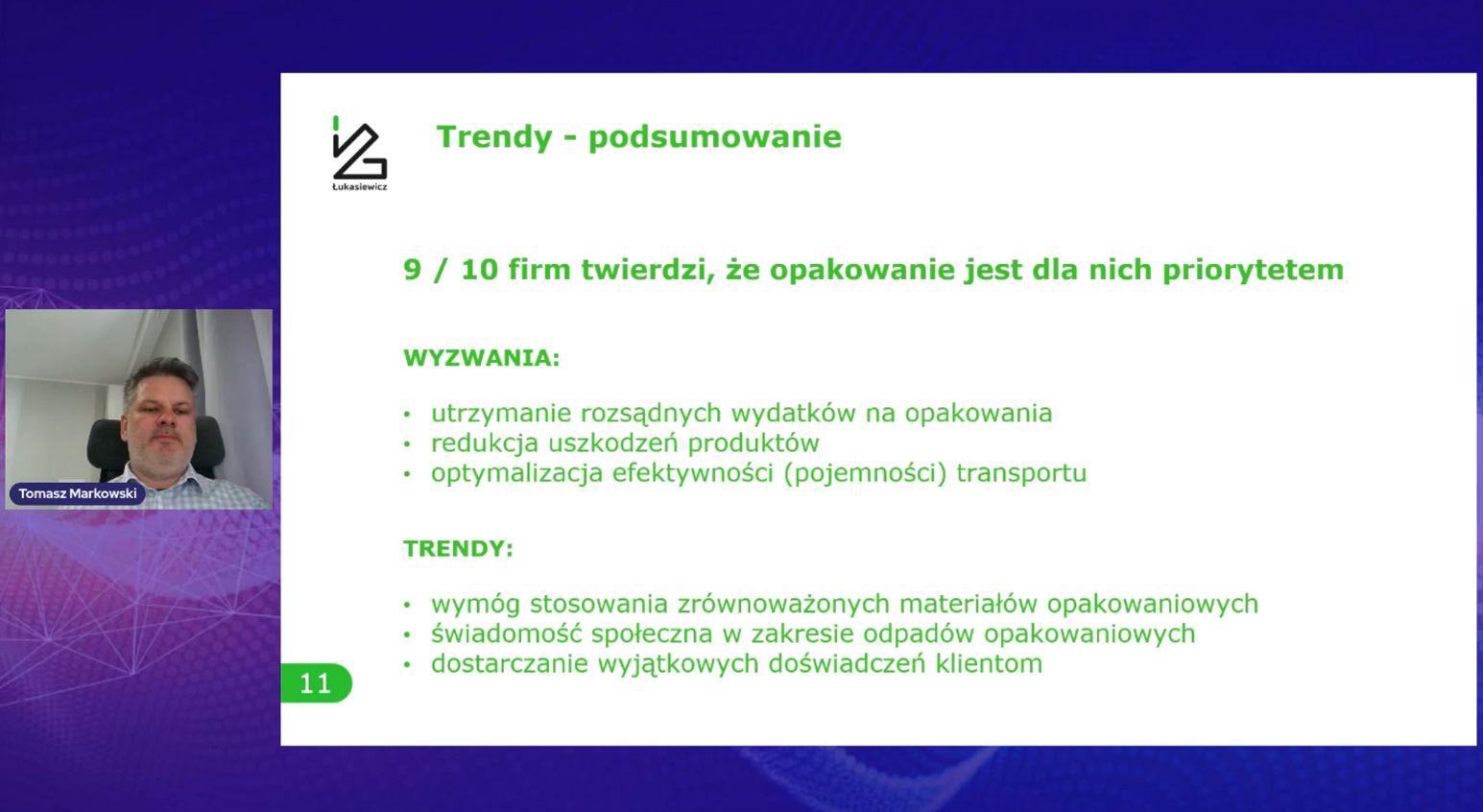
The e-Pack project aims to create reusable returnable packaging, inspired by Physical Internet solutions. The task is to support logistics processes in the B2C area and facilitate identification and reduce errors in reading labels. More about the e-Pack project can be read in the LOGISTYKA 1/2021 magazine.
The next expert of the Ecologistics session was Mateusz Boruta, Director of ECR Polska.
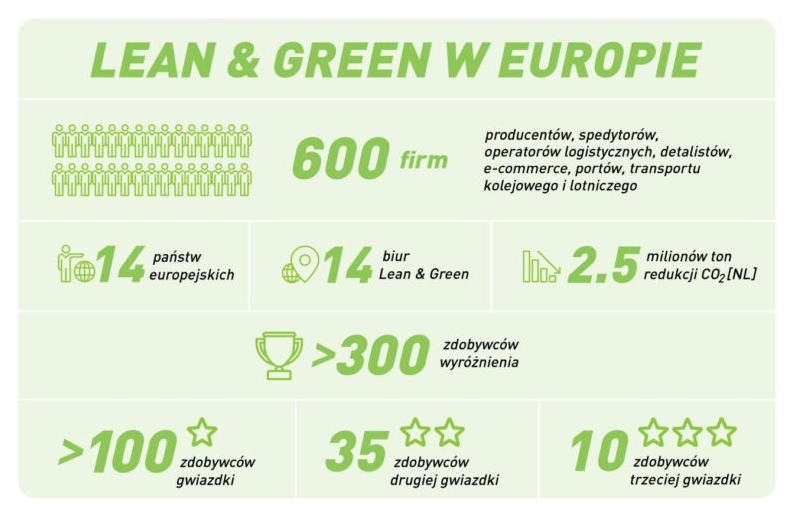
– We live in times of ultra-mobility, advanced logistics enabling just-in-time delivery of goods. Along with mobility, sustainable development must come as a strategy for generating profit and protecting the environment – said M. Boruta, talking about the idea of the Lean&Green platform.
Transport in Poland is responsible for 15% of CO2 emissions. Half of this value comes from transport by delivery vans. That is why ECR Polska joined the Lean&Green project. The goal is to achieve 0% CO2 emissions in the future by entities participating in the program. The assumption of Lean&Green for implemented innovations is that GREEN is GREEN. By developing business, improving operational efficiency, reducing costs and carbon footprint, you earn more and limit the negative impact on the environment.
Just after the Director of ECR Polska, Mr. Krzysztof Witos from AllGreenPallets appeared on stage with a speech “IoT…? Pallets “with ID”, who argued that polypropylene pallets are the answer to the need to reduce pallet weight.
– Lower pallet weight translates into fuel savings in transport and, of course, into a reduction in CO2 emissions. This is a new dimension of “green logistics” – says K. Witos.
Each of the experts has a different idea for reducing the negative environmental burden. Different approaches, different tools, but one goal – cleaner air, less environmental pollution, less noise in the city.
– Producing a cargo bike is only 5% of the resources needed to produce a car. Companies that transport goods in strict city centers are obliged to carry out deliveries in a sustainable way – mentions Paweł Raja from BikeRepublic, who prepared a lecture on cargo bikes as an important element of green logistics.
Meanwhile, on the second stage of the Polish Logistics Congress eLogistics2021, we have a completely different vision of the logistics of the future. Digitalized, automated, based on sensors, robots, and artificial intelligence. Łukasz Kobus from WDX S.A. leads the presentation “Fleet management of forklifts in the era of logistics 4.0.” Task queuing, increased work efficiency, easy employee implementation, cost reduction – we talk to him about the benefits of implementing system trucks. A moment later, we listen to Maciej Gryczewski from Siemens, who talks about digitalization in intralogistics and automatic warehouses of the future.
– The market situation forces the implementation of digitalization and the introduction of efficient automatic processes – explains Maciej Gryczewski. – Integration and digitalization of the entire value chain is key to maintaining competitiveness.
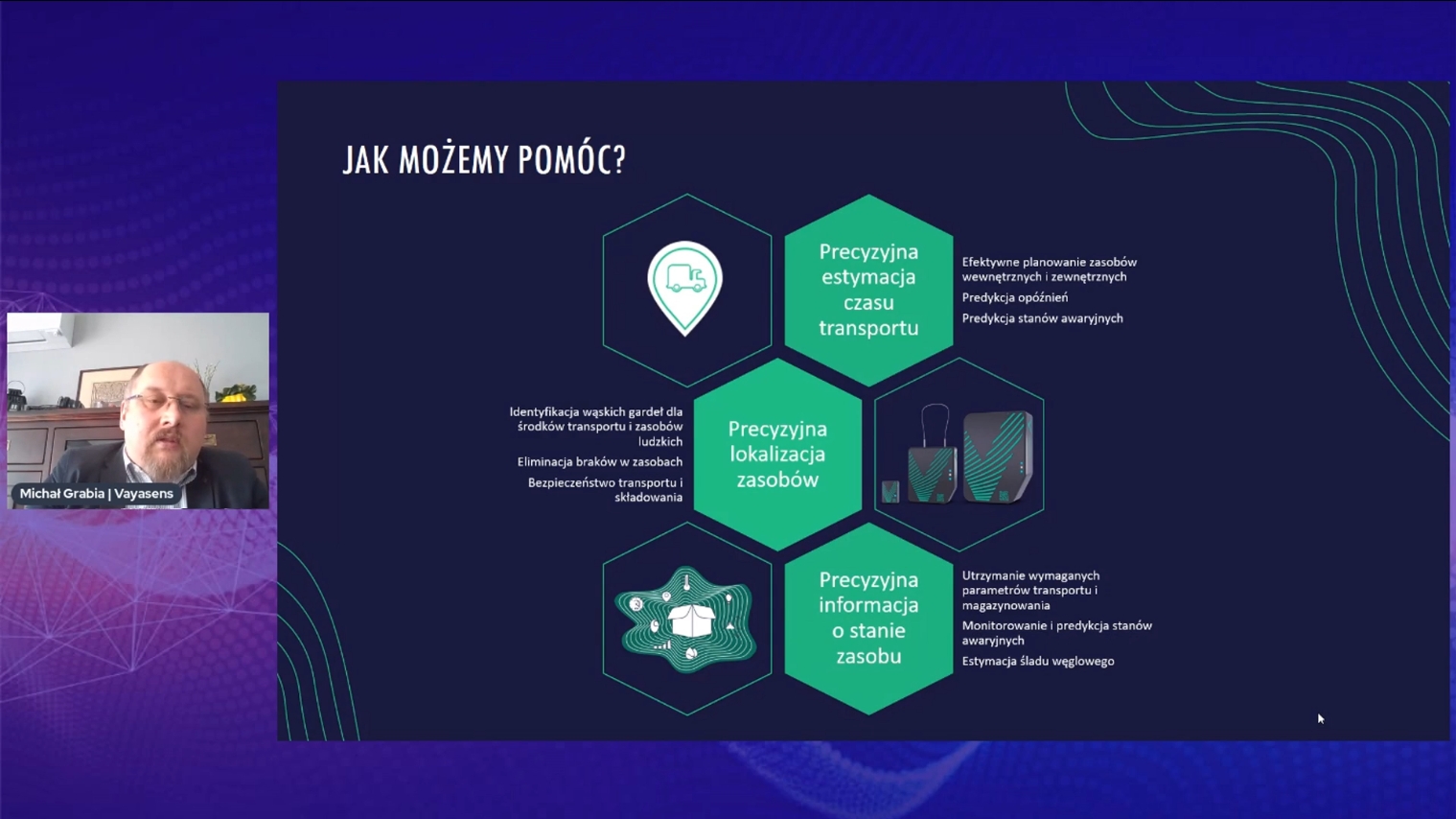
A supporter of modern, futuristic solutions is also Michał Grabia from Vayasens, who first presented data on the losses that manufacturers and operators suffer due to extremely extensive and expensive-to-operate modern supply chains, and then proposed a solution that will eliminate product losses, delivery delays, and allow for precise location and information about available resources: a low-power sensory network for comprehensive monitoring and securing of cargo and means of transport in logistics processes.
At the end of the IoT/ICT session, Krystian Bergmann from FIBARO appeared, who talked about connectivity solutions for the Smart home. According to FIBARO, a home is a place where different devices communicate with each other. A smart home can be monitored and controlled from anywhere in the world – all you need is a smartphone with an application and Internet access.
The third session, devoted to e-commerce, also enjoyed great interest. Already the first speaker of this session put forward a bold (and ominous) thesis that a crisis in the warehouse is a certainty and it is impossible to prevent it 100%. Screwing up e-commerce standards has a huge impact on the functioning of warehouses.
– The warehouse is not able to react quickly to changes here and now. Fighting the pressure from e-commerce is very unequal – says Rafał Szcześniewski from Omnipack.
Next session and another experienced practitioner on the stage of the Polish Logistics Congress. Marek Różycki from Last Mile Experts talks about the dynamic increase in the number of shipments on the last-mile section, caused, among other things, by the rapid growth of e-commerce. How to handle 20 billion parcels that will soon appear on the market? The solution to this problem can be parcel lockers (e.g., Paczkomaty), the number and availability of which have increased significantly in the last year. IKEA also uses its own parcel lockers, for example. Remote services and deliveries to parcel lockers are just some of the changes in IKEA’s logistics grid. Sebastian Kaczmarski presented the details in a speech titled “Development of e-commerce sales as a source of changes in the organization’s logistics grid.”
In turn, Magdalena Krasoń-Wałęsiak from GS1 Polska in a lecture titled “Standardization as the basis for success in e-commerce” brought closer the importance of correct product identification.
Around 2:00 PM, individual thematic sessions were already coming to an end. At the end, as part of the e-commerce session, we had the opportunity to listen to a speech by Dr. hab. Arkadiusz Kawa, Director of Łukasiewicz – ILiM, organizer of the eLogistics2021 Congress, on “Cross border e-commerce – the world has never been so flat.” Marketplaces play the biggest role in the cross-border sales sector. As much as 60% of sales value in Europe comes from this very channel. The value of this sector is growing faster than the value of e-commerce! – such conclusions flowed from A. Kawa’s presentation.
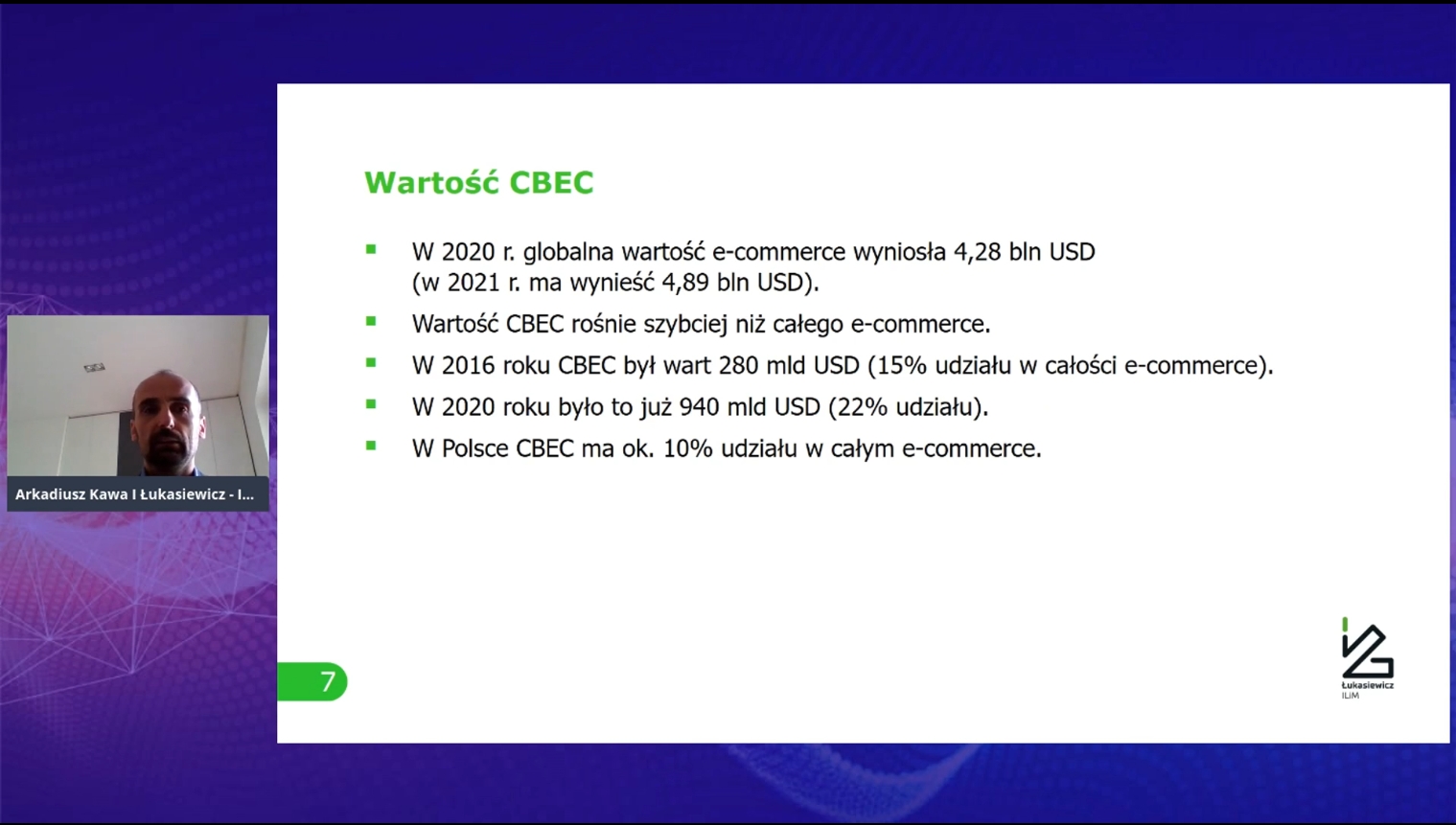
– The benefits of foreign sales are significant: greater competitiveness, entry into the global market, access to new clients, offering products abroad without knowledge of the local market. – says A. Kawa.
The Director of Łukasiewicz – ILiM also answered several questions that participants asked during the presentation: How will VAT on shipments below 22 euros, entering into force on July 1, 2021, affect foreign purchases? Is the development of cross-border linked to limited possibilities for increasing sales on the Polish market?
At the same time, we remind you that if you are interested in e-commerce, the electronic version of issue 5/2020 of the LOGISTYKA magazine is still on sale. We dedicated the entire issue to e-commerce and the last mile.
And the winner is…
Emotions accompanied us to the very end. After the conclusion of all excellent sessions, there was a moment that many were eagerly waiting for. The presentation of the prestigious award in the Polish Logistics Association (PTL) competition. This was already the fourteenth edition of the competition, during which logistics projects implemented by Polish enterprises are distinguished.
PTL appreciated the Speedmail company for the project “Introduction of online tracking of letter delivery,” thanks to which the operator gives the possibility of monitoring every type of sent shipment. The award in the Polish Logistics Association competition was received by Janusz Konopka, President of the Board of Speedmail. The President presented the main assumptions of the project, the genesis of its creation, and the effects that its implementation brings.
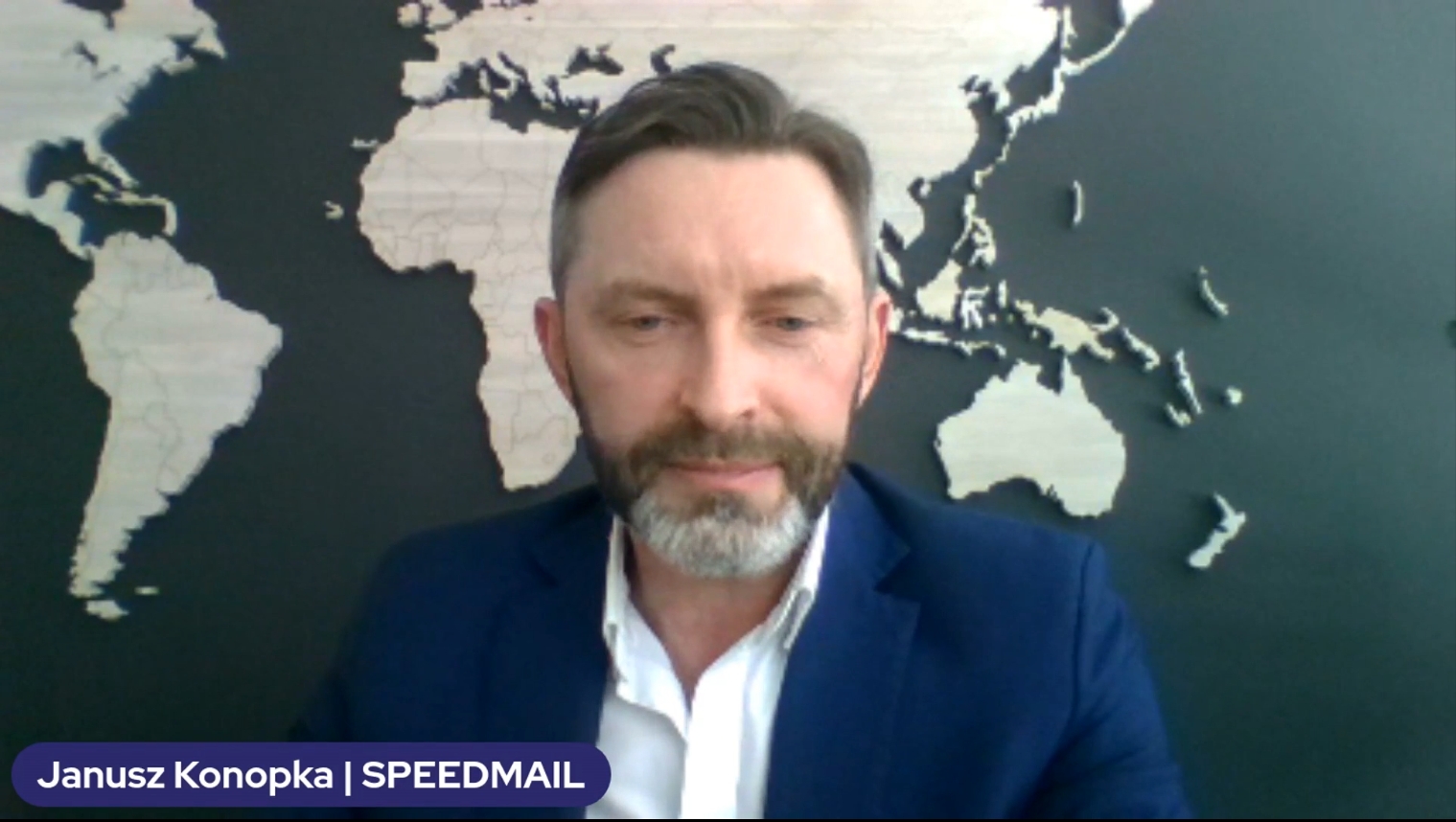
Projects concerning the implementation of innovative technologies or modern organizational solutions, as well as other solutions aimed at improving logistics processes, could be submitted to the competition. The project had to be implemented in practice, and its implementation completed between 2019 and 2020. In two stages of the competition, the jury evaluated, among other things, the course of implementation work, the innovation of the solution, and the effects of the project.
– We are glad that the jury appreciated the work of our team. At Speedmail, from the beginning, we have focused on innovative logistics solutions and technologies. We were the first in Poland and one of the first in Europe to introduce tracking for every type of shipment, even ordinary letters and marketing correspondence. The reason for undertaking the new project was the desire for continuous development and being a leader on the market. Thanks to online monitoring, our work is more effective, shipments are safer, and the process of their delivery is more successful – explains Janusz Konopka, president of Speedmail.
The distinguished project was implemented from March 2019, when research and development work began, to August 2020, when the implementation of the new system in all branches was completed. Thanks to on-line GPS monitoring, the operator has the ability to supervise the delivery process in real-time and a tool to better plan the routes and working time of postmen. Customers, on the other hand, gained better insight into the stage of delivery their shipment is at and access to more accurate reports on the performance of the service.
The Polish Logistics Congress eLogistics2021 has come to an end. The online format allowed over 350 participants, experts of the logistics industry, to take part in it, despite the prevailing pandemic, and networking, discussions, debate, and virtual booths allowed for establishing new business relationships, which – we hope – will result in many inspiring implementations, about which – who knows? – maybe we will hear during the next edition of the Congress.