








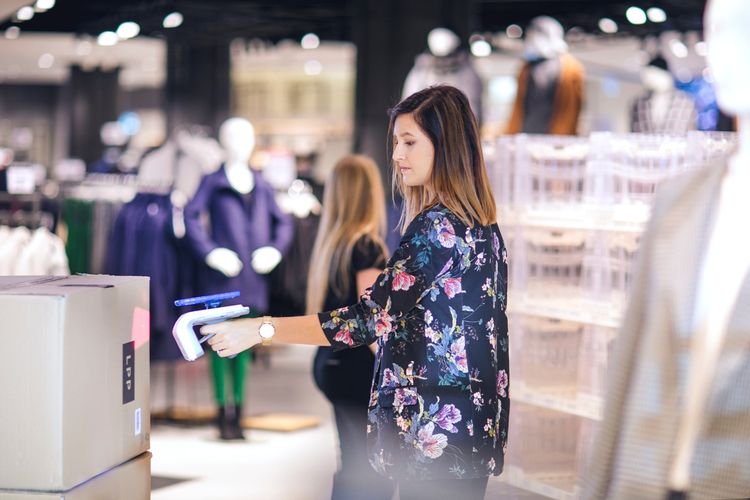
In response to the dynamically growing role of omnichannel sales, LPP is accelerating the implementation of RFID technology across its other brands. The introduction of electronic tags to the Mohito, Cropp, and House brands will be completed more than 5 times faster than it was for the flagship Reserved brand. The plans also include the use of soft tags, which will allow for 100 percent visibility of the entire product range. This is the next stage in the development of the Polish clothing manufacturer as part of its omnichannel strategy.
The new retail reality brought about by the Covid-19 pandemic served as an impulse for LPP to significantly accelerate projects supporting omnichannel sales. Investments in the fashion-tech sector and the implementation of the RFID system—a technology involving electronic tags—proved their worth during the period of traditional store closures and rapid growth in online sales. It was this solution that supported the sales efficiency of the flagship Reserved brand during the crisis. Given the key importance of this technology in the process of integrating sales channels, the Gdańsk-based company decided to speed up the implementation of electronic tags for Mohito, Cropp, and House.
Thanks to the electronic tag, the company tracks product availability in real-time, which allows for better control of its flow, including between warehouses and stores, and consequently, a faster and more accurate response to customer needs.
– The first wave of the pandemic showed us that we must be ready for various scenarios. In March of last year, with the overnight closure of almost all brick-and-mortar stores, we had to adapt quickly to the new situation. Thanks to the use of RFID technology in Reserved, physical stores began to function as mini-warehouses handling online orders. As a result, we processed orders placed through the online store faster – explains Alexander Yashin, RFID expert at LPP. – The success we achieved thanks to an integrated approach to our sales in our flagship brand was a key factor that confirmed we should follow this path with subsequent brands. We knew we had no time to lose and had to accelerate work on implementing RFID for other brands – he adds.
The first RFID implementation in the Reserved brand was the fastest deployment of this technology in the world. Thanks to the lessons learned from this experience, the company will carry out the second approach even faster.
– At Reserved, we introduced RFID in 270 stores within 12 months. We currently plan to implement this in 867 stores of other brands in just 7 months across 12 countries. This means that we will roll out the solution more than 5 times faster compared to Reserved – adds Agata Mielewczyk, IT Project Manager at LPP.
A total of over 1,200 LPP stores will be covered by RFID technology. Thus, in 2021, over 200 million items of merchandise offered by the four brands of the Polish company will be tagged with electronic labels. An important element of the ongoing project is also a novelty: RFID soft tags. Thanks to this solution, products such as jewelry, perfumes, and other accessories will also be covered by the technology.
– The implementation of soft tags will allow us to increase the availability of the offer for online orders for the Reserved brand, as well as Cropp, Mohito, and House. The implementation of the system and the additional introduction of soft tags will thus provide us with 100 percent visibility of stock levels in real-time. The accuracy and efficiency of this solution are an essential element for us in the development of our omnichannel strategy – says Alexander Yashin.
– We made the decision to finally extend the technology to Cropp, House, and Mohito in October 2020, and we began training for buyers and suppliers as early as November. We are currently preparing the stores, i.e., painting walls with shielding paint and equipping them with detachers and RFID readers. Furthermore, we are implementing changes in the WMS warehouse management system, store applications, and the software for RFID encoding tunnels in our Distribution Center. The full rollout of the technology in stores will begin in September of this year, and training for store employees will be carried out in parallel until March 2022 – says Agata Mielewczyk.
The transformation the company has undergone and the decision to accelerate many technological projects are a response to the new reality of the clothing industry. The potential of RFID technology fully aligns with the needs of LPP’s dynamic development of an omnichannel sales model.
Source: LPP