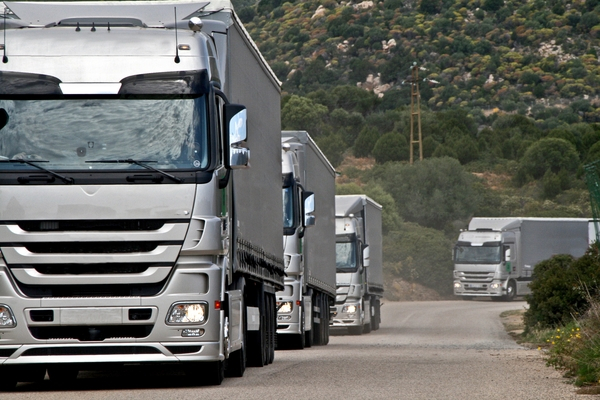
Transport is a sector of the national economy that has a significant impact on its development. Every economic activity is associated with transport operations (commuting employees to work, delivering raw materials and supplies necessary for production, product distribution). The easy accessibility and the ability to quickly move people and goods to their final destinations, which road transport offers, have caused it to dominate the transport market in most countries.
Road transport brings both benefits and a number of negative consequences. External costs associated with transport activities threaten the environment and the safety of road users. These include water, air, and soil pollution, noise emissions, and transport accidents. Corporate social responsibility plays an important role in the management of a modern transport company. These entities are beginning to understand that they are expected not only to provide products and services but also to actively participate in solving social, economic, and environmental problems.
External costs of road transport
The dynamic development of transport in recent decades is a key factor in global economic growth and, at the same time, a significant source of nuisances, problems, and costs, which are particularly important on a local scale (especially in urbanized areas). Transport costs can be divided into:
- internal (private) – borne by the person conducting transport activities,
- external – affecting others, determined outside the accounting system of the transport company.
External transport costs are all costs of consuming resources used to produce a transport service that are not borne by the buyer or the producer of the service, but by a third party, i.e., the general public. External transport costs can be defined as the negative external effects of service activities related to the movement of people and material goods using an appropriate means, e.g., a car. These costs are primarily borne by the so-called periphery, not by the producer or user, and are not compensated for in the price of the service.
Determining all external costs of the transport system’s impact on the environment is a difficult issue, and in essence, very subjective. External costs can include costs associated with the negative effects of road transport activities on the natural environment and human life:
- water, air, and soil pollution,
- noise emissions,
- transport accidents (not covered by insurance or compensation systems).
The full article is available below in PDF format.
The article comes from the magazine LOGISTYKA 5/2018.
The e-edition of the magazine is available in our offer!