








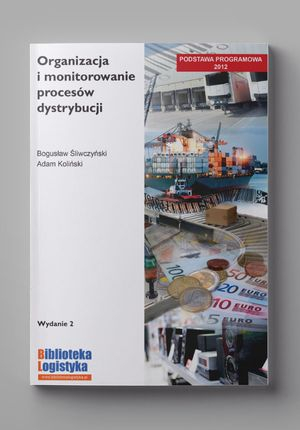
Authors: B.Śliwczyński, A.Koliński
Price: 42.00 PLN
Description:
The textbook has been developed in accordance with the assumptions of the new core curriculum for the logistics technician profession. It contains a systematic presentation of thematically related learning outcomes described in the third part of qualification A.30 “Organization and monitoring of the flow of resources and information in production, distribution, and warehousing processes”.
After mastering the material contained in the book, a future logistics technician will be able to, among other things:
– describe the enterprise’s distribution system,
– characterize distribution channels and product supply chains,
– present logistics strategies and concepts,
– conduct a distribution needs analysis and prepare a distribution plan,
– describe the functioning of a distribution center,
– present the principles of logistics cost accounting as well as cost calculation and estimation.
The textbook contains many practical examples, thanks to which students will find answers to sample questions:
– how to plan distribution needs for an enterprise’s product,
– how the planning and design of a distribution network proceeds,
– what is the efficiency of supply chains and networks,
– how to perform an operational analysis of a distribution center,
– what characterizes different distribution channels,
– how to conduct an analysis of conditions for external transport and warehousing in distribution processes.
Year of publication: 2014
ISBN: 978-83-63186-92-0
Volume: 236 pages
Textbook approved for school use.
Table of contents:
1. Supply chains and networks
1.1. Enterprise market environment – basic information
1.2. Supply network
1.3. Production network
1.4. Distribution network
1.5. Supply chain in a classical approach
1.6. Supply network
1.7. Evolution of enterprise cooperation – integrated supply chain and network
1.8. Efficiency of supply chains and networks
1.9. Skills and knowledge test
2. Planning in enterprise logistics
2.1. Planning in the management process – basic information
2.2. Planning in enterprise logistics
2.3. Strategic planning
2.4. Tactical planning
2.5. Operational planning
2.6. Planning cycle and period
2.7. Planning procedure and organization
2.8. Planning methods in logistics
2.9. Flow control in logistics
2.10. Skills and knowledge test
3. Strategies in the supply chain
3.1. Strategies in the supply chain – basic information
3.2. General strategy
3.3. Logistics concepts and strategies
3.4. MRP I
3.5. DRP I
3.6. LRP
3.7. MRP II
3.8. DRP II
3.9. ERP
3.10. ECR
3.11. JiT
3.12. SCM
3.13. Skills and knowledge test
4. Distribution process
4.1. Distribution process – basic information
4.2. Characteristics of distribution activity
4.3. Distribution needs analysis
4.4. Elements of the distribution system
4.5. Distribution channels
4.6. Customer in the distribution process
4.6.1. Offer development
4.6.2. Submitting offers
4.6.3. Identification and customer care in the distribution process
4.7. Analysis and planning in the distribution network
4.8. Algorithm for planning and designing a distribution network
4.9. Determining the location of nodes in the supply network
4.10. Needs planning in the distribution network
4.11. Examples of distribution networks
4.12. Skills and knowledge test
5. Distribution center in the supply chain
5.1. Node in the supply network – basic information
5.2. Factors determining the creation of distribution centers
5.3. Analysis of distribution center location
5.4. Analysis of distribution center functioning
5.5. Analysis of distribution center turnover
5.6. Analysis of conditions for external transport
5.7. Analysis of warehousing conditions
5.8. Warehousing program
5.9. Calculating area and space in a distribution center
5.10. Calculating transport and operational cycles in a distribution center
5.11. Planning technical resources in distribution center operations
5.12. Calculating employment in a distribution center
5.13. Analysis of investment and operating costs of a distribution center
5.14. Analysis of transport needs and the number of transport means for deliveries and shipments of a distribution center
5.15. Skills and knowledge test
6. Costs in the supply chain
6.1. Logistics costs in the supply chain – basic information
6.2. Cost recording and analysis
6.3. Cost accounting in the supply chain
6.4. Cost calculation
6.5. Skills and knowledge test
7. Information flow in distribution processes
7.1. Information flow in production processes – basic information
7.2. Documentation in distribution processes
7.3. Information system supporting supply chain management
7.4. Integration of information flow in the supply chain
7.5. Skills and knowledge test