We talk to Izabella Maczkowska-Ciborowska, General Manager of CHEP for Poland and the Baltic States, about optimizing and developing the supply chain in a circular economy.
Michał Koralewski: Experts from the consulting firm Deloitte have identified six megatrends that will change the face of the Polish and global economy in the coming years. One of these megatrends is the concept of the circular economy. Why is this concept so important today? Izabella Maczkowska-Ciborowska: Currently, the pursuit of a circular economy (CE) is not so much a trend as a necessity, both for the economy, government policy, industry, and the development strategies of individual enterprises. CE means moving away from a linear model based on the “take-make-dispose” principle, which negatively affects the state of natural resources and is not consistent with a regenerative approach. We observe how, as the population grows, the extraction of raw materials necessary for the production of consumer goods increases, and product life cycles are constantly shortening due to technological development and faster distribution cycles. For the sake of our natural environment and for future generations, we are obliged to slow down this process. It is crucial to change the way we think and decouple global economic growth from the increasing consumption of finite resources. We must focus on innovative solutions for products and services based on sharing, recycling, energy recovery, and optimizing product shelf life. According to research by McKinsey & Company, supply chains offer a huge field for innovation, as they are usually responsible for 80% of greenhouse gas emissions generated by companies and more than 90% of the degenerative impact on air, soil, water, and biodiversity. CHEP, as a pioneer of the circular economy, is aware of the challenge facing entities responsible for production and distribution and has for years been actively supporting initiatives that aim to build green supply chains, which, among other things, helps to reduce CO2 emissions, the amount of waste, and the use of natural resources.
M.K.: It is said that the effect of popularizing the circular economy model, in addition to environmental protection, will include lowering operating costs and increasing the competitiveness and innovation of companies. However, does the implementation of such a model not involve huge costs associated with the need to transform a linear economy into a circular one?
I.M.-C.: To fully benefit from circular economy solutions, many companies will have to carry out technological upgrades and operational changes. However, responsible companies are ready to invest in sustainable activities not only for ethical reasons but also for commercial ones. We see that the mentality of consumers is changing; they are becoming more aware of the consequences of the negative impact of human activity on the natural environment and are beginning to value sustainable companies more than those that offer the same services cheaper but in a resource-intensive and unsustainable way. Due to the fact that in the long term, the circular economy model assumes a reduction in the use of raw materials and resources, these actions will begin to generate savings for the enterprise. As a result of the changes made, companies will be able, for example, to recover water and heat from the production process and reuse them. In addition, they will reduce the amount of waste generated, and the waste that is created can be recycled and used in another way that is useful from an economic point of view. In the long term, the circular economy enables the development of enterprises and the maximization of profits while simultaneously optimizing resource consumption.
M.K.: What opportunities and potential threats to the economy are associated with transitioning to this type of business operation?
I.M.-C.: McKinsey & Company examined how the implementation of six circular economy solutions would affect the operating costs and efficiency of companies from 28 sectors. These actions are: the use of renewable energy and materials, sharing and extending product life through maintenance and proper design, improving product efficiency and eliminating waste from the supply chain, recycling materials and components, digitalization, replacing old materials with advanced, renewable substitutes, and using new technologies, such as 3D printing. It turned out that each of the analyzed industries, after implementing just 3 of the mentioned solutions, would increase the efficiency of the enterprise and reduce costs, regardless of the specifics of the sector. This study shows that the transition to a model based on CE principles is a huge opportunity for business, not just a necessity. Speaking of the benefits of this solution, one cannot forget about the development of innovative technologies, the creation of new jobs, an increased level of environmental protection, the reduction of natural resource exploitation, and the optimization of resource use through sensible design and keeping materials in circulation.
M.K.: The Council of Ministers adopted a draft Roadmap for the transition to a circular economy in 2019. At what stage of implementing this concept are we today in Poland? Do we have any implementations that we can boast about?
I.M.-C.: From the perspective of progress in implementing circular economy solutions in the supply chain, an important event was the entry into Poland of the Lean&Green initiative, which CHEP actively supports by being on the Steering Committee together with its partners – Biedronka and Unilever Polska. Lean&Green brings together representatives of the TSL industry (transport, shipping, and logistics), manufacturers, and retail chains on the path to a more sustainable supply chain. Each Lean&Green member company sets a goal of reducing CO2 emissions by at least 20% within five years compared to a specific base year. Lean&Green obliges companies to set specific and measurable goals, a timeline for their implementation, and the way in which companies will achieve them. The great interest in the initiative in Poland and the readiness to make specific commitments is proof that companies see the need to implement circular economy solutions and the benefits of transitioning to more sustainable, green supply chains. Focusing on the task of reducing greenhouse gas emissions requires mutual trust and a willingness to cooperate from companies. Initiatives such as Lean&Green, which integrate the industry, promote circular economy solutions, and support the sharing of knowledge and experience, are the engine of good change.
M.K.: You recently took part in a webinar of the Polish Logistics Society, presenting the issue of pooling and its importance in a sustainable supply chain. What is the concept of pallet circulation?
I.M.-C.: The concept of circular pallet circulation is based on the multiple use of resources. Customers rent a specific number of carriers from us, which enter circulation and are used by several participants in the supply chain. CHEP pallets are made from wood coming 100% from certified sources and are built in a way that ensures their functionality and the longest possible product life cycle. As a pool operator, CHEP is responsible for delivering pallets to customers, quality control of the carriers, storing them, and recycling. In the disposal process, we use fibers from wood waste coming from service centers or sawmills to produce composite blocks, which are then used to repair the carriers, so waste, if it is created, becomes a raw material. In the pooling model, we also have greater control over pallet movements, which allows us to reduce the risk of losing carriers or difficulties in enforcing their return. The pool operator takes these tasks upon themselves, ensuring that the carriers remain in circulation for as long as possible. Thanks to the fact that our product has a longer life cycle than a standard white pallet, we generate financial and environmental savings for all participants in the supply chain. In this way, in the last year alone, we managed to save the equivalent of 24,205 trees. CHEP is a pioneer of the sharing economy and has been operating in a circular loop for 60 years. Currently, we want to go a step further and build regenerative supply chains. For us, regeneration means renewal, replenishment, and creating added value and positive results for society and the environment related to the company’s operations, instead of just reducing negative effects. For example, part of the “2025 Planet Positive” strategy of CHEP within the Brambles group is the “Forest Positive” goal, which assumes planting two trees for every one used for pallet production. As a result, the number of new trees will increase by several million by 2030. Our strategy also assumes sourcing 100% of electricity from renewable sources, at least 30% recycled or upcycled material in every new plastic product by 2025 and 100% by 2030, achieving zero waste, and optimizing water consumption in all our facilities.
M.K.: While taking care of pallet management, your company also strongly supports business partners in creating more sustainable supply chains. What does this support consist of?
I.M.-C.: Our cooperation includes not only renting pallets and managing them but also looking for synergies in distribution and transport streams between our partners. Thanks to the unique data that CHEP has, covering millions of pallet movements across Europe, we are able to monitor transport flows between partners and support them in their efforts to optimize. In this way, CHEP partners, using solutions dedicated to them and adapted to their infrastructure, use transport as efficiently as possible, combining pallet transport with goods flows, closing logistics connection loops, and reducing so-called “empty kilometers.” All cooperating partners increase transport capacity and efficiency while simultaneously improving its availability and reducing CO2 emissions. We strive to expand cooperation with our customers in Europe through initiatives such as our Zero Waste World program, which connects leading retailers and manufacturers to create smarter and more sustainable supply chains. Our goal is to double the number of such collaborations with customers around the world from 250 to 500. We are fascinated by the vision of sustainable development and are happy that together with our partners, we can implement circular economy solutions on a large scale and set ambitious goals for the future. We are convinced that thanks to technology, sharing information, and cooperation, logistics service providers and their partners can optimize transport and strive for maximum use of the fleet, carriers, and resources to prevent the waste of raw materials and bring real benefits to the environment.
The article comes from the magazine LOGISTYKA 1/2021.
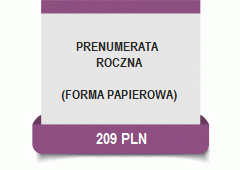
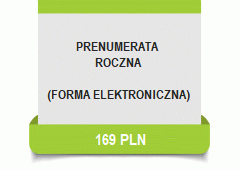
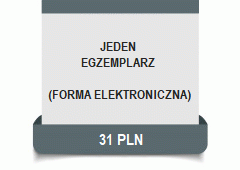
The e-edition of the magazine is available in our offer!

Stay up to date, subscribe to the LOGISTYKA magazine!