The latest edition of the “DHL Logistics Trend Radar” places cloud solutions among the 8 technologies that will have the greatest impact on logistics in the next 5 years. This trend encourages companies to react faster in the area of data sharing. Moreover, it is also linked to the issue of Big Data, because the successful and effective operation of the entire system—which can be the cooperation of devices operating in warehouses, production halls, or in transport—depends on the quality of data placed in and retrieved from cloud systems. The scale and pace of development of such solutions are surprising. According to the aforementioned DHL report, which in this case cites Gartner research, as much as 90 percent of spending on supply chain management systems will be allocated to cloud-based systems.
Cloud solutions are not just a success for the IT industry. Recently, we have been hearing more and more about projects implemented by leaders in the logistics industry. A spectacular event of recent months was the signing of a multi-year contract in May this year between Microsoft and FedEx for the implementation of the Microsoft Azure platform, which, as the most advanced collection of cloud services allowing for the connection and deployment of intelligent applications, supports existing or even initiates new processes in various areas. The aforementioned partnership is not the only example indicating the growing popularity of similar solutions. In June, market leaders—DHL Supply Chain and advanced warehouse solutions provider Blue Yonder (formerly JDA)—announced the implementation of a platform integrating warehouse robots, also based on MS Azure. The pilot took place in one of DHL’s warehouses in Madrid, and its result was a reduction in system integration time by as much as 60 percent. If one considers the fact that this global operator has 2,000 locations, the potential savings seem to be enormous. Without cloud solutions, it is difficult to imagine the functioning of enterprises that create new services or business models fitting into the broadly understood “factory of the future” model. In discussions among specialists and countless articles about visions of the “factory of the future,” less space is devoted to what actually distinguishes the “traditional” production model from the digital one, in which solutions based on cloud systems will play a dominant role. So, what distinguishes the current model, reflecting the present situation, from the conditions in which “factories of the future” operate or will operate? The answer to this question can be found in the white paper published by Fraunhofer IML in May this year titled “The path to a smart factory.” It seems that noticing and understanding the differences between the current model and the “smart factory” model can be a starting point for enterprises to switch to “digital tracks.” When analyzing the mentioned factors, it is worth paying attention to the importance of knowledge management, which until now has not had its proper place in the structure of enterprises. Reading the aforementioned Fraunhofer white paper shows that traditional enterprises were more focused on shaping individual employee competencies than on building a systemic approach.
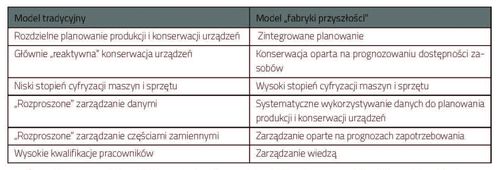 Source: Whitepaper, Future Challenges in Logistics and Supply Chain Management. Der Weg zur Smart Factory. Fraunhofer IML, 2020, p. 11
Cloud initiatives
It turns out that the development of cloud systems for logistics and production is the domain not only of IT solution providers themselves. Manufacturers are also initiators of change. An example of such action is the initiative of the Open Manufacturing Platform (OMP) alliance, established in 2019 at the initiative of the BMW Group and Microsoft; recently, other leaders have joined it, including the Bosch Group. The goal of the venture is to support manufacturing companies in accelerating innovation through horizontal cooperation between companies, sharing knowledge and data, and facilitating access to new technologies. An important element of the activities is also the pursuit of developing standards. From the users’ point of view, the development of a semantic model that allows for understanding data and presenting its relationships and dependencies is interesting. They do not receive incomprehensible messages in the form of strings of numbers, but information useful for their production systems, along with its context. A concrete example of a cloud application developed by a company from outside the IT industry is the Nexeed system from Bosch, which enables real-time monitoring of production processes or central management of IoT devices, such as routers, machines, and sensors, thus ensuring interoperability. The solution itself—as Bosch specialists emphasize—also guarantees a high degree of security, eliminating the possibility of interference with the system, e.g., via USB from an individual employee level. Interestingly, since 2018, the system has been implemented not only for internal needs—in 100 Bosch factories around the world, which translated into significant process optimization at the group level—but also in many companies outside the group, such as BMW or Trumpf.
Case study
In the described example, Bosch’s cloud solution—based on IoT—was used for Track & Trace at the company nox Nachtexpress, which handles less-than-truckload lines and specializes in delivering shipments weighing over 100 kg. The solution is based on sensors located in special housings, installed, for example, on crates transported on vehicles. The read data (photo) is transmitted to the system, where it is mapped. The next stage is the automatic transmission of data in real time from the sensors—via a gateway—to the cloud. Thanks to this, they are available—also in real time—in the form of analyses (visualizations) covering, for example, the location of objects and other logistics parameters. The implementation of the system itself covered 4,000 load units. The described example is a relatively simple solution, but it points to the benefits associated with simplifying the planning process, improving delivery punctuality, or saving employee time, e.g., in connection with the possibility of quickly identifying lost shipments.
Examples from intralogistics
Production and transport are not the only areas of application for cloud solutions. Intralogistics equipment manufacturers also facilitate their customers’ access to personalized data reflecting the current state of the fleet they operate, shortening the time spent on “manual” analyses. All such solutions aim to measure the efficiency of the fleet itself and, consequently, aim to optimize intralogistics processes. Certainly, a noteworthy solution is the Still neXXT Fleet system, developed in 2015 but implemented since the beginning of 2018. It is worth adding that it was nominated in 2019 for the prestigious IFOY award—Intralogistics and Forklift Truck of the Year in the intralogistics systems category. The solution itself is based on the proven SAP HANA system and consists of 9 modules. Analyses useful for users can come from a fleet of trucks operated in one location or a larger number of them in different countries—at the level of each individual device. In the opinion of the IFOY jurors, “the system has set a new standard in terms of transparency, accessibility, and data visualization.” Data regarding technical and performance parameters are linked to real data coming from individual devices, which enables a full analysis of fleet performance. One of the functionalities is the automatic warning of users about various events, such as exceeding defined costs or important deadlines, e.g., inspections. In turn, Jungheinrich also implemented a data cloud-based system at the end of 2019 called “Connected Trucks,” enabling the assessment of the current state of the forklift fleet, i.e., parameters such as the number of operating hours or costs per individual location. Data integration allows for estimating the performance of individual devices and their service costs. The solution itself is independent of the fleet size, and modules can be configured according to the customer’s needs. From the browser level, dashboards are available, presenting the most important parameters of the operated trucks.
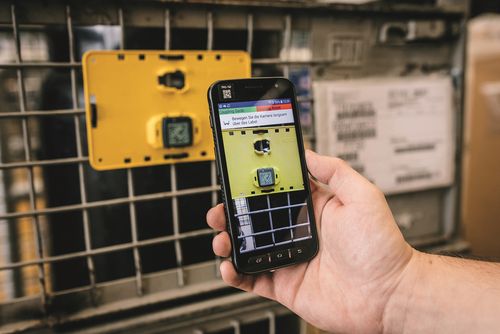 Photo 1. Data reading in the Bosch Nexeed system
We write more about logistics in the cloud in the magazine Logistyka 6/2020.
The e-edition of the magazine is available in our offer!