









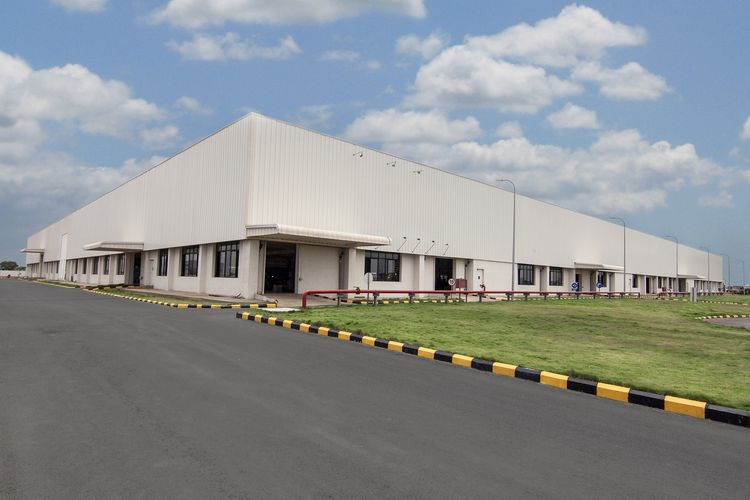
Experts from the international advisory firm Cushman & Wakefield have summarized the year 2020. Will the main trends remain with us for 2021? The warehouse market is resilient to the COVID-19 pandemic. E-commerce remained the main driving force of the market in 2020.
Despite the turbulence associated with the coronavirus pandemic, 2020 was marked by the continued dynamic development of the warehouse sector. Particularly encouraging is the high demand for space, driven to an even greater extent than before by the growth of the e-commerce sector. The latter has gained importance due to restrictions on stationary retail and the emphasis on increasing social distancing. Thus, specific external circumstances forced companies from various industries to remodel sales channels, dynamically develop the omnichannel sales model, and increase the importance of efficient and effective logistics. These major changes, made under immense time pressure, translated into high demand for warehouse space. Growing consumer requirements regarding the speed and handling of deliveries, in turn, translate into the development of logistics outsourcing. This is visible in the structure of demand for warehouse space, in which tenants from the logistics operator sector hold the largest share, amounting to over 30% of the transaction volume.
More and more logistics companies are offering specialized services in the field of e-commerce distribution handling. Operators also remain the most active group generating new inquiries for space (potential future demand). Large retail chains offering product categories such as food and beverages, electronics and household appliances, or furniture/interior design were also highly active in the market. Despite serious challenges related to suspended or limited production processes, the light manufacturing and automotive industries also remain an important source of demand.
Every year, well over 2 million sq m of new warehouse space is added in Poland
It is worth emphasizing the extremely high dynamics of the warehouse market development – 2020 will be the fourth consecutive year in which more than 2 million sq m of warehouse space will be added to the market, with an average of 2.45 million sq m over the previous three years. Total warehouse stock exceeded 20 million sq m in 2020, and subsequent million-unit thresholds will be crossed in 2021. In the last 5 years alone, the size of the sector has doubled. This means that the product offering on the Polish market is also very attractive in terms of the age structure and standard of the offered warehouse space. This is an additional asset of the Polish market, which is recognized by both domestic and foreign companies.
Dominance of major markets, but the geographical reach of investments is constantly expanding
The geographical structure of investments is still dominated by the main regional markets, the so-called “Big Five,” which include Warsaw, Upper Silesia, Central Poland, as well as Wrocław and Poznań. These markets have maintained an 80% share in the total stock of modern warehouse space in Poland, and taking into account developers’ expansion plans, this statistic will remain at a similar level in the coming year. At the same time, smaller regional markets are gaining importance and will strengthen their position in the long term. The Tri-City, Kraków, Szczecin, or the Bydgoszcz-Toruń region are just a few examples. The Western Poland region, primarily the Lubusz Voivodeship, as well as the “eastern wall” with cities such as Lublin, Rzeszów, or Białystok, are also gaining importance. This is influenced by both the development of the local market, new investments in transport infrastructure, and the need to diversify locations in national logistics chains of the e-commerce sector. An additional factor stimulating the development of the warehouse market in Poland is also our country’s convenient location, facilitating distribution to foreign markets (Western Europe, Scandinavia, the CEE region, the Baltic states, or Eastern Europe). Moreover, new points appear on the map of developer investments every year – recently, one can mention such places as Kutno, Legnica, Gorzów Wielkopolski, Olsztyn, or Kalisz.
Diversification of the logistics network, growing importance of “last mile” logistics
This year, we observed deepening diversification in terms of location as well as warehouse product. Large units consolidating warehouse processes are still being built, most often for the needs of the largest companies from the FMCG/retail chain sector and global e-commerce platforms. They are increasingly being supplemented by a network of smaller warehouses, cross-dock type investments, or small Small Business Unit type units. The main goal is to optimize the distribution chain on the so-called “last mile” section. The implementation of such facilities close to consumers in both large and medium-sized cities has a positive impact on the level of costs and delivery times. This trend is supported by investments in the network of expressways, including city bypasses, which allow for quick service of local markets. A similar trend will continue in 2021 and will prompt developers to look for new urban locations, including those of a brownfield nature. We also expect further product diversification and perhaps novelties in the retail-warehouse type warehouse offer.
The pandemic may become a catalyst accelerating the phenomenon of so-called nearshoring
The manufacturing and automotive sector, which felt the greatest problems in the initial phase of the pandemic due to broken supply chains or limited demand, has recorded an improvement in the situation in recent months. Poland, thanks to its strategic location in the central part of the European continent and a competitive labor market, will remain at the forefront of countries considered as a preferred location in the context of relocating business processes. This applies to both distribution and production facilities supplying foreign markets.
Ecology is increasingly entering warehouses
One of the most important trends of 2020 was the popularization and development of the green warehouse concept. New warehouses and factories are increasingly fitting into the trend of sustainable construction development, with particular emphasis on environmental protection. Both tenants and owners of warehouse and industrial facilities are increasingly noticing the positive aspects associated with the ecological verification procedure, which best testifies to the changing market realities. The vast majority of new warehouse facilities today have a green certificate, primarily in the BREEAM system, often at the very good level. Additionally, the growing awareness and need to introduce eco-solutions among tenants is very encouraging. Due to the practical approach of tenants, the specific green solutions implemented by them have real economic justification, e.g., in the form of lower utility costs. Besides economics, the argument of the requirement to reduce the carbon footprint appears more and more often. This confirms our conviction that the topic of ecology in warehouses will stay with us in the coming years and will be explored more and more intensively by market participants. It may also become another element significantly influencing, apart from location and commercial issues, the choice of the final solution.
Source: Cushman & Wakefield