The shift of customers towards online shopping is forcing the logistics industry to seek optimal solutions. The last mile is one of the most important phases of the online order fulfillment process. What solutions and trends can be observed in this field?
 Michał Goldmann, CEO, Sendit Sp. z o.o.:
E-commerce is gaining strength; this is an indisputable statement. In 2019, the number of e-shops reached almost 32,000, and in 2020, according to estimates, the number of newly created online stores exceeded 10,000. The projected growth in revenue generated by Polish e-commerce will reach as much as 40%, which will translate into a value close to PLN 100 billion (pre-pandemic estimates suggested a value of PLN 70 billion). New legal regulations and changes in brick-and-mortar retail, resulting from measures aimed at limiting the spread of the COVID-19 pandemic, have caused shopping patterns to shift online. Everything indicates that this trend is here to stay. What actions can help brick-and-mortar stores encourage consumers to move from online to offline? Offering new services desired by e-customers, e.g., the ability to send and receive courier shipments.
The growth of e-commerce has directly affected the number of drop-off and pick-up points across Poland, which are increasingly being indicated as the preferred form of parcel collection. Data from Poczta Polska shows that partner stores of Żabka, belonging to the company’s network, accounted for 48% of the total share. They recorded the highest growth dynamics, which amounted to over 18% year-on-year. In addition to Żabka stores, the network also includes Orlen stations, as well as Ruch kiosks, post offices, and newsstands. Other autonomous retail chains, such as Dino, Livio, the “abc” brand, or Kaufland – by gaining the status of a post office – are also trying to retain existing customers and attract a new group of consumers in this way.
Delivery to a point
A visible direction in the area of supply chain construction by carriers is the search for solutions that reduce the costs of delivering shipments. The last mile is one of the most important phases of the online order fulfillment process, which, if properly organized, can significantly reduce the operating costs of courier companies. Multiple delivery attempts when the recipient is not at the indicated address not only generate additional costs but also cause frustration for both parties in the process. By optimizing their own processes, including focusing on cost-efficiency, as well as being guided by consumer expectations, carriers are developing the “pick-up at a point” service understood broadly, not only through the prism of parcel lockers. Thanks to this, the e-customer can pick up the shipment at any time, in a place of their choosing.
The number of parcel collection points is constantly growing, as it is a response to the expectations of e-consumers regarding convenience and ease of collection, as well as due to mass online shopping and the increase in the number of shipments appearing in circulation. The capabilities of drop-off and pick-up points, whether parcel machines or retail points, are limited, hence the need to launch new ones. This is done not only by building them from scratch (e.g., installing new machines) but also by using the already available brick-and-mortar retail infrastructure. Today, thanks to appropriate technology, every store or retail chain can become a drop-off and pick-up point, increasing the scope of its services and expanding its group of potential customers.
According to the Global State of the Consumer Tracker study, conducted by Deloitte at the turn of October and November last year, the vast majority (89%) of Polish consumers decide to buy food in brick-and-mortar stores. Although we are quite cautious about doing grocery shopping online (7% of respondents), it is a trend that should not be underestimated. This is supported by the situation in large cities, where food stores began to lose customers, and additional sanitary restrictions were imposed on large-format facilities. This may translate into lower comfort of doing traditional offline shopping and the consumer’s transition to online. Offering additional services by stores, e.g., sending or receiving a parcel, will increase the e-consumer’s motivation to choose a given facility instead of online shopping.
E-logistics of the future
The popularization of collection points as a preferred form of delivery and the migration of the customer towards online shopping means that the logistics industry is looking for optimal e-logistics solutions that will combine all components, i.e., the e-commerce consumer, retail chain outlets, and the CEP industry – into one coherent whole.
Carriers, by diversifying their offer, focus on cooperation with networks and brick-and-mortar stores – for this purpose, they use already available facilities instead of building new drop-off and pick-up points or installing their own parcel machines. This is the maximization of market potential in the functioning structure of brick-and-mortar sales points. Combining the online world with the offline one translates into a set of named and obvious benefits resulting from the created synergy.
How does it look in practice?
A store or retail chain must be visible on the map presenting available collection points for a shipment ordered online. The service of locating a point on the map is offered, for example, by Bliskapaczka.pl, belonging to Sendit Sp. z o.o. Thanks to such a solution, an e-customer, wanting to pick up their shipment, will be able to choose not only the already popular parcel machines or partner networks known to them and present on the map, but also, for example, their local neighborhood store that is closest to them during the online ordering process. By picking up the order, they will most likely also make purchases there, contributing to an increase in the turnover of a given business. An additional influx of e-customers to a given network facility is built in a natural way, without the need for it to incur additional, paid marketing activities.
Three-way benefits
We recently introduced the Smart-Points system to the market, which, in connection with the BliskaPaczka.pl project, has become a modern e-logistics solution, bringing benefits to all entities of the buy-sell transaction. The project combines the needs and expectations of both the e-customer, striving for the convenience of picking up a shipment at a time and place of their choosing, the e-shop, caring for consumer satisfaction and loyalty, and the traditional offline store, which, by joining Smart-Points, introduces a new service. Thus, acting as a post office, traditional retail gains the opportunity to acquire a group of new customers and generate additional revenue resulting from the very fact of serving an e-customer – both in the context of providing the collection service and as part of selling items from its own offer.
Smart-Points, with its idea, naturally fits into the trend of popularizing parcel collection at a point. Who knows, maybe this model is a “business vitamin” thanks to which traditional retail will reduce losses or – what is more – improve its condition caused by the loss of customers during the pandemic? Time will tell.
Read also about last-mile logistics:
– The last mile requires investment
– Listopaczka – a new Speedmail offer for e-commerce
– InPost Paczkomaty® for IKEA and Amazon shipments
– DPD Polska includes SwipBox machines in its network
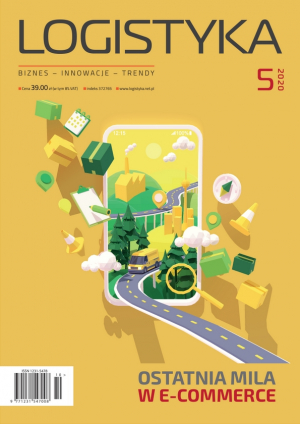
We write more about last-mile logistics in the magazine Logistyka 5/2020.
The e-edition of the magazine is available in our offer!