









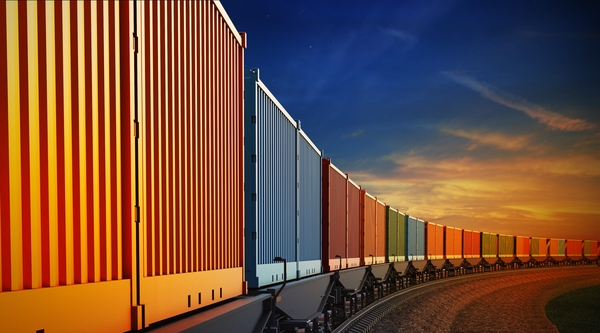
According to 2020 data from Statistics Poland (GUS), the import of goods from China to Poland between January and August amounted to 87.9 billion PLN, whereas 12 years ago the annual figure was half that amount. Thanks to the New Silk Road, the steadily growing volume of cargo transported along Eurasian corridors demonstrates development opportunities for Polish logistics companies. In 2014, 307 trains were launched on Eurasian rail routes. Within just 5 years, this number grew to 8,000. During this period, the structure of the Polish transport network, including railway lines and port infrastructure, was modernized. New logistics centers, transshipment terminals, and new regular international connections were established.
– The numbers speak for themselves. Poland’s location on the Silk Road is a significant transit point, however, one must constantly monitor market trends and react instantly to the demand of Chinese and European cargo shippers. The implementation of infrastructure projects, the modernization of strategic elements of the railway network, and investments in new intermodal terminals will influence delivery punctuality and the throughput of trade routes. This, in turn, will build a competitive advantage for Polish enterprises and strengthen Poland’s position as a hub for Europe – says Anna Reczulska, Head of the European Rail Transport Department at AsstrA-Associated Traffic AG.
Despite the restrictions introduced in connection with the coronavirus, the market for intermodal transport and multimodal solutions is growing dynamically. According to the Office of Rail Transport, a record mass of goods was transported by combined transport in the second quarter of 2020, amounting to 5.5 million tons. Comparing the same period in 2018 and 2019, it was 4.3 and 4.7 million tons respectively. A further increase in the container loading factor is expected, as container rail transport proved to be a stable and optimal transit option during the pandemic. At the same time, air transport became four times more expensive. Intermodal rail transport met the expectations of Chinese cargo suppliers and European consumers. The number of loaded containers depends on which wagons are dedicated to a given transport. Usually, these are 41-43 40’ containers. AsstrA corporate clients use a full range of transport and logistics services within the framework of rail freight transport. Special trains and containers are used for developed intermodal and multimodal “door-to-door” transport schemes, depending on the individual needs of the Client. During the first 10 months of 2020, the capital group’s experts organized over 4,500 rail deliveries, transporting bulk and loose cargo, oversized and heavy cargo, as well as piece goods or hazardous materials.
– Intermodal transport is the future of trade between China and Europe. Poland has established a strong position in the exchange of goods with Asia, however, countries such as Lithuania or the Kaliningrad Oblast have also begun to increase their share in the Eurasian corridor. Further development focuses on transport solutions taking into account various means of transport: container ships, feeders, trains, and trucks. This is an element of the implementation of the European sustainable transport development strategy, which aims to increase the efficiency of the transport sector and ensure ecological stability – adds Anna Reczulska.
Source: AsstrA