








Decades ago, most large manufacturing companies had internal logistics departments and their own fleet of transport vehicles. Today, when every detail determines competitive advantage and business is becoming more digital, fewer and fewer enterprises are able to bear the burden of managing their supply chain on their own. The decision to partially, or even fully, outsource logistics can be difficult for a company. The difficulty lies in the fact that the consequences of outsourcing force a change in the entrepreneur’s existing operating model, and the choice of a logistics partner carries risks. However, as experience shows, there are more benefits to outsourcing, which is why many companies wanting to focus on their core business use it.
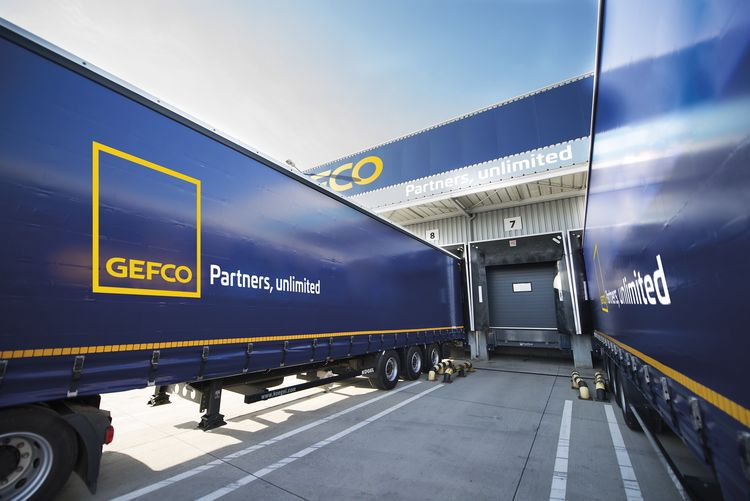
An intermediate model between performing all logistics operations in-house and full outsourcing was, in the past, the creation by manufacturing companies of specialized enterprises that provided logistics services for the parent company, as well as for other entities, using extensive know-how and optimizing costs through economies of scale. An example is Peugeot, which founded the company GEFCO in 1949. Its task was to provide logistics support for the Peugeot vehicle assembly plant in Sochaux and to help optimize transport costs. Initially, transport was managed by a 10-person team. Today, GEFCO employs approximately 15,000 people and is described as an expert in comprehensive supply chain solutions. The company originates from the automotive industry, but as a result of deep business diversification, it now manages logistics from 1PL to 4PL for most industries.
Together with GEFCO specialists, we present 7 benefits of delegating logistics to operators, supported by over 70 years of GEFCO’s experience working for companies from various countries and sectors.
Reduction of fixed costs
High fixed costs can cause significant problems for companies because, unlike variable costs, they remain at the same level despite production fluctuations. In a crisis or with a seasonal business nature, handing over management to a logistics partner relieves the company of the obligation to maintain part of the staff, empty warehouse spaces, and its own vehicles. Productivity also increases because the company’s management can focus on managing the production team and maintenance, rather than dealing with managing deliveries for production and to sales networks.
Greater development opportunities
Flexibility is one of the most appreciated benefits of working with a logistics operator, as it allows for smooth reactions to demand fluctuations and the implementation of market expansion plans. Even if the initial warehouse demand was at the level of 20,000 sq. m., but the company’s needs doubled in a short time, the logistics operator can scale the scope of services to the current expectations of its client, as it has procedures for implementing expansion, as well as quick access to human and material resources. Most manufacturing companies will encounter difficulties and, consequently, spend significantly more funds if they undertake this task on their own. The same applies to securing additional means of transport, which grow in proportion to the scale of production and demand for goods.
Transport optimization
The greatest losses in international transport are generated by empty runs. Without involving other entities and combining their loads into a smooth flow, transport optimization is not possible in practice. The advantage of a logistics operator stems from the ability to consolidate loads for different clients, which an entrepreneur usually cannot do alone. For example, GEFCO Polska has a common groupage network for Inbound projects, which collects goods from hundreds of suppliers and transfers them to transshipment centers. There, loads are grouped, and full transports are directed to production.
Expert knowledge and experience from other projects
Experience gathered in many markets and over several decades pays off. Trust in a logistics operator is always important, and its highest dimension is found in projects managed by GEFCO 4PL, where the client gives up their own structures and hands over to the 4PL operator the management of not only transport but also logistics engineering, purchasing, or invoicing. Benefits for the manufacturing company also come from the transfer of logistics experience from other projects. GEFCO’s many years of experience in order picking for clients in the automotive industry is fully transferable to projects carried out for power tool manufacturers. Many years of experience have helped GEFCO develop a range of special services – for example, night deliveries with stocking for dealerships or express deliveries of spare parts to the site of a breakdown.
Global reach
Entering new markets is not always simple, as individual economic areas and countries may differ in procedures, including those regarding customs and taxes. Therefore, companies look for logistics partners in new markets to whom they will delegate matters related to international transport, warehousing, and completing all formalities. The highest value in this regard is offered by global logistics operators who have a full portfolio of products and operate on all continents, without the need to involve additional subcontractors.
IT tools. Your own or the operator’s?
The digitalization of business processes makes running a company easier, but at the same time requires investment in new technologies, which consumes time and money. Currently, process automation and the introduction of solutions based on artificial intelligence apply to both production and logistics, where interest focuses on monitoring the supply chain in real-time. From the perspective of a manufacturing company, incurring large expenditures on modern systems for managing the full logistics process usually has no economic justification.
Today, the most modern and expensive technologies for managing logistics are in the possession of operators who develop uniform systems for tracking processes with the possibility of detailed and efficient reporting to clients in real-time, via interfaces. The costs of developing and implementing these systems are spread across many users, which significantly lowers costs and increases service competitiveness. To ensure solutions are optimal and up-to-date, GEFCO collaborates with start-up accelerators and incubators, universities, and laboratories, and within the company, it seeks creative ideas through the GEFCO Innovation Factory. All this translates into increasing process automation and the implementation of new solutions.
Delegating multiple tasks
The scale of delegating tasks from a manufacturing company to a logistics operator is very broad and ranges from 1PL through 3PL to 4PL. In the case of extensive outsourcing of tasks, logistics engineering and purchasing are still often kept within the company’s remit, even though these areas often generate seemingly low costs, for example for additional consulting or market reviews. Delegating many tasks to 4PL operators often has opponents within the manufacturing company who fear change and have concerns about their professional future. However, 4PL is not a new cooperation model on the market, and logistics operators have many good practices that can dispel the above doubts.
– More and more projects commissioned by clients are happening on the border of 3PL and 4PL. Many companies are interested in logistics solutions that include creating new schemes for the supply chain, and we are able to provide comprehensive 3PL solutions or integrated 4PL logistics. Such decisions are favored by the fast pace of innovation and the need for volume adaptation. Additionally, the process of hiring new employees and financing the costs of the logistics structure can be troublesome, which may generate a demand for outsourcing comprehensive solutions – says Radosław Różycki, Key Account Manager, GEFCO Polska.
More about GEFCO Polska
Like the GEFCO Polska profile on Facebook