









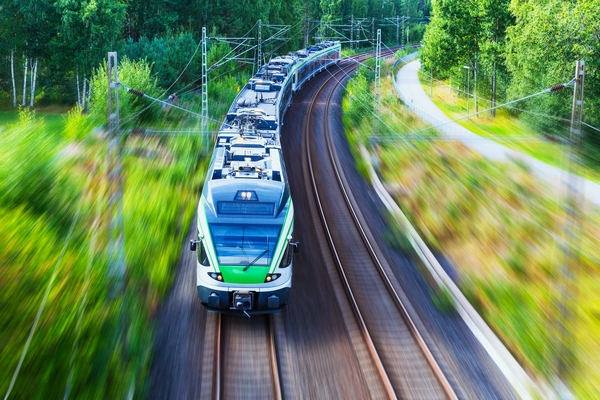
The Polish railway is facing major challenges – gigantic investments as part of the so-called TEN-T network, including rail projects such as Rail Baltica, the E59 railway line, or Rail-2-Sea. We are also facing the historically largest source of funding for infrastructure investments from EU funds for the years 2021 – 2027. These are the conclusions drawn from the report “State and prospects for the development of the Polish railway”, prepared by the Business Institute.
The industry and market experts agree that the current situation related to COVID-19 and the market slowdown should be an impulse for the development of infrastructure investments, which are capable of stimulating the economic bloodstream and preventing unemployment growth.
The future of infrastructure investments and the degree of utilization of external support depend, among other things, on the speed of resolving tenders and the pace of implementing procedures related to them, as well as banking support for ensuring business financing. The lack of new orders and tenders in the area of transport infrastructure, including rail, may have a significant negative impact on the labor market in many sectors, forcing employers to reduce employment and cut wages – we read in the Business Institute report.
Infrastructure projects are mainly based on EU funds, around which a dispute has recently been taking place. In the previous budget perspective for 2014-2020, the European Union allocated 82.5 billion euros to Poland. In the new perspective, Poland has a chance to be the largest beneficiary of cohesion policy in the EU, receiving 66.8 billion euros.
This is a record amount of support, and probably the last one of this kind for our country – emphasizes the Institute. Furthermore, one can also add over 776 billion PLN from the so-called Recovery Fund, launched by Brussels as part of mitigating the effects of the COVID-19 pandemic. However, the current situation in the political arena is not very optimistic. In the absence of an agreement, Poland may lose up to half of the cohesion policy funds it is entitled to in 2021.
Obtaining these funds is extremely important for many companies in the infrastructure industry. The lack or limitation of financing means stopping investments, a decline or lack of orders for materials and products, and consequently, the inhibition or interruption of production by companies working for these investments.
Worsening economic sentiment is also exacerbated by large delays in the dates for announcing and resolving tenders. Which, in turn, in the absence of new orders and tenders, may be associated with a disaster in the labor market – employers, cutting costs, will be forced to reduce employment and lower salaries, experts point out.
Meanwhile, it is precisely the state of implementation of infrastructure investments that will determine how quickly the Polish state will be able to emerge from the economic crisis.
In an era of economic slowdown, the Polish state should stimulate economic development through investments in infrastructure projects, giving an impulse to subsequent sectors and industries. State institutions play a key role at the level of planning and communication about new investments in road and rail infrastructure – indicates the IB.
Source: Business Institute
The full report is available below in PDF format.
The report comes from the website: https://instytutbiznesu.com.pl/raport-stan-i-perspektywy-rozwoju-polskiej-kolei/