Last mile costs
Although it may seem at first glance that the key costs for the entire logistics sector are primarily supply, warehousing, picking, value-added services, or returns management processes, it is the last mile that causes headaches due to the fact that it accounts for at least 50% of all costs incurred within the supply chain. How can these costs be optimized? One such possibility is to offer delivery to a parcel locker, which is not only cheaper but also much more environmentally friendly. Delivery of a parcel to a parcel locker is the most frequently chosen form of delivery in Poland. The domestic market is an absolute exception in Europe in this regard. According to the “E-Commerce in Poland 2020” report prepared by Gemius, as many as 61% of online shoppers use this form of delivery. Only in second place was courier delivery directly to the home or workplace. There is no doubt that it is worth taking a closer look at this phenomenon and checking why this form of delivery is so popular.
Why a parcel locker
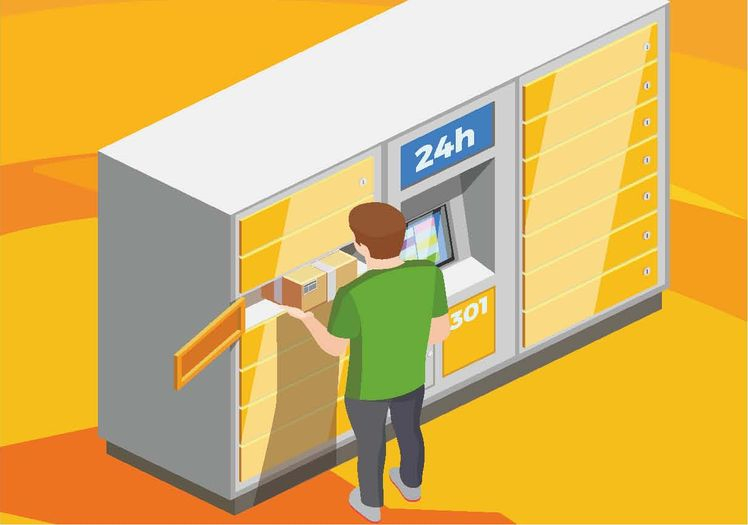
For as many as 68% of Poles shopping online, the option of delivery to a parcel locker is a motivating factor for placing an order. For obvious reasons, we do not always have time to wait for a courier at home. At the workplace, the possibility of picking up a parcel is also not a given. Telephone contact with a courier to arrange a redelivery is also often difficult. Surely, I am not the only one whose adventure with courier delivery ended with a visit to the deep suburbs of the city to pick up a parcel from the courier company’s warehouse. For this very reason, parcel lockers have become the number 1 pickup location in Poland. They allow you to:
– pick up a parcel outside of courier working hours,
– order a parcel to a convenient location on the way to work or near home,
– avoid trouble when we are on a business trip, away from our place of residence, and cannot pick up the order on a given day,
– use the machine on weekends as well,
– easily send a return if we want to take advantage of such an option,
– choose a more ecological form of delivery than courier,
– decide when we will use the pickup,
– open the machine contactlessly,
– take advantage of an extended pickup period (2 days in the case of InPost, up to 7 days in the case of DHL Locker).
Ecology is no less important
It cannot be denied that the rapidly growing popularity of parcel lockers on our market is associated with ecology and care for the environment. According to information provided by the largest operator of such devices in Poland, InPost, as many as 37% of respondents reach Paczkomaty® on foot. Furthermore, 61% of people using InPost services admit that they use Paczkomaty only when running other errands. Moreover, 93% of respondents do not go out of their way or travel a maximum of 5 km to reach the pickup point. Research conducted by scientists from the AGH University of Science and Technology in Krakow showed that by delivering many parcels to one place, carbon dioxide is reduced by up to 95%, and annual fuel consumption by over 20 million liters. A special calculator developed by InPost, in turn, indicates that if traditional home courier deliveries were replaced by delivery to a Paczkomat, CO2 emissions could be reduced by up to 75%.
The carbon footprint for a parcel with home delivery is on average 0.659 kg CO2, taking into account the entire route of the parcel, of which 0.294 kg CO2 is just on the last mile. Meanwhile, the average results for deliveries to Paczkomaty® are only 0.229 kg CO2 for the entire route and only 0.075 kg CO2 on the last mile. The carbon footprint of deliveries to a Paczkomat® can be even smaller if our journey to the machine is also environmentally neutral, e.g., when we pick up the parcel on the way to work or while shopping, when we walk to it or ride a bike1.
Parcel machines in Poland
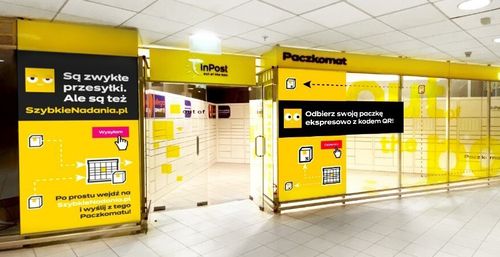
The Polish market for parcel lockers is undoubtedly dominated by InPost, whose network already counts 8,000 Paczkomaty®. Many of them are also located in smaller towns, which makes the company’s offer available to many consumers. Increasingly, they have various forms, adapting to the available space, for example, the shape of the letters “L” and “U”. The development of the InPost network is very dynamic, and the number of parcel lockers has almost doubled within a year. A year earlier, we could use a network of 4,300 machines. In September, InPost also launched the InDoor version, which will be installed in office buildings, apartment blocks, shopping malls, and other service and residential facilities. The first of several installed was placed in the Warsaw University Library. However, InPost Paczkomaty® are not the only machines through which we can pick up parcels. Poczta Polska has already installed over 200 machines in cooperation with the Danish company Swipbox. Self-service machines, however, are not a separate service, but are an element of the “Pickup at a Point” program. Thanks to this, the ordering party will no longer be dependent on the opening hours of the post office. They will also be able to redirect the parcel to one of several thousand points participating in the project, e.g., in Żabka stores, at PKN Orlen stations, and in kiosks and newsagents of the Ruch chain.
As part of its strategy for 2020-2024, Poczta Polska wants to launch up to 4,000 machines called Smartboxes. About a thousand Smartboxes will be placed inside stores and shopping malls, the rest will have external locations. They will be placed, among others, at Biedronka, Carrefour, or Żabka chain stores and at gas stations. They are also to appear at some bus and train stations and in post offices. The secret to the surprisingly fast pace of the machine network development is said to be a new model of the machine called Infinity. It does not require a power connection, which means it can be placed practically anywhere. Its battery lasts for 10 years of continuous operation. It has no screen; it is operated using a mobile phone. Poczta Polska machines are also to become part of the expanded Allegro Smart offer.
DHL also has a network of parcel lockers in Poland, which, as part of DHL Locker, operates over 170 devices located in Carrefour and Biedronka chain stores in large Polish cities.
Not just parcels and not just outside
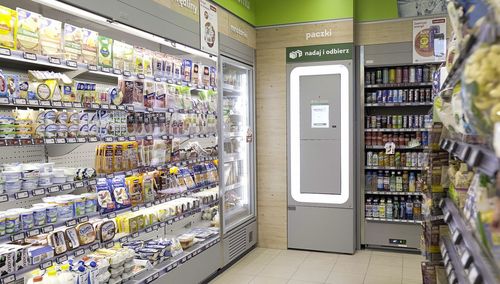
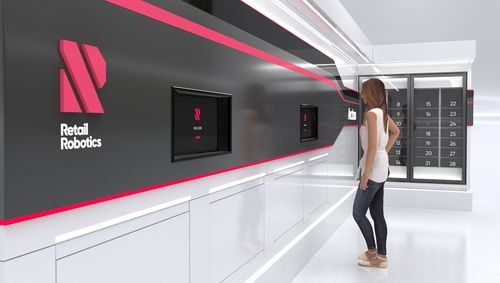
Interestingly, parcel machines serve us not only for picking up parcels. In July of this year, the City Hall in Krakow launched the possibility of handling official matters in a machine, e.g., picking up a vehicle registration certificate in case of replacement due to lack of space for a technical inspection entry, a duplicate vehicle card, a driver’s license, a license plate, and a registration certificate. Further installations of machines at offices across Poland are planned. Residents of Gorzów Wielkopolski, Koszalin, and Nowy Targ already have a similar possibility. Parcel lockers are also an increasingly common sight in places other than just offices. Similar devices are being installed in their stores by the Żabka chain, so as not to involve salespeople in the parcel pickup process and to optimize the already small store area. Using the PickUp Hero device produced by the Tychy-based company Retail Robotics, customers have the possibility of quick parcel pickup and return shipment. The machine is built into store shelves, and after a contactless parcel drop-off, or before its pickup, appropriate tasks are performed by a “Cartesian robot” moving on several axes. The intelligent machine occupies only 0.9 m2 of space, which can hold up to 90 parcels. The pickup time for one parcel does not exceed a few seconds.
PUDO
Moving smoothly from external parcel lockers to machines installed in stationary stores, it is impossible not to mention the popular PUDO form, i.e., pick-up/drop-off points, which also significantly reduce last-mile costs and are an extremely popular way of delivering parcels in Poland and abroad. Such points can be the grocery stores described above, but also newsagents, small kiosks, or gas stations. The largest network of such locations is owned by Poczta Polska, which consists of 13,000 addresses across the country. Second is DHL with over 9,000 locations. DPD is also on the podium, with 2,600 points. Next is GLS with 1,500 and UPS with 1,200 locations. The popularity of the “out of home delivery” service is growing year by year, and although, unlike in Western Europe, it is less popular in Poland than parcel devices, CEP operators are constantly expanding their network of points, and the D2P (Delivery to Point) segment will displace the previously popular D2D (Delivery to Door).
Omnichannel
We pick up orders not only in external lockers or PUDO-type points, but also in stores that offer an omnichannel click&collect model. In this segment, parcel machines will also appear more and more often. Not only to relieve salespeople and improve CX (customer experience) for the end customer, but also to create conditions for the dynamically growing e-grocery industry. The first such machine, although different in appearance from the external ones, but fulfilling the same function, was placed in a store of one of the clothing chains in a Krakow shopping center. With its help, after scanning a QR code, customers can receive their order without standing in line and approaching the counter. The Krakow machine is one of several dozen installed by the chain across Europe. Thanks to such a solution, customers can pick up parcels by scanning a QR code or entering a PIN, which they receive together with the product shipment confirmation to the store. Within a few seconds, the point, which can simultaneously manage 900 parcels, is able to locate the selected order and deliver it to the customer. More complex devices are being launched in grocery stores, which allow for the pickup of purchases ordered online. Such machines differ from traditional ones in that they have a zone with several temperature zones, and even a place for storing frozen food. The operating scheme is very similar, while the entire process is triggered by entering a QR code or a PIN number. The first such device has already been placed in Paris, and in the future, installations outside stores are planned, enabling “Drive Thru” pickups, without the need to enter the store. Although a similar concept already existed in Poland (so-called “coolomaty”), perhaps the Polish market was not yet ready for such a solution, especially since the coronavirus epidemic significantly influenced our shopping habits, and InPost is constantly developing a competing project of refrigerator lockers in Warsaw and Krakow, of which there are already several dozen
The road to cost optimization
The “Last Link” report published last year by C&W confirms that a pickup location situated within a 10-minute radius closer to a courier hub provides savings of up to 1 million euros per year. Such an indicator is a great motivation for the development of parcel lockers, pickup points, click&collect, and installing machines in stationary stores. Door-to-door deliveries will certainly not disappear from the offers of CEP companies, but they will become increasingly expensive. Also for this reason, Amazon plans to open over a thousand small distribution centers in the suburbs and cities in the USA. Such locations are intended to reduce delivery costs and make the offer more attractive as part of same-day deliveries. The coming years will certainly be fruitful in new initiatives in the field of the last mile and the development of urban logistics on the Polish market. Especially since fast delivery is the most important thing for us, which distinguishes us from other European consumers.
1 InPost B2B carbon footprint calculator, InPost internal data.
The article comes from the magazine Logistyka 5/2020.
The e-edition of the magazine is available in our offer!