In recent years, much attention has been paid to logistics as a part of business operations that can significantly influence the reduction of operating costs for enterprises and the entire economy. Efficiently conducted logistics processes, both in the phase of supplying the enterprise with components and raw materials, as well as during production and at the stage of delivering the product to the customer, influence the success of their operations.
Bearing in mind that various forms of transport in logistics account for approximately 70-80% of the processes taking place, and that proper management of goods flows is of great importance, its appropriate form and organization are crucial. It can take various forms – starting from internal transport in production processes, through transport between logistics centers over long distances, or so-called pick-up and delivery transport on the last mile. Properly organized transport and warehousing processes are an important element of competitive struggle between large enterprises in the international market. Logistics requires efficient transport systems in which there is a quantitative and qualitative balance, i.e., full synergy of linear and point infrastructure as well as the means of transport moving along it and the adopted organization. Properly functioning supply chains have an impact on reducing the final costs of not only production but also the delivery of the finished product to the final customer. Explaining the meaning of logistics processes in a very simplified way, it can be said that they are part of economic activity concerning the movement (flow) of all materials and information about them, in order to ensure their availability and manage these processes. Logistics activities in building supply chains are understood as a complex system that can be divided into stages, in which it is easy to identify individual links.
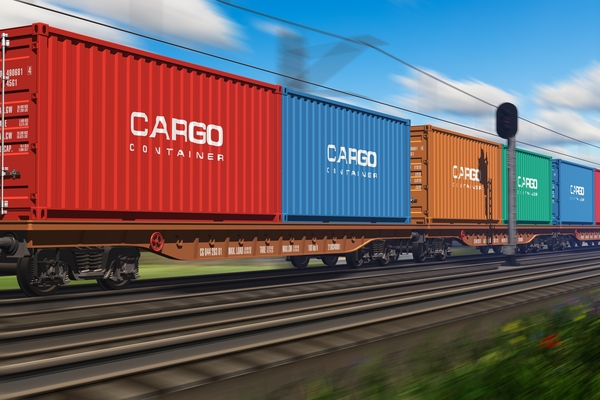
A condition for the success of supply chain operations is the creation of a coherent organization whose parts contribute to the success of the whole. The market economy and fierce competitive struggle between logistics companies have forced a strong customer orientation, which involves providing comprehensive service. The executors of these tasks are logistics enterprises and modern transport companies, which, in addition to their core business, are increasingly involved in logistics services. With the development of means of transport, their range, speed, and transport capacity, as well as the speed of information flow, transport chains using more than one means of transport along the entire route of goods transport have appeared. They have been defined as combined transport (a good example is the combination of rail and road transport, in which the loading unit is transported by rail between terminals on the main part of the route, and its pick-up and delivery are carried out by road transport) or multimodal transport in a similar configuration. The need to coordinate the transport process using two or more branches of transport imposes many tasks on the organizer, and thus the need to know a number of regulations. We most often deal with multimodal transport in the case of comprehensive logistics services.
Currently, we can observe the process of gradual transformation of forwarding and transport enterprises in terms of customer service. A number of them are gradually moving from their basic business profile (transport alone, or organizing the transport process, insurance, preparation of transport documentation and its circulation, and customs clearance on behalf of the client) to more and more advanced services – by creating their own transshipment terminals or investing in means of transport. Such a transformation involves the necessity of incurring significant financial outlays, but it also brings measurable financial benefits, especially in specialized transport or container transport. As forwarding services develop, their scope is increasing and – in many cases – is beginning to approach the scope of services provided by logistics enterprises. Of course, there are still a few basic elements missing here, such as: warehouse management, inventory management, information flow management on behalf of the client, etc. However, the scope of comprehensiveness is growing.
The full article is available below in PDF format.
We wrote more about transport in the Logistyka 4/2018 magazine.
The e-edition of the magazine is available in our offer!