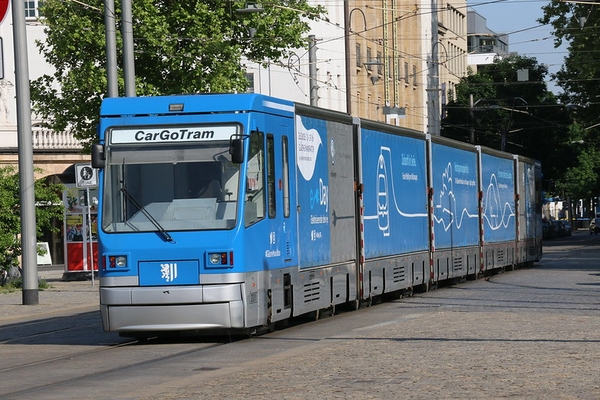
When the phenomenon of using cargo trams comes up in expert discussions, two examples are most frequently cited: the CarGoTram in Dresden and the Cargo-Tram in Zurich. The similarity between both solutions is based only on the graphic and phonetic coincidence of their names. In Dresden, the tram is used for shuttle transport of new (often high-value) car parts to the Volkswagen factory located in the city center (the so-called “Transparent Factory”). In Zurich, conversely, the cargo tram serves the city and its residents for the collection and removal of waste.
Cargo trams were used, among other places, in the cities of the Ruhr area to transport coal even before World War II, many years before the term “urban logistics” appeared, at a time when logistics itself was associated exclusively with transport.
How does it work today?
Even a cursory analysis of solutions over the last two decades allows for the statement that the use of a tram in urban freight transport must be dictated by the needs of the city itself (environmental protection considerations) and enterprises (manufacturing, commercial, and logistics operators), should have economic justification, and meet the criteria of sustainable development. In the realities of a market economy, can all these priorities be reconciled? The answer is: not always. In 2007, in Amsterdam, the company City Tram Amsterdam tested cargo trams intended for handling deliveries to shops in the center of the Dutch capital. The authors of the project presented concrete results of the project, resulting from the replacement of delivery vans by the tram (including a 16% reduction in CO2). However, the trams did not find application due to a lack of further financial support for the operator. A similar fate befell the creators of the TramFret project. In 2017, in the French city of Saint-Etienne, a cargo tram successfully passed tests and was intended to be used for transporting goods ordered by both companies and private individuals. This project is also not being continued for financial reasons.
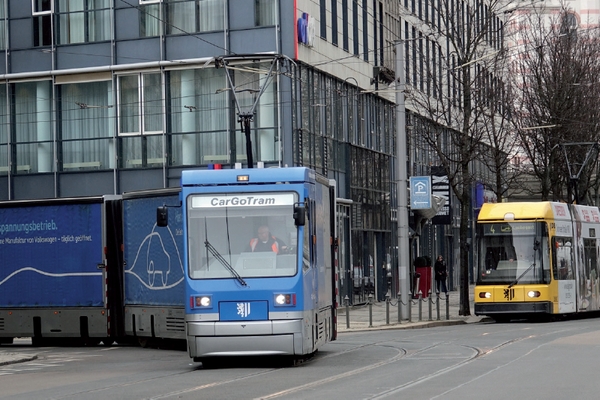
CarGoTram on the streets of Dresden
Sources of success
A spectacular solution, proven in practice for many years, is undoubtedly the CarGoTram, an unusual one (because it carries no passengers), which appeared on the streets of Dresden in December 2001. In this case, we are dealing with a specific need of a specific enterprise, which is Volkswagen. One of them is the small storage area on the factory premises itself. Additionally, the entire venture is favored by technical conditions, as both the loading and unloading points lie on the route of a tram line. The Dresden tram, consisting of 5 wagons with a length of 60 meters and a load capacity of 60 tons, operated for 15 years on a 5.5 km route between the logistics center (GVZ) and the factory located near Strassburger Platz (the city’s main transport hub), delivering parts for the production of the luxury Phaeton. When the VW group gave up production of this car model, the use of the tram – fortunately only temporarily – had no business justification. The good news, however, is that in 2017, the CarGoTram returned – literally – to the right tracks and is again amazing tourists visiting Dresden, delivering parts for the production of cars, this time the e-Golf, in shuttle traffic. A circumstance favoring the joint venture of Volkswagen and the Dresden city authorities was the possibility of using the tram infrastructure of the municipal public transport. The cargo tram is integrated into public transport, which is also noticed by residents when the CarGoTram passes passenger trams. According to experts’ calculations, one tram trip replaces 3 trips that a truck would have to make, which of course translates into a reduction in CO2 emissions. In the second case discussed, the cargo tram (operated since 2003) in Zurich is used for waste transport. The tram itself acts as a tractor, and items are transported in a special wagon attached to it.
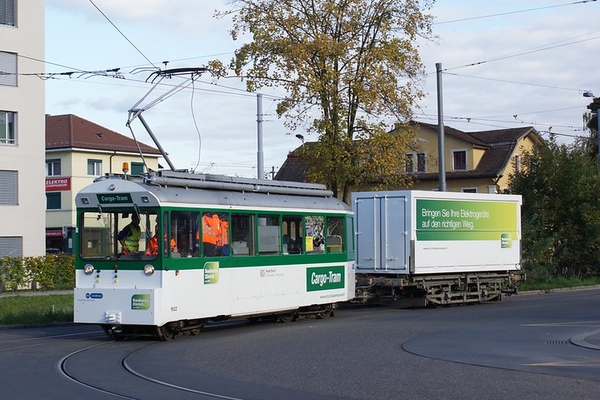
Cargo-Tram, transporting waste in Zurich
Interestingly, the city has made it available to residents in two variants. The first one – Cargo-Tram – is intended for the transport of used office equipment, household appliances, cables, consumer electronics, and power tools. The website of the Department of Civil Engineering and Waste Disposal of the City of Zurich provides the tram’s timetable and transport conditions. We learn from it that items delivered by residents cannot be longer than 2.5 meters, and their weight cannot exceed 40 kilograms. The tram runs on average once a month, and the stop at each of the 11 stations lasts 4 hours (from 3:00 PM to 7:00 PM). The regulations also specify what waste can be transported. These are (exclusively): flat glass, construction rubble, oversized loads, metal, plastic bottles, porcelain products, and… a curiosity – aluminum coffee capsules. The second tram – “E-Tram” – takes e-waste on board. According to the regulations, these include: office equipment, household appliances, cables, consumer electronics, and power tools. The transport service in both cases is free of charge. As befits disciplined Swiss people, they agree to deliver waste to a selected tram stop using public transport, a bicycle, or simply by bringing it with them. Such a solution eliminates deliveries by car, and thus forces pro-ecological habits among residents.
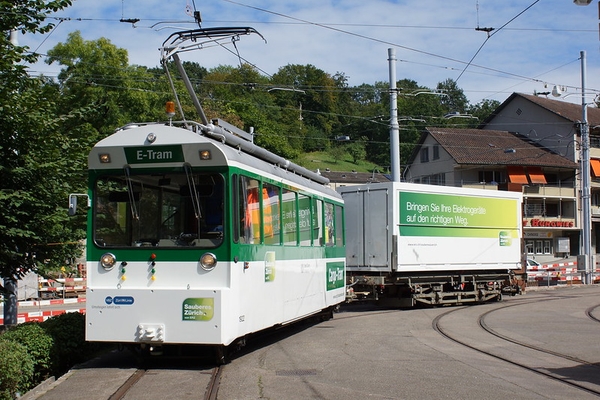
E-Tram transports e-waste
A tram will deliver your package
The idea of a cargo tram and the use of available rail infrastructure is also intended to be used by other cities. In Frankfurt am Main, a pilot project for a logistics tram has been implemented since March 2019, which is to be the result of cooperation between the Chamber of Commerce and Industry (IHK), the logistics cluster House of Mobility (HOLM), and the University of Frankfurt am Main. The business partner is the courier company HERMES. In this case, its use consists of transporting packages in larger loading units (e.g., crates) and their further distribution using bicycles with trailers. Such a solution would be based on the concept of micro-hubs – small buffer warehouses located, for example, at tram stops. These would be the (pen)ultimate links delivered directly to companies.
What next?
The briefly described solutions are “point-based,” local, and not systemic. Their application possibilities are – so far – limited to specific cities, among other reasons due to a favorable transport layout. Will the described initiatives find imitators in other cities? Will other logistics operators (courier companies) be interested in developing alternative forms of delivery? Will the expectations of all stakeholders be met? We do not know that. Regardless of the development of technical and organizational solutions in this area, it should be treated as a socially important topic. It is worth writing about it and following the fate of the projects, not just as a curiosity.
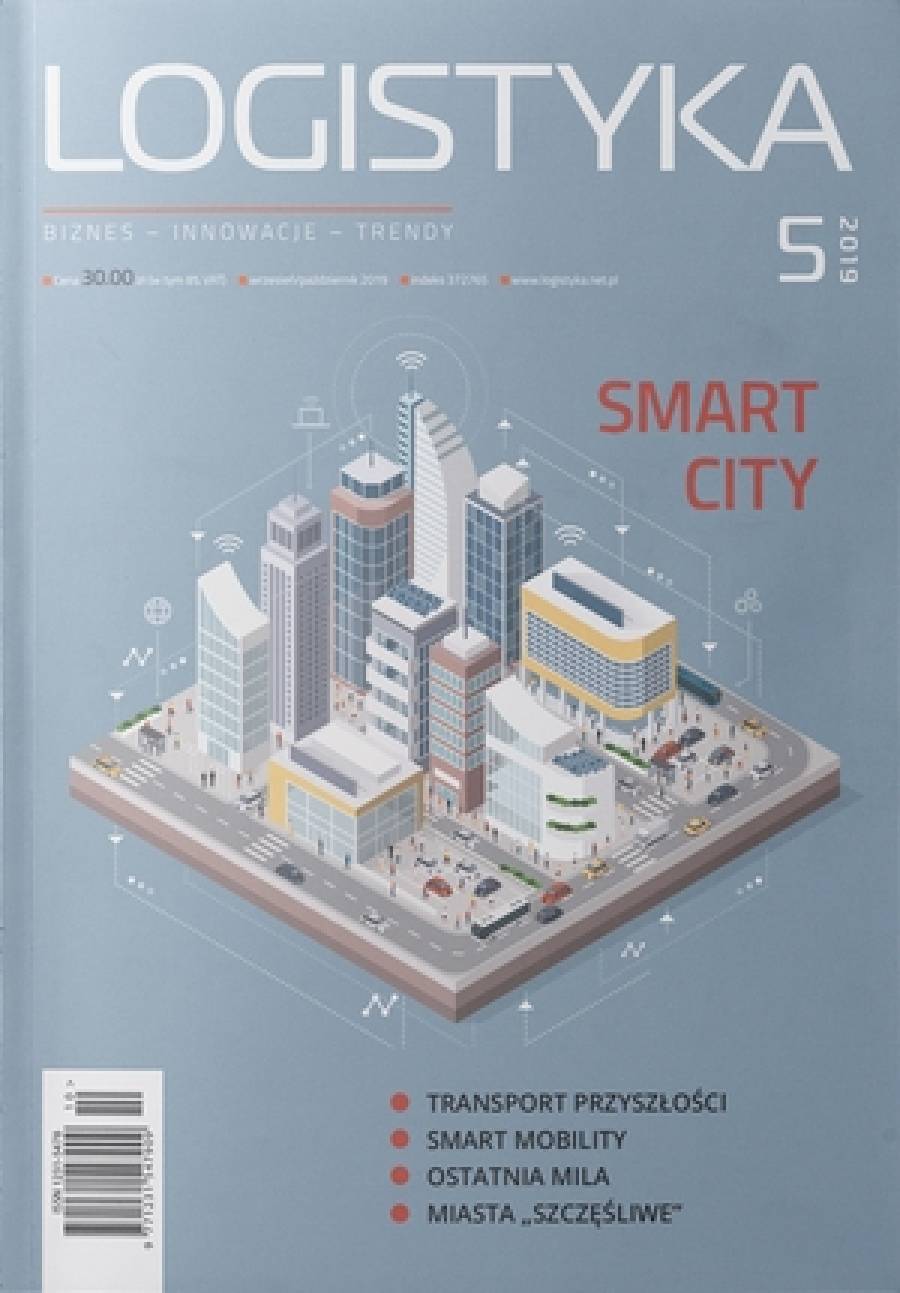
The article comes from the magazine Logistyka 5/2019.
The e-edition of the magazine is available in our offer!