









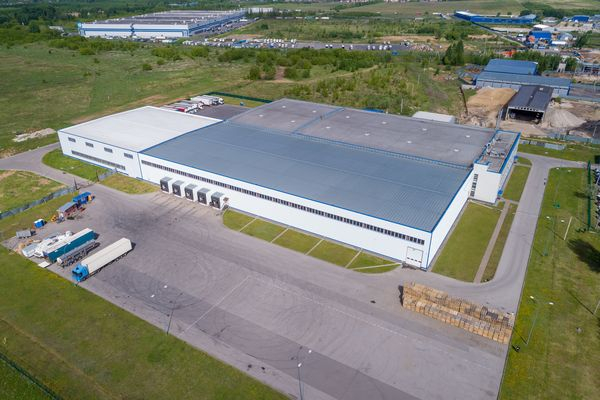
The warehouse market in Poland continues to develop dynamically. Both demand and supply remained at a high level in the first half of 2020, emphasize experts from the international advisory firm Cushman & Wakefield, which has summarized the first half of 2020 in the Polish warehouse market.
– Despite good results, we are cautious about stating that this year will be a record-breaking one for the warehouse market. Sectors such as automotive or manufacturing, which play an important role in the Polish economy, have suffered significantly due to the pandemic. However, recent months have shown positive trends towards a gradual return of companies to normal business operations along with the further easing of restrictions. Some companies are already negotiating or finalizing new projects, and we expect the entire sector to be better prepared for the potential risk of a second wave of the epidemic – says Joanna Sinkiewicz, Partner, Head of Industrial and Logistics Agency, Cushman & Wakefield.
Demand
In the second quarter of 2020, 1.3 million sq m of warehouse space was leased, and nearly 2.3 million sq m since the beginning of 2020. A very good result was recorded in terms of net demand, which includes new contracts and expansions. In the first half of the year, it amounted to almost 1.7 million sq m, accounting for 74% of total demand, while lease renewals accounted for the remaining 26% (i.e., 582,000 sq m) of the leasing transaction volume. Regionally, the highest tenant activity was observed in the three largest markets: Warsaw and its surroundings, Upper Silesia, and Central Poland. Lease transactions for a total area of 1.2 million sq m were concluded in these markets, accounting for over 50% of the total demand recorded in the period from January to June 2020.
– These statistics would indicate a record level of tenant activity under non-pandemic market conditions; however, it should be noted that part of the demand was generated by lease transactions or renewals that included preferential terms offered to tenants in connection with COVID-19. We could expect that some transactions would have been finalized in later years, but due to the exceptional situation, there were grounds for earlier renegotiation of lease terms. Companies that felt the negative consequences of the pandemic most acutely turned to landlords for support, most often consisting of deferring or temporarily reducing costs in exchange for extending the lease agreement – adds Joanna Sinkiewicz.
The industry structure of demand was dominated by logistics companies (28% of the total transaction volume in the first half of 2020), retail chains (16%), e-commerce (14%), and light manufacturing (12%). Companies from sectors such as construction (6%), courier services (4%), and food (4%) were also active.
Supply
Since the beginning of the year, developers have delivered over 1 million sq m of warehouse space, of which 600,000 sq m in the second quarter. Approximately 70% of the new supply was delivered to three regional markets: Warsaw and its surroundings, Wrocław, and Upper Silesia.
Total warehouse stock in Poland will soon exceed 20 million sq m. In June, 1.9 million sq m of industrial space was under construction, which indicates high developer activity, although this is a slightly weaker result compared to the same period last year (2.2 million sq m). Developers are most active in regional markets: Upper Silesia (435,000 sq m), Warsaw and its surroundings (324,000 sq m), Western Poland (256,000 sq m, of which 80% is part of a Build-to-Suit (BTS) project located in Świebodzin near the Polish-German border), as well as the Tri-City (237,000 sq m) and Wrocław (158,000 sq m).
Due to the higher market risk caused by the COVID-19 pandemic, developers will be more cautious about launching new speculative projects. This will be particularly visible in selected locations currently characterized by a relatively high percentage of available warehouse space in existing and ongoing projects, including markets such as Wrocław or Upper Silesia.
Rents
Base rents remain stable in 2020 and range from EUR 2.50-3.80/sq m/month for larger BIG-BOX warehouse modules to approximately EUR 4.00-5.25/sq m/month for urban projects, so-called Small Business Units (SBU), located in the largest agglomerations.
Effective rent rates currently fluctuate in the range of EUR 2.00-3.20/sq m/month for BIG-BOX units and EUR 3.00-4.50/sq m/month for SBU modules.
Vacancy
At the end of June 2020, almost 1.4 million sq m of space was vacant, which corresponds to 7% of total warehouse stock in Poland. The vacancy rate fell by 0.4 p.p. compared to the previous quarter but is still significantly higher than a year ago. The largest decrease in warehouse space availability was recorded in Central Poland (from 10.1% to 6.8%) and Kraków (from 7.5% to 5.2%), while a slight increase was recorded in the Warsaw and surroundings market (from 5.3% to 6.8%). For other regional markets, the vacancy rate remained stable over the last three months.
Forecasts
– The e-commerce sector remains the main driver of the dynamic development of the warehouse market in Poland. During the pandemic, we observed its accelerated growth, as evidenced by the double-digit share of online sales in total retail turnover. Currently, however, this indicator is gradually returning to pre-pandemic levels, although its organic, long-term growth will be beneficial for the logistics sector, and ultimately for the entire warehouse sector in Poland, which successfully operates in both domestic and cross-border distribution – says Joanna Sinkiewicz, Partner, Head of Industrial and Logistics Agency, Cushman & Wakefield.
The full report is available below in PDF format.
The report comes from the website: https://media.pl.cushmanwakefield.com.pl/pr/551568/dobre-wyniki-sektora-magazynowego-w-polsce-w-pierwszej-polowie-roku