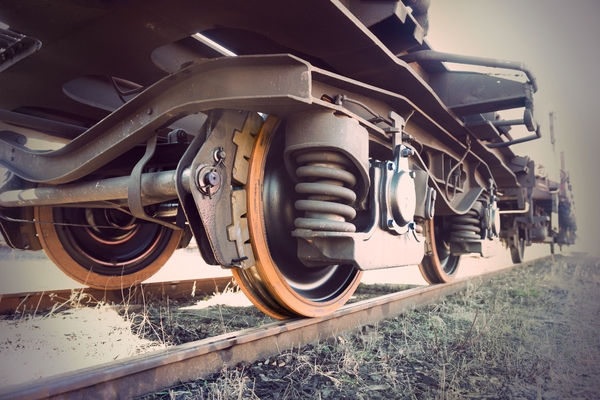
Given the favorable growth trends in transshipments at our ports and increasing road congestion, it seems justified to make greater use of rail transport on the north-south axis than is currently the case. The expenditures incurred for the potential modernization of railway lines or the modernization or construction of new terminals are incomparably lower than those that would have to be incurred for adapting and building new roads capable of ensuring proper transport service for our ports.
The protection of our natural environment is also of no small importance. The development of rail transport is possible thanks to investments, i.e., both through the modernization of existing infrastructure and the construction of new facilities. Infrastructure investments should anticipate transport needs. This results, among other things, from the long lead time for the creation of new infrastructure facilities. Along modern and adapted linear infrastructure and transport hubs, new logistics infrastructure facilities are emerging, such as warehouse centers, industrial plants, or economic and service areas. Developed and efficient transport is therefore a condition and a factor stimulating economic growth. The place of individual branches in our country’s transport system should be determined by: on the one hand, the scale of the needs of the economy and society and the capacity of the existing infrastructure of each type of transport – and on the other hand, the conscious shaping of infrastructure potentials, reflected in the branch structure of transport, which translates into market shares. According to a popular definition formulated by Lucjan Hoffman, the transport system defines the entirety of technical, organizational, economic, and legal issues that occur in the process of cooperation between individual branches of transport and determine the nature of the main dependencies and relationships between transport and other areas of the national economy.
In this sense, every active transport infrastructure is part of a larger system, which does not mean that every new infrastructure investment is necessary, or that its schedule and location are adapted to current needs. Above all, efforts should be made to ensure that the implemented investments:
– align with the postulates of sustainable economic growth,
– are aimed at eliminating bottlenecks in cargo flow,
– lead to a significant improvement in the capacity of entire communication corridors or an effective reduction in the transit time of goods along entire transport routes,
– ensure interoperability between the Polish transport system and its counterparts in neighboring countries, especially in European Union countries,
– are synchronized in time and space externally and internally – i.e., that they harmonize with other investments in communication corridors.
When making decisions about the directions of the country’s transport system development, one must also take into account economic and technological conditions, as well as the protection of the natural environment, which is the highest human good. An important factor is also the social costs of the functioning of individual branches of transport in the country’s transport system, which has an impact on the economy. When choosing, we should take into account all costs (including external ones) and effects – both short- and long-term. Thus, transport policy should be a process of making social choices regarding projects in the field of transport functioning and development, from the point of view of various criteria (e.g., environmental impact, efficiency of transport projects, or methods of conducting transport activities).
The full article is available below in PDF format.
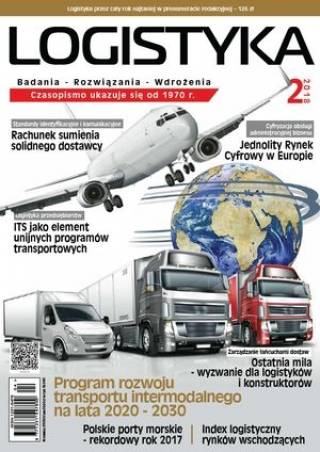
We wrote more about transport in the Logistyka 2/2018 magazine.
The e-edition of the magazine is available in our offer!