









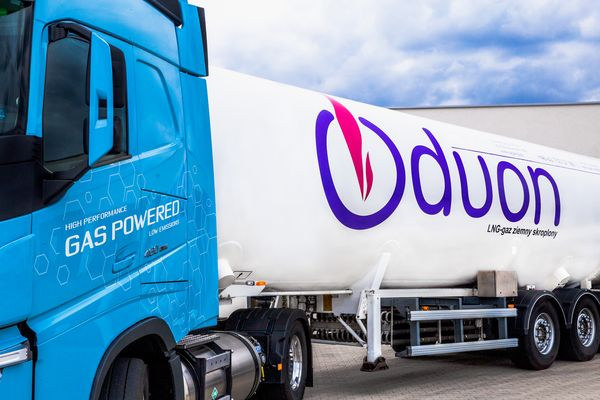
Liquefied natural gas – LNG – has been used since the 1960s. Recently, in the face of the need to address environmental challenges as part of the alternative fuel development strategy adopted by EU member states, interest in it has been growing in the transport sector, especially as a fuel for heavy-duty vehicles and shipping.
Status quo
Currently, due to the high requirements of carriers, heavy-duty vehicles (HDVs) used in long-haul road freight transport are powered almost exclusively by diesel engines. However, this technology has already reached its peak in terms of meeting successive emission standards and has stalled at the EURO 6 class. Therefore, manufacturers of diesel power units are limiting their production, planning to introduce alternative solutions on a wider scale.
Such an alternative, which both meets technical requirements related to engine power and contributes to reducing air pollution, is LNG. Liquefied natural gas is a favorable fuel option for heavy-duty vehicles that combines environmental and economic benefits.
Climate
The global boom in logistics is leading to a disproportionate increase in greenhouse gas emissions from road freight transport. The growing climate commitments imposed by the EU force a shift towards low-emission solutions. To achieve energy, climate, and environmental goals, market operators must immediately reverse the current trend related to greenhouse gas emissions, other air pollutants, and noise.
EU standards for CO2 emission reductions for commercial vehicles make LNG an attractive fuel due to lower levels of carbon dioxide, sulfur oxides, and nitrogen oxides compared to diesel fuel.
New quality
The potential main application for LNG is long-distance road transport. Natural gas vehicles have a chance primarily in areas where more environmentally friendly propulsion alternatives will not be available in the foreseeable future, i.e., in the heavy transport and shipping sectors. In the coming years, among all currently available alternative fuels, the development of LNG should proceed the fastest due to the known, relatively inexpensive, and continuously improved vehicle propulsion technology and the dynamically expanding infrastructure.
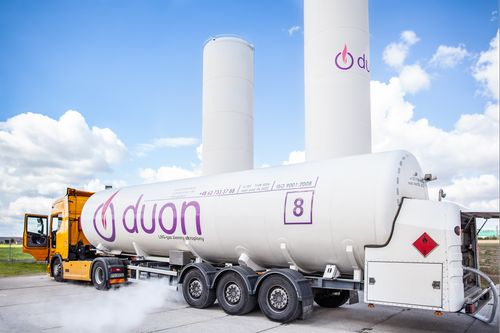
Economics
Undoubtedly, apart from purely environmental arguments, the factor determining the choice of natural gas-powered vehicles will be the cost of their operation compared to vehicles powered by conventional fuels. This is primarily due to lower failure rates, lower fuel consumption, or the lack of road tolls and other tax benefits. The Total Cost of Ownership (TCO) of such vehicles is lower compared to conventional propulsion within just two years!
In many European countries, active policies for financing alternative drive systems and fuel options are already in place, which brings benefits to owners of LNG-powered vehicles.
The example of Germany
The German government is consistently supporting the development of a green economy and the transition to alternative fuels, which has resulted in LNG transport being exempt from road tolls. Subsidies for the purchase of LNG trucks are very popular among carriers. Financing for the development of infrastructure and LNG vehicles, tax cuts, and lower road tolls also work in favor of liquefied natural gas. All these actions mean that the fleet of LNG-powered trucks in Germany is constantly growing. The expansion of refueling station infrastructure has also accelerated.
EU regulations favor the development of the LNG market in Poland
Directive 2014/94/EU of the European Parliament and of the Council on the deployment of alternative fuels infrastructure imposes an obligation on member states to create a national policy framework for the development of alternative fuels infrastructure. In Poland, it is implemented through the National Policy Framework for Alternative Fuels Infrastructure and assumes that by 2025, 14 publicly accessible LNG refueling stations will be built along the TEN-T network, and there will be 3,000 LNG-powered vehicles in the country.
The development of this area is also supported in Poland through a zero excise tax on LNG for vehicle propulsion and under the Low-Emission Transport Fund. At the same time, organizations associated with the LNG industry are striving to introduce exemptions for LNG-powered vehicles from road tolls in Poland.
LNG in the heavy transport industry is currently the most favorable alternative to diesel fuel. It allows for successfully meeting not only the increasingly stringent European Union requirements regarding fleet low-emission standards but also the requirements of principals, who increasingly set the possession of alternative fuel vehicles as a requirement for carriers.
One must be aware that the heyday of diesel engines is passing, and LNG is the natural direction in which the entire TSL industry is heading. Alternative fuels that allow for successfully meeting the requirements set by both carriers and the EU are an inevitable future. Furthermore, LNG will undoubtedly help in building the competitiveness of transport offers on the market, allowing for winning subsequent tenders and acquiring new orders from clients who require compliance with specific emission standards for the fleets employed.
You can check whether LNG is profitable for your fleet in the savings calculator.
