









As part of the cooperation announced last year, the Volkswagen and Ford groups are working together in the field of electric vehicles and light commercial vehicles. The result of this collaboration will be three vehicle projects for Ford and Volkswagen Commercial Vehicles (VWN).
– Strategic cooperation with Ford is an important element of our GRIP 2025+ future strategy and thus part of the transformation the brand is currently undergoing. The cooperation strengthens our strong position in the light commercial vehicle sector in the coming years, especially regarding European sales markets. The partnership with Ford is long-term, and the agreements signed now are confirmation for me that we are successfully implementing our plan step by step – says Thomas Sedran, CEO of the Volkswagen Commercial Vehicles brand.
Ford Ranger and Volkswagen Amarok
In the future, Ford, as the lead partner, will produce a new version of the Amarok for Volkswagen Commercial Vehicles based on the Ranger. The successor to the Amarok will be produced at Ford’s Silverton plant in South Africa from 2022. For both partners, it is important to use the same platform while highlighting their respective strengths through customization, individual design, and interfaces, in order to clearly emphasize the differences between the models. For Volkswagen Commercial Vehicles and the successor to the Amarok, the main sales markets will be the EMEA region (Europe, Middle East, and Africa).
– Ultimately, our customers will benefit from this, because without this cooperation, we would not have created the new Amarok – claims Thomas Sedran.
City van and Transporter
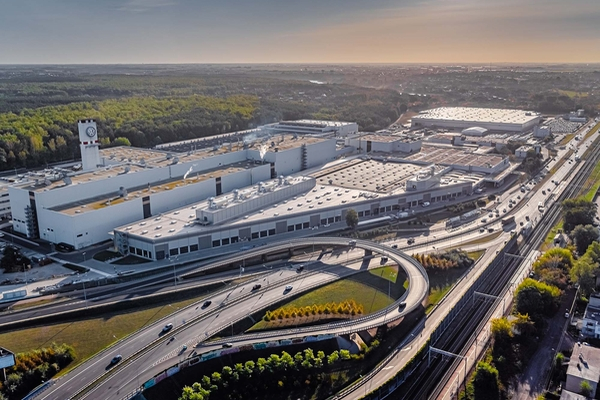
The signed cooperation agreements between the groups will result in two further projects. Based on the Caddy 5 presented in February this year, Volkswagen Commercial Vehicles will develop a city van and produce it for Ford in Poland under the name Transit Connect starting in 2021. Thus, Ford will launch the first vehicle as part of the cooperation with Volkswagen Commercial Vehicles. Production of the new Caddy 5, which was very positively received by international media after its world premiere in February 2020, will begin in the second half of 2020 in Poznań.
Volkswagen Commercial Vehicles and Ford have also decided to start cooperation in the field of light commercial vehicles, specifically working on Transporters with a payload of up to one tonne. Ford will take the lead in technical development and production.
– The “1Ton” project will be an additional boost for Volkswagen Commercial Vehicles in the commercial customer segment, as we will be able to create a strong offer with very good cost-to-utility conditions. At the same time, we retain exclusive control over the technical development, production, and marketing of the successor to our current 6.1 series for private customers, i.e., the Multivan, Caravelle, and California models. You could say we are combining the best of two automotive worlds for our customers – said Thomas Sedran.
Development of autonomous driving
In June 2020, agreements were also signed as part of the cooperation in the development of autonomous driving, and Volkswagen’s sister company AID was incorporated into the ARGO AI enterprise. This created the foundation for a globally operating company in the field of autonomous driving development. Both partners will be able to use the software and the SDS (Self Driving System) individually in the future. Within the Volkswagen Group, VWN is responsible for the technical development of autonomous driving in the MaaS/TaaS area for Level 4 automation.
– In 2022, we will be able to use a fleet of autonomous vehicles in real-world conditions for the first time. This will be the first test using fully electric vehicles from the ID-BUZZ series at Level 4. To this end, we will work closely with ARGO. Furthermore, I am convinced that ARGO will take a leading role in the entire industry, from which both Ford and we will benefit greatly – said Thomas Sedran.
The cooperation agreements between Volkswagen and Ford are not capital-binding. All vehicles will be distributed in the markets independently of each other.
Source: Volkswagen Commercial Vehicles