









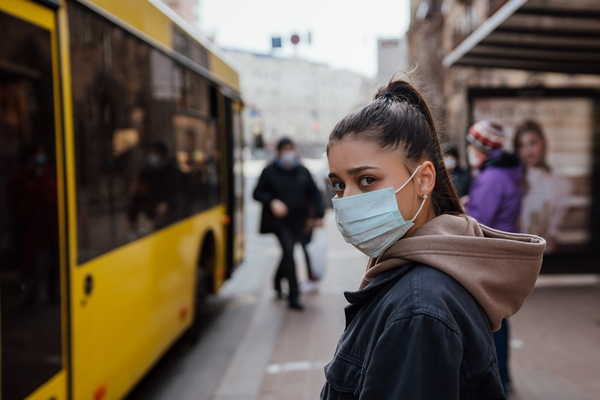
Public transport, passenger rail transport, and local transit in Poland, despite numerous investments in rolling stock, have faced many problems to date. The economic crisis caused by the coronavirus pandemic is further significantly weakening this sector. The situation is presented in the expert report: “Supporting regional mobility in the face of economic and climate crises and epidemic threats,” prepared by the interdisciplinary team “TSL Competence Network.”
The transport of goods, although with some limitations, is still being carried out – the flow of consumer goods and medical supplies must continue. In the TSL sector, public transport has suffered the most as a result of the pandemic. The threat of coronavirus, mandatory quarantine, and WHO recommendations to stay at home have caused the number of passengers to decrease significantly. The closure of schools, shops, workplaces, and the delegation of employees to remote work at home has resulted in far fewer public transport users. All of this is, of course, synonymous with low financial revenues for transport companies. The prospect of their bankruptcy is therefore very real.
According to the authors of the expert report, developed under the leadership of Prof. Wojciech Paprocki and Dr. Michał Wolański from the Warsaw School of Economics, the project should include: subsidizing the operational work of public transport vehicles to ensure passenger safety and competitiveness; introducing full tariff integration, assuming the creation of a system of monthly tickets valid throughout the country, in voivodeships and counties, for all public transport systems; and purchasing additional rolling stock and training personnel.
– In a group combining specialists from the academic, local government, and business communities, an expert report dedicated to supporting regional mobility has been prepared. Public authorities at the local, national, and EU levels are facing the challenge of implementing structural changes – writes Prof. Wojciech Paprocki on LinkedIn. – Since there will not be more funds in regional, national, or EU budgets, but rather less, every zloty (including those obtained after converting euros from EU funds) must be looked at twice, or even three times, before it is spent. Public money must be managed particularly rationally.
The report also mentions the need for legal changes – in particular, an amendment to the Public Collective Transport Act, which would simplify the organization of transport outside cities and increase the powers of local governments. Experts also propose abandoning certain regulations that unnecessarily increase costs, such as health requirements for railway personnel and the requirement to own vehicles powered by alternative fuels.
According to the specialists, transferring funds allocated in the state budget for subsidies to statutory discounts and funds from the Bus Transport Development Fund of public utility nature to county and voivodeship local governments could help avoid bankruptcies of local transport operators.
The expert report can be downloaded at: https://oees.pl/ekspertyzy/