









On April 16, a regulation by the Minister of Health came into force, according to which it is mandatory to cover the mouth and nose in public places using clothing or protective masks. What requirements regarding face covering must transport workers meet?
The obligation to cover the face is stipulated in the Regulation of the Council of Ministers amending the Regulation on the establishment of specific restrictions, orders, and prohibitions in connection with the occurrence of an epidemic state, published in the Journal of Laws on April 15, 2020. “§ 18. 1. From April 16, 2020, until further notice, there is an obligation to cover the mouth and nose using clothing or a part thereof, a mask, or a face mask”.
Imposing such an obligation on the public is intended to limit the spread of the epidemic so that infected individuals who are asymptomatic carriers of COVID-19 do not infect others. Therefore, the nose and mouth must be covered in public places and wherever contact with people is unavoidable.
Masks and transport
1. Masks must certainly be worn by people traveling together in a single passenger car. Exempt from this obligation are people living together or individuals who cannot cover their mouth or nose due to health conditions, pervasive developmental disorders, intellectual disabilities, or dependency, although presenting a medical certificate or statement in this regard is not required.
2. The face should be covered by public transport passengers, train conductors, and ticket inspectors in public transport vehicles.
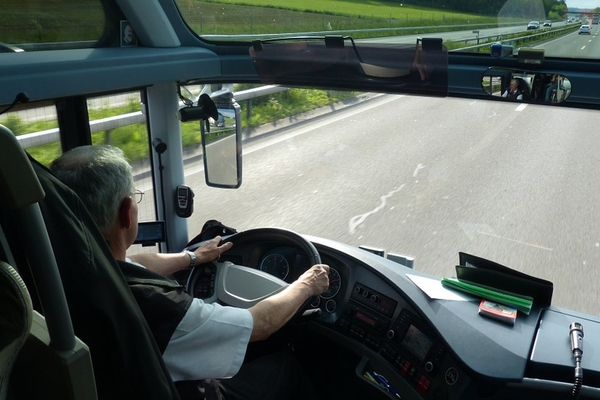
3. This obligation does not apply to public transport drivers who do not have contact with passengers.
– Tram and bus drivers who are in a separated area of the vehicle and thus do not have direct, personal contact with passengers are not required to wear masks – explains Agnieszka Smogulecka, press spokesperson for MPK Poznań Sp. z o.o.
4. The obligation to wear masks, however, includes truck drivers working in a two-person crew. This is a significant burden for them, as they stay together in the vehicle cabin almost 24 hours a day for several or more days. If the truck crew consists of people who manage a household together or live together, as well as people whose health conditions prevent them from covering their nose and mouth, they are exempt from the obligation to cover their face. Truck drivers would also not have to wear masks if a partition separating them were installed in the cabin, but this is technically impossible.
The “Transport and Logistics Poland” organization has appealed to Minister of Health Łukasz Szumowski to exclude drivers staying in the vehicle cabin from the obligation to cover their mouth and nose when working in a two-person crew system, or to provide an appropriate functional interpretation of this provision and convey detailed information to inspection services.
– Drivers stay in the same space for almost 24 hours a day for several or even more days. They work, sleep, and eat meals there together. This applies in particular to international road transport, where work is often performed on very long routes. In such a situation, the obligation to cover the face is pointless because drivers cannot eat meals with their mouths covered. Sleeping in a mask also makes it difficult to avoid it slipping off the face. It is also absurd to enforce the obligation to cover the face on drivers within Poland when there is no such obligation after crossing the border, and it is precisely outside Poland that drivers spend most of their working time – says Maciej Wroński, President of TLP.