









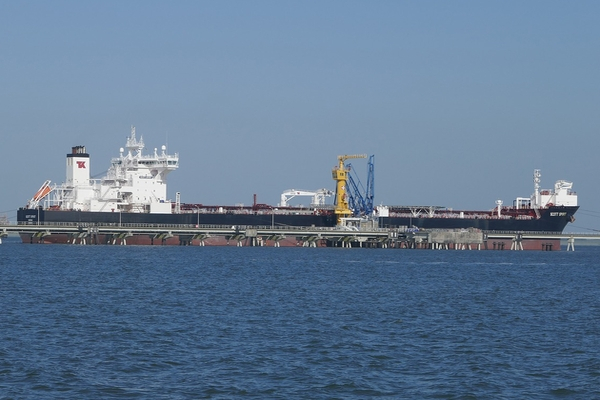
Since April this year, Polskie Górnictwo Naftowe i Gazownictwo (PGNiG), as a result of a tender, has been the exclusive user of the LNG receiving and reloading station located at the entrance to the Lithuanian port of Klaipeda.
The Klaipeda station is equipped with five tanks with a total capacity of 5,000 cubic meters (2,250 tons) of liquefied gas. It has two loading bays for road tankers or ISO containers, which can be used simultaneously. The station’s quay allows for the receipt of LNG from floating units as well as its loading. PGNiG has already sold the first two cargoes of liquefied natural gas to road tankers.
– Despite the difficult market situation caused by the coronavirus pandemic, we needed only a week to start operations in Klaipeda. On one hand, this is proof of our competence in the small-scale LNG sector. On the other, it testifies to the great potential of the liquefied gas market in Lithuania and other Baltic countries – said Jerzy Kwieciński, President of the Management Board of PGNiG SA.
The buyer of the gas is CRYO Shipping AS – a Norwegian company that supplies fuel to ships powered by liquefied gas engines in Scandinavia, the Netherlands, Belgium, Germany, and Lithuania.
– We are pleased with the opportunity to cooperate with PGNiG. We want to develop our position as a ship bunkering service provider in the port of Klaipeda – emphasized Nicholai H. Olsen, Managing Director of CRYO Shipping.
The fuel purchased from PGNiG was used to bunker the cement carrier Greenland, which was docked in the port of Klaipeda and is owned by the Norwegian company JT Cement AS.
Today, the environmental protection aspect is increasingly being taken into account, which is why liquefied gas is being used more and more frequently in maritime transport. The possibility of exclusive use of the reloading and receiving station in Klaipeda for the next five years gives PGNiG a chance to become an important LNG supplier for ships operating in this part of Europe. The port of Klaipeda is among the top five largest Baltic ports in terms of transshipments.
Source: PGNiG