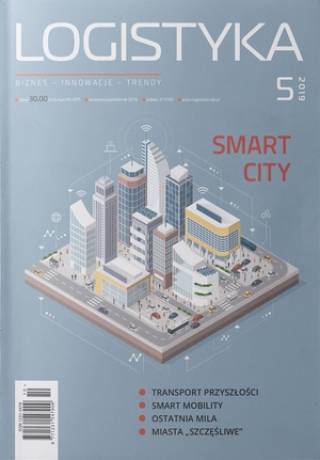
The aim of the article is to present, from a theoretical and empirical perspective, transport and ICT (Information and Communication Technologies) as a smart city area. The theoretical part of the article introduces the idea and concept of a smart city, characterizes one of the smart city areas – transport and ICT (smart mobility) – and the nature of investments in the ICT sector. The practical part of the work presents solutions in the field of transport and ICT as a smart city area, used in the city of Edinburgh. An attempt to address these issues was made due to their continuous development and attractiveness.
Urbanization is one of the most important social processes. It is defined as the process of population concentration in specific points of geographical space, mainly in urban areas. Urbanized areas occupy 2% of the Earth’s surface, consume about 75% of the energy produced globally, and are responsible for about 80% of carbon dioxide emissions. According to the World Health Organization, the world’s population will double by 2050, and 70% of the total population will live in urban areas. Cities face environmental, economic, social, and spatial problems. There is an increased demand for utilities (such as energy, gas, water), housing, transport services, and severe limitations of public space. In view of the above, highly effective solutions that will generate sustainable economic growth and social well-being and be reflected in the improvement of the quality of life of urban residents are extremely important. These solutions include the smart city model, based on investments relying in particular on advanced technologies and innovative solutions from the information and communication technology sector – ICT.
The smart city idea
The term smart city has been a popular subject of scientific research in recent years. It is also an element of the operational strategies of private entities and business models. The smart city concept stems from the idea of sustainable development and the “Europe 2020” strategy, according to which urban areas are to play a significant role in implementing innovative strategies by utilizing the potential of information and communication technologies – ICT. The subject literature does not provide a single, unambiguous definition of a smart city. A smart city is characterized as a new model of effective city management that contributes to the development of urban centers by stimulating economic growth, supporting ecological solutions, and innovation. This concept is also described as an innovative approach focused on modern city (urban area) management, using technical means offered by the latest technologies (including IT), in accordance with ecological principles, while maintaining a tendency to save resources and achieve expected results. According to Austrian scientists from the Vienna University of Technology, the smart city model distinguishes six areas, which are largely identical to the dimensions of sustainable development. The distinguished areas, described in Table 1, are:
- smart economy – competitiveness,
- smart mobility – transport and ICT,
- smart environment – natural resources,
- smart people – social and human capital,
- smart living – quality of life,
- smart governance – participation.
The full article is available below in PDF format.
We wrote more about the smart city in Logistyka Magazine No. 5/2019.
The e-edition of the magazine is available in our offer!