








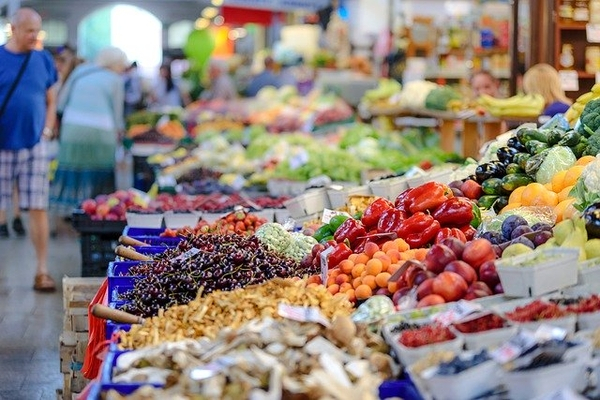
Every year, one-third of all food produced worldwide is wasted. Two organizations have joined forces to fight this problem: the Polish Federation of Food Banks and GS1 Poland.
The number of food collections, as well as the collection points themselves at Food Banks, is systematically increasing. Consequently, the efficiency of the recording process and the monitoring of data consistency between the donor and the recipient are becoming increasingly important. The transfer and collection of food donations from stores are subject to a recording obligation by both parties. For Food Banks, which in 2019 handled donations from over 1,000 stores across Poland, this involved manually entering data on the weight and value of each individual food transfer into an IT warehouse system. On a scale of 1,000 stores and daily collections, this amounts to approximately 230,000 documents per year! Cooperation with 8 retail chains and the prospect of growth with new partners obligated by the entry into force of the Act on Preventing Food Waste may make the recording process even more time-consuming and costly. The need to optimize the donation transfer process is also being recognized by retail chains.
– The Auchan chain has been supporting public benefit organizations, including Food Banks, for years. Joining the project to automate the transfer of food donations was therefore an obvious step that brought mutual benefits. Participation in the project is also a response to the needs of our employees who want to counteract the effects of food waste, promote activities that reduce waste, and influence the improvement of the situation of the poorest. It is also worth mentioning the financial benefits, such as reducing waste disposal costs or minimizing financial penalties resulting from the new law – assesses Wioletta Grydziuszko, Application Specialist at Auchan Poland.
The cooperation between GS1 Poland and Food Banks was aimed, among other things, at optimizing logistics processes, including:
• Streamlining the flow of data on donations for social purposes.
• Reducing the time for receiving and issuing donations.
• Eliminating paper documents in favor of their electronic versions.
– Due to the short shelf life, products must be quickly issued by the chain, physically received into the Food Bank’s warehouse, recorded in the system, and finally, effectively distributed among those in need. Implementing a solution based on GS1 standards has allowed for the optimization of the donation handling process, especially in the area of efficient and effective exchange of reliable information between the donor (the chain) and the Food Banks (electronic documents in the form of digital files are transmitted via EPCIS – Electronic Product Code Information Services – a set of standards that enables the creation of an information service on the Internet that allows for sharing information about events related to the movement of goods and cargo, their groupings, quantities, and dates). Furthermore, introducing the recommended changes ensures not only data consistency but also tax security (accounting for the purpose of exempting food donations from VAT) and provides a basis for creating reports required by the Act – comments Hanna Walczak from GS1 Poland.
As a result, the Greater Poland Food Bank, which participated in the pilot, began to function much faster, and donors receive reliable data regarding the products transferred.
– In our daily work – with a small staff – every process improvement is very important. Thanks to it, we can transfer more food in less time to a larger number of organizations, and consequently, to more people in need. We are aware that implementing all the recommendations is a process that will take time, but according to its assumptions, we are trying to develop technologically and implement solutions in stages. The NGO sector wants to operate professionally. Without the support of GS1 Poland and the Łukasiewicz Research Network – Institute of Logistics and Warehousing, this would not have been possible – concludes Katarzyna Bielawska, Director of the Greater Poland Food Bank.
More information about the project can be found here.
Source: GS1 Poland