









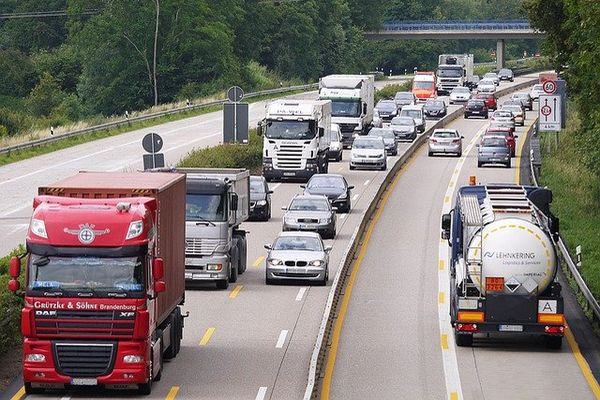
There are two main steps left until the approval of the Mobility Package, which consists of new, unfavorable changes to transport law for Polish entrepreneurs. The carrier community is still waiting for the first reading in the EU Council and the second reading in the European Parliament. If nothing unexpected happens in Brussels, work on the EU regulations for carriers will be completed in the first half of 2020. How can you prepare for the entry into force of this troublesome directive?
A long road to the Mobility Package
The slogan “equal pay for equal work” started the discussion on minimum wage and the posting of workers. Germany took the first steps toward new laws changing the rules of the international road transport system by introducing MiLoG. Since July 2016, the French Loi Macron has also been in effect. In May 2017, the European Commission submitted an official legislative proposal to the Parliament called “Mobility Package 1”. The initiative, aimed at amending and expanding EU regulations to find a balance between safety, social justice, a sustainable economy, and the profitability and needs of the Community’s national markets, has been one of the most discussed and controversial topics in the transport industry for nearly three years. After numerous changes, amendments, and updates to the regulations, the effects of introducing the Mobility Package have still not been studied by the EU legislator. However, this did not stop representatives of the so-called old Union from bringing the procedure to a point where only the two most important votes remain to complete the entire legislative process.
– The date of the next vote in the Council has not yet been set, but it can be expected to take place approximately eight weeks after the last meeting of the TRAN Committee. This is how long it takes to prepare the legal and linguistic provisions contained in the framework of the latest trilogue negotiations. It can be expected that the entire process will be closed, i.e., the regulations will be published in the first half of 2020. Between these main votes, smaller meetings may still take place, and information will be exchanged between institutions. However, these are formalities and will likely not affect the Mobility Package in its current form – says Mateusz Włoch, an expert at Inelo.
What is the Mobility Package and when will it be applied?
The new transport law is, simply put, changes in three groups of regulations:
• Requirements regarding maximum daily and weekly driving times, minimum breaks, and daily and weekly rest periods, as well as regulations concerning tachographs.
• Posting of drivers in the road transport sector and roadside checks.
• Conditions for pursuing the occupation of road transport operator and access to the international road transport market.
– The changes defining driving times, breaks, and rest periods will enter into force the earliest, possibly as early as the second half of 2020, i.e., 20 days after the publication of the regulation. After 18 months, a new rule will begin to apply, i.e., the driver will enter the country after crossing the border, and the provisions from the groups of changes on posting and market access will also apply. From the end of 2024, roadside checks will cover 56 days back instead of the current 28. Carriers with a fleet of vehicles from 2.5 tonnes GVW in international transport of goods and cabotage will have the longest period to prepare for the new developments in the functioning of a transport company. The requirement to install and use tachographs, just like in trucks, will apply from July 1, 2026. For van operators, this will be a real revolution – comments Mateusz Włoch.
Within 20 days after the publication of the adopted Mobility Package, the following will enter into force, among others:
• Clarification of the ban on taking regular weekly rest periods in the cabin. Any rest over 45 hours must be spent outside the cabin in a place with appropriate sanitary facilities.
• Tightening of rules regarding taking reduced weekly rest periods, meaning an international driver will be able to take two reduced weekly rest periods in a row (2x24h) provided that in every four weeks they have at least two regular weekly rest periods and two reduced ones. After taking two reduced weekly rest periods in a row, the next one will be a regular weekly rest period along with compensations. Such a long rest will be taken mandatorily at the base in the country of the company’s establishment or at the driver’s place of residence. Note: in this case, it is necessary to document the return.
• Mandatory return of the driver to the company’s operational center in the country of establishment (base) or the driver’s place of residence at least every four weeks. The driver should return at least for a 45-hour rest.
• Possibility of interrupting weekly rest periods on a ferry – reduced without additional restrictions and regular – only when the journey is planned for at least eight hours and the driver has access to a sleeping cabin.
• Possibility of extending daily and weekly driving time by up to two hours when returning to the base or home for a weekly rest. The condition for driving for an extra two hours is taking a 30-minute break before the additional driving time and compensating for this time with any other rest within three weeks. Note: extension is possible only due to exceptional situations (e.g., traffic jam, detour, other unforeseen circumstances).
The regulations that will apply 18 months after the publication of the directive include, among others:
• Return of every vehicle to the company’s operational center in the country of establishment at least once every eight weeks.
• Restriction of market access regarding cabotage. The current rules for international transport allow for three operations within seven days. In the Mobility Package, the EU has added a four-day cooling-off period between cabotage operations with the same vehicle in the same country.
• New driver obligation – entry of the country after crossing the border, made at the first possible safe place.
• Possibility of losing good repute for infringements regarding cabotage and the posting of workers.
• Addition of a so-called company rating, defining, for example, the rate of infringements to the ERRU and KREPTD registers.
• Exclusion of transit operations, bilateral transport (from/to PL), and a maximum of two loadings or unloadings accompanying bilateral transport from posting (the latter under certain conditions, e.g., 2nd gen smart tachograph, on the way from Poland, max. 1 additional operation allowed).
• Inclusion of cross-trade transport and all cabotage operations under posting.
• Use of full collective agreements when calculating minimum wages and no possibility of including per diems and lump sums.
Additional important findings are:
• 56 days back, i.e., the new roadside check period, which will apply from the end of 2024.
• Installation of new second-generation smart tachographs in new vehicles two years after the entry into force of technical regulations.
• Mandatory replacement of tachographs in international transport to the next generation
– analog and digital within three years from the entry into force of technical regulations
– smart first generation within four years from the entry into force of technical regulations.
• Requirement for owners of transport companies with a so-called light fleet to comply with driving and rest time standards as currently applicable to truck drivers (Regulation 561), and the obligation to install and use a tachograph will apply from July 2026.
• Within 21 months from the date of publication of the Mobility Package, carriers using vans will be required to meet all requirements regarding the pursuit of the occupation of road transport operator, including, among others, holding a license and financial security for each vehicle.
Mobility Package – what will road transport be like?
– Uncertain, because everything that is not fully understood in the economy simply causes anxiety. However, transport will also record growth in demand in the coming years and drive the economic situation in Poland. Why is this? According to estimates, over 50 percent of goods transport in Europe takes place via road transport, which generates about 500 billion euros in profit annually, and about 5 million people are employed in TSL alone. Despite the additional difficulties that the EU is serving us, we will not fall out of the market so quickly, although the threat of losing financial liquidity, especially by small companies, is indeed real – says Łukasz Włoch from OCRK. – Domestic entrepreneurs will be most affected by the increase in labor costs, by as much as 30-40 percent, and significant restrictions on market access, mainly including restrictions on cabotage and the necessity to return to the country after eight weeks on the road. Company owners should consider in the future, among other things, negotiating rates for freight covered by the Mobility Package, as well as planning routes and loading-unloading operations further in advance, if possible. Furthermore, cooperation with an experienced partner who knows international law, as well as modern telematics tools, will prove helpful in the long term and may constitute an additional competitive advantage. It is also important now to have a strong lobby to start legislative changes in Poland in order to minimize the effects of the Mobility Package. This mainly concerns adjusting the rules for settling drivers to the provisions of the amended Posting Directive, i.e., changing regulations in the Act on Working Time of Drivers. Thanks to this, labor costs will increase, but by 15 percent, for example – concludes Łukasz Włoch, OCRK.
Source: OCRK