









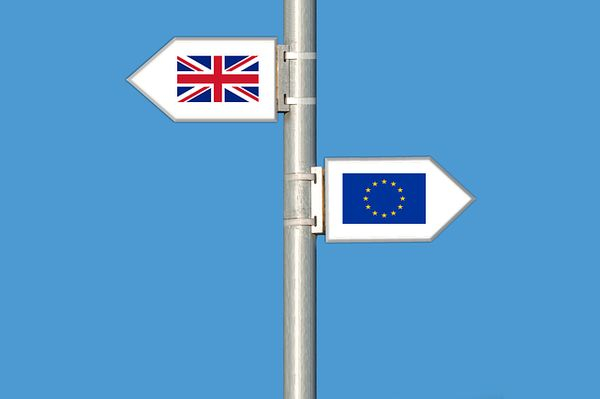
The United Kingdom’s withdrawal from the European Union based on the Withdrawal Agreement is preceded by a transition period, which will begin on February 1, 2020, and last until the end of the current year. During this time, transport operators do not need to fear restrictions or difficulties.
The so-called transitional Brexit is intended to ensure the continuation of current relations between the European Union and the United Kingdom in their existing form. According to the premise, during the transition period, the United Kingdom will continue to be treated as a member state. However, it will no longer have the ability to participate in the EU decision-making process.
For Polish entrepreneurs and citizens, this means, among other things::
• No customs duties or additional trade regulations,
• No border controls between the European Union and the United Kingdom,
• Free movement of persons and workers continuing under existing rules – an ID card will still be a recognized travel document,
• No restrictions in road transport,
• No need to adapt exported goods to different standards,
• No need to possess additional, previously unrequired certificates,
• No need to make customs declarations, obtain licenses, or meet different sanitary or phytosanitary standards,
• No restrictions on the free movement of capital,
• Continuation of mutual recognition of qualifications.
What will change from 2021?
The conditions for economic cooperation from January 1, 2021, will depend on the content of the future Free Trade Agreement between the United Kingdom and the European Union. However, it should be remembered that even the most ambitious trade agreement has its limitations and will not fully replace the regulations of the European Union’s internal market. Negotiations for the future agreement will begin soon, and there is little time. The United Kingdom has announced that it will not extend the transition period beyond 2020.
What happens if a future agreement with the United Kingdom is not reached on time?
If the transition period ends and negotiations for the future agreement are not concluded, and therefore it cannot come into effect on January 1, 2021, it is possible that economic relations between the European Union and the United Kingdom will be governed by World Trade Organization rules. In that case, customs tariffs as currently applied to third countries would apply, VAT settlement rules would change, excise tax collection rules would change, and many other trade difficulties would arise, which would constitute the new reality of trade exchange between the EU-27 and the UK. Of course, this is only a scenario that will likely not happen.
The Ministry of Development has prepared a special guide for entrepreneurs. The advice contained therein concerns both the consequences of Brexit for individual sectors and the provision of support in the form of advisory services, financial support, support from foreign trade offices, or promotional activities. The guide is based, among other things, on the European Union’s position on Brexit and the position presented by the United Kingdom, as well as notes published during the negotiations on the terms of withdrawal from the EU.
Ministry of Development Guide
Source: Ministry of Development