









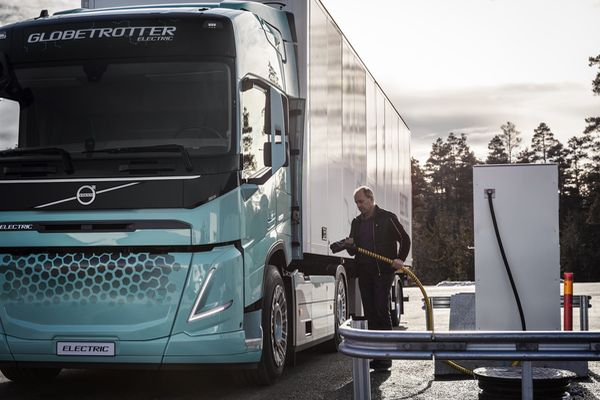
Electrification of passenger transport is becoming increasingly common. The next step is the electrification of trucks. Volvo Trucks, which recently started selling electric trucks for urban transport, has developed two European conceptual electric trucks designed for construction transport and regional distribution.
– In the long term, we see significant potential for heavy-duty electric trucks for the construction industry and regional transport. With these conceptual trucks, we want to explore and demonstrate various future-oriented solutions while analyzing the level of interest in the market and society. To increase the demand for electric trucks, charging infrastructure must be intensively expanded, and stronger financial incentives must be created for carriers who are the first to introduce new vehicles with a lower impact on the environment and climate – stated Roger Alm, President of Volvo Trucks.
Heavy-duty electric trucks generate less noise and produce no exhaust emissions, which can provide a better working environment for drivers and construction workers. There is no need to convince anyone of the importance of zero exhaust emissions and their impact on air quality in rapidly developing cities. Due to the low noise level, electric trucks can also operate for longer periods during the day, which will improve operations in, for example, large construction projects and urban transport.
– In Europe, a huge number of trucks with an average annual mileage of 80,000 km carry out regional goods transport. This means that wider use of electric vehicles for regional distribution will be extremely beneficial for the climate, given that such vehicles do not use fossil fuels – says Lars Mårtensson, Director of Environment and Innovation at Volvo Trucks.
Volvo Trucks intends to start introducing heavy-duty trucks for the construction industry and regional distribution by implementing a European pilot project, which will involve selected customers and a small number of electric vehicles. This will be followed by an intensification of commercialization.
– The speed of electrification will depend on many factors. On one hand, a major expansion of charging infrastructure is necessary, and on the other, a guarantee that regional power grids can provide sufficient capacity in the long term. To encourage more carriers to invest in electric vehicles, financial incentives are necessary. These can also be created by transport buyers by offering long-term contracts and preferring the purchase of sustainable transport solutions. Many carriers have very small margins, so every new investment must be profitable – explains Mårtensson.