









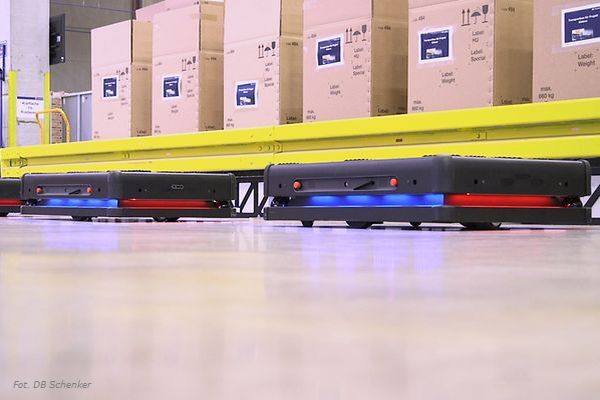
Autonomous robots from Gideon Brothers have been introduced at the DB Schenker branch in Leipzig. Equipped with state-of-the-art technologies, they increase efficiency without the need for facility modifications.
– In order to offer our customers strategic advantages in an increasingly complex digital environment, DB Schenker is constantly exploring the possibilities of using innovations created by visionary start-ups – said Xavier Garijo, Member of the Board for Contract Logistics at 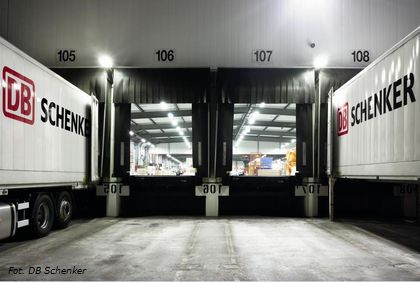 Schenker AG. – Ensuring the ability to automate logistics and warehouse operations is the foundation for creating a next-generation supply chain.
The autonomous logistics robot from Gideon Brothers is equipped with a Robot Autonomy System, which, based on Visual Perception technology, combines deep learning with stereoscopic cameras. Visual perception technology, supported by artificial intelligence, improves safe movement among employees, equipment, and other moving machines. The robots can carry 800 kg of cargo at a time. Importantly, they have the ability to swap batteries without interrupting work, which minimizes downtime. The robots being tested in Leipzig automate tasks related to current order fulfillment. Just a few weeks after the start of the project, DB Schenker expanded it by adding a significant number of new pick-up and 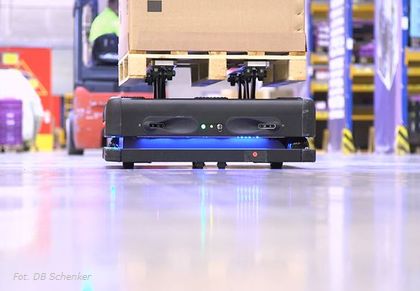 drop-off points for goods.
– The machines we have created perceive the world just as we do: by processing visual data, understanding what surrounds them, and how it relates to the tasks entrusted to them – explained Matija Kopić, CEO and co-founder of Gideon Brothers. – This is a huge technological breakthrough. Self-driving devices based on artificial intelligence will succeed where previous technology failed and will become ubiquitous in the industrial sector.