










100% eco-friendly packaging and a 50% share of eco-collections in the flagship Reserved brand by 2025, as well as a reduction in the carbon footprint – these are the most important goals of the sustainable development strategy announced by the Polish clothing manufacturer. The shift towards ecology is LPP’s response to new challenges emerging in the fashion industry. The Gdańsk-based company is also continuing its investments in new technologies – it recently completed the world’s fastest implementation of electronic tags (so-called RFID) in the Reserved chain in Poland.
Global environmental challenges are changing the face of the fashion industry. The future of the market in a few years depends on whether manufacturers take greater responsibility for people and the environment. This means the necessity of making strategic decisions that determine changes throughout the entire value chain. After all, eco-friendly fashion is more than just a T-shirt made of organic cotton. Its real impact on the environment is the sum of many elements – from the choice of raw materials and suppliers, through transport and logistics, to the sales network. In the face of climate challenges, the Polish clothing company LPP wants to limit its impact on the environment and declares a clear turn towards ecology through its new sustainable development strategy.
– We are making a fundamental change in our approach to doing business – says Marek Piechocki, CEO and founder of LPP. – In recent years, we have done a lot in the area of sustainable development, systematically increasing the share of eco-collections or working intensively to improve working conditions at our suppliers. But today we want to take the next step and make responsibility for people and the environment an integral part of our development strategy. LPP is a family company. We therefore feel a special responsibility for future generations and the conditions in which they will live. As a co-founder of LPP, CEO, but also a father and grandfather, I treat the implementation of the goals set out in our sustainable development strategy as a personal commitment.
LPP’s sustainable development strategy for 2020-2025 includes changes in four areas, which will be overseen by the newly created Sustainable Development Department. The most significant and far-reaching actions will include eco-friendly production. In 2021, every fourth product of the Polish company will be marked with the Eco Aware label, and a year later, a used clothing collection system will be introduced in the stores of each of the five LPP brands.
At the same time, the company intends to invest one million zlotys in technologies that will allow for the disposal of textile waste in the future. Long-term goals for 2025 include a 15% reduction in CO2 emissions and an increase in the share of eco-collections in Reserved to 50% (today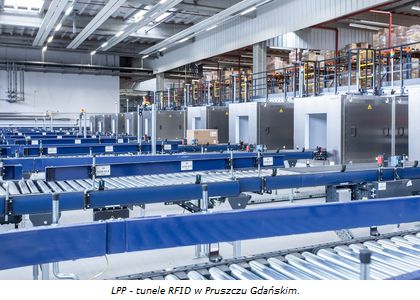 the brand’s sales account for about 40% of the group’s revenue). As part of the new strategy, the company will also place emphasis on the chemical safety of production, and in 2020 – as the first Polish company – it will join the ZDHC (Zero Discharge of Hazardous Chemicals) program, thereby committing to meeting strict standards for the elimination of hazardous chemicals in the textile supply chain.
The third pillar of changes at LPP will be the elimination of non-circular plastic packaging, which was initiated earlier this year by joining the New Plastics Economy Global Commitment initiative. In September of this year, plastic shopping bags disappeared from stores in Poland, and by 2025, the company will eliminate non-circular packaging from its entire sales network and supply chain. It will use only plastic that meets one of the criteria: 100% reusable, recyclable, or compostable. The new strategy also announces ecological solutions in the headquarters buildings and the sales network. In 2021, 100% of the energy powering the company’s servers and online stores will come from green sources. In turn, by 2023, all new company buildings will be covered by ecological certificates.
The Polish clothing manufacturer has been implementing sustainable development principles in its business practice for some time. An example of their application in the LPP supply chain can be the logistics park in Brześć Kujawski, which is currently in the design phase. The flagship project of the Gdańsk-based company will be the first warehouse facility in Poland to hold the international WELL certificate. This certification confirms the positive impact of the workplace on human health and well-being and has so far only been used in office buildings. The investment worth 860 million PLN will be completed in 2022.
Over the last few years, LPP has also initiated a number of pro-ecological activities. In its collections, it uses organic cotton, TencelTM Lyocell obtained from wood cellulose, organic linen, or recycled fibers, e.g., polyester from bottles. E-commerce deliveries for the Reserved and Mohito brands are carried out only in packaging made of waste paper. In several dozen Reserved, Mohito, and House stores, there is a collection of used clothing that goes to people in need. The company also controls safety and environmental impact in the supply chain – since 2013, the Gdańsk-based company has spent over 20.5 million PLN for this purpose.
Parallel to the implementation of the new strategy, LPP intends to maintain the momentum of business development, mainly through investments in new technologies. The Polish manufacturer has completed the process of implementing RFID in the Reserved brand in Poland.
– We can safely say that this is the fastest RFID implementation in the world. On a similar scale, such a process usually takes about 2-3 years. This milestone puts us in the position of a leader in the Fashion Tech industry in Poland – comments Jacek Kujawa, Vice President of LPP for IT. – Ahead of us is the time for the first assessment of benefits – we can precisely control what is on the sales floor and we are achieving nearly 100% compliance with our assumptions. This means an improvement in product availability for customers by about 15%. Electronic tags also streamline processes in the store and have a positive impact on our customers’ shopping experience – the inventory process has been shortened about 100-fold, and the time for registering goods at the checkout has been reduced by about 70%.
In the coming years, the company plans to implement RFID in its other brands and will analyze further opportunities created by the use of electronic tags. From the perspective of the omnichannel strategy, an important functionality will be the potential use of warehouse space in stores and the fulfillment of online deliveries directly from the store. This will affect the speed of order fulfillment, but also the reduction of CO2 emissions resulting from the limitation of transport.