









More than two years have passed since the implementation of regulations regarding the monitoring of road and rail transport of goods. During this time, the act has undergone several amendments. The most important changes, including those concerning geolocation, were introduced on 15 June 2018. It turns out that the most common offenses by carriers include failure to comply with the notification obligation or providing data inconsistent with the actual state of affairs.
In such cases, the fine for an entrepreneur can reach as much as 10,000 PLN. It is worth knowing more and checking how to fulfill the SENT obligation and avoid a penalty, as well as where to look for exceptions. Good news for the carrier is that the amendment to the act has simplified the method of classifying goods. Since 14 June 2018, it has been possible to make collective notifications and use only the Combined Nomenclature (CN), developed by the European Commission, which is a list of goods contained in Commission Implementing Regulation (EU) 2018/1602 of 11 October 2018 amending Annex I to Council Regulation (EEC) No 2658/87 on the tariff and statistical nomenclature and on the Common Customs Tariff1. The classification of goods according to the Polish Classification of Goods and Services (PKWiU) has been completely removed from the act, which has eliminated doubts regarding the improper assignment of cargo.
SENT System
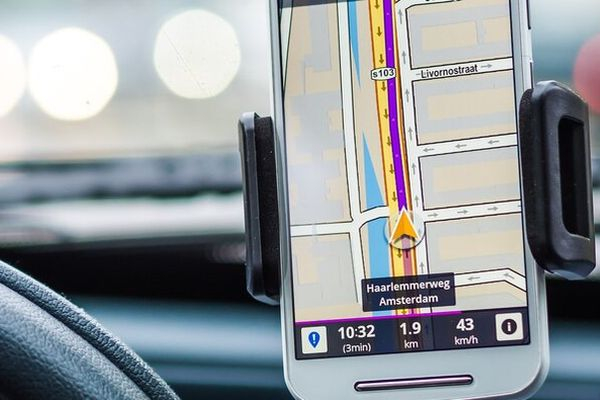
If a carrier intends to transport sensitive goods, in addition to a correct notification or its supplementation in the SENT system, they must ensure the transmission of current geolocation data of the means of transport throughout the entire transport route, keeping in mind, of course, that the act applies within the territory of Poland. For this purpose, they should use a mobile application made available to transport companies by the Ministry of Finance or an External Localization System.
– It is worth paying attention to the reliability of the adopted solution. While using the application seems the least financially burdensome, it is the most unreliable method, as some carriers using it have already discovered. Events that increase risk include problems with the continuous power supply of the phone, lack of certainty regarding the constant and correct operation of the application, limited influence on the driver’s proper behavior, and supervision over the application’s operation. Any irregularity leading to a break in route recording will result in the imposition of a 10,000 PLN fine. No phone can guarantee that the application will not stop working at any given moment. Unfortunately, arguments related to the technical functioning of the application and the phone on which it was used do not constitute a basis for reducing or canceling the penalty. Consequently, solutions based on the use of more advanced telematics systems that meet the requirements of an External Localization System, such as GBOX, guarantee safety – says Arkadiusz Góra, an expert at the National Center for Driver Settlement (OCRK) in the field of Road Transport Inspection (ITD) and the National Labor Inspectorate (PIP).
Goods from abroad
Cases of transit, export, or import of sensitive goods to Poland are particularly at risk. This is due to the fact that the act covers Poland in its scope. It should therefore be assumed that foreign contractors do not have knowledge of the obligation to monitor goods and will not make notifications in the Polish system.
– In such situations, the carrier’s vigilance and verification of whether the goods – which are to be picked up and transported across the Polish border – are subject to notification is extremely important. To this end, one should check the type of cargo, then refer to the Act of 9 March 2017 on the system of monitoring road and rail transport of goods, and specifically to Article 3, which indicates sensitive goods. If the cargo is not mentioned in this article, it is necessary to check whether it is included in the regulation referred to in Article 3(11) of the act. Currently in force is the Regulation of the Minister of Finance of 20 July 2018 on goods whose transport is covered by the system of monitoring road and rail transport of goods, and the list of goods that the system includes is contained in paragraph 1. Article 3, paragraphs 4-7 of the act and § 2 of the regulation indicate exceptions, i.e., types of transport or goods to which the provisions on the monitoring system do not apply – advises the OCRK expert.
To be sure that information about the regulations is always up to date, it is recommended to use official publications of the Journal of Laws, primarily ISAP – the Internet System of Legal Acts, where you can find not only the act but also its subsequent amendments and the consolidated text. Additionally, it allows for quick finding of executive acts to the act, i.e., regulations.
Goods notification step by step
When deciding to accept a transport order, one must ensure whether the sender has made a notification in the SENT system. If they are from outside Poland, they are most likely not familiar with the notification procedure, and the carrier must take action. First of all, it is necessary to check what goods or groups of goods will be transported and in what quantities. Then, it is necessary to verify under what code the goods appear in the Combined Nomenclature. The next step, after determining the CN number, will be to verify whether it has been covered by the monitoring system. For this purpose, the previously cited Article 3 of the act and § 1 of the regulation are checked.
– In the event that it is determined that the goods are covered by the monitoring system, it is necessary to notify the transport in SENT, generate and provide the driver with a reference number, and ensure the correct operation of geolocation. If the entrepreneur is not sure about the method of notifying transports, it is possible to use the system in a test environment. It is also worth familiarizing yourself with the emergency notification procedure in case the platform is not working or is functioning incorrectly. For this purpose, use the information available on the PUESC website – explains Arkadiusz Góra.
Verifying goods subject to monitoring is not difficult. However, carriers should also inform drivers that responsibility for violating obligations related to monitoring goods lies not only with the carrier but also with the driver of the vehicle, which is why they should also be concerned about the proper execution of the transport task.
1 Information on the nomenclature and the list can be found at: https://stat.gov.pl/sprawozdawczosc/intrastat/nomenklatura-scalona.