








At times when history is being made before our eyes, symbols take on special significance, especially those that directly define our identity. During the ceremony of laying the cornerstone for the construction of the Public Ferry Terminal at the Port of Gdynia, the Port of Gdynia Authority, together with invited guests, recalled one of the most famous Polish transatlantic liners, the MS Piłsudski.
The cornerstone is in the shape of an anchor. It is a replica of the one that was on the side of the MS Piłsudski. It is meant to serve as a reminder that the construction of the Port of Gdynia and the development of maritime trade were among the strategic goals of the reborn Second Polish Republic. The badge of the First Piłsudski Brigade, which was located on the bow of the transatlantic liner and immortalized on the cornerstone, also became a symbol. Inside, an act of foundation, today’s daily newspaper, a collector’s five-zloty coin issued by the National Bank of Poland to mark the 100th anniversary of Poland regaining independence, and an electronic storage device containing the exhibition “Port of Gdynia – Poland’s Flagship Investment” by artist Tadeusz Urbaniak were placed.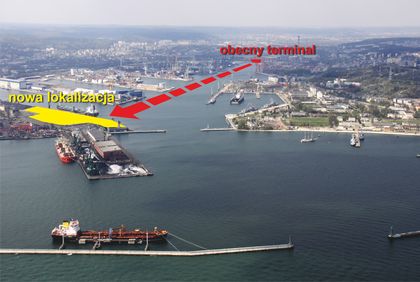 One of the showcases of that era was the Marine Station at the French Quay, where the flagship vessel of the Polish passenger fleet—a symbol of modernity, vision, and courage—docked. In the area of passenger traffic, the construction of the public ferry terminal in Gdynia is the first such large investment since that time, representing another milestone in the development of the city and the country.
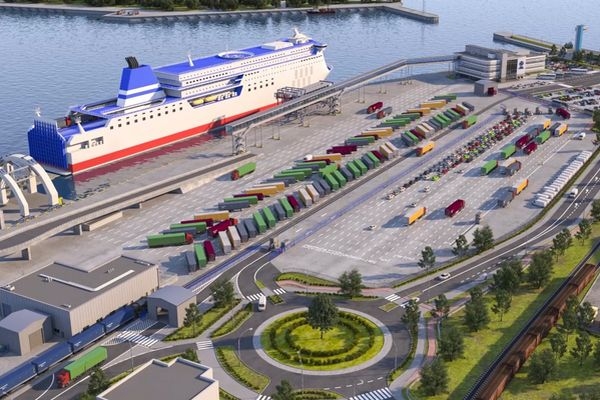
The investment will contribute to accommodating a larger number of ferries and will facilitate the maneuvering of 240-meter-long ferries. The time associated with a ship’s call at the port will be shortened (the time counted from the start of mooring to the vessel’s departure from the port will not exceed 120 minutes).
The new location of the terminal, at the Marshal Piłsudski Basin, will provide a connection to the most important local and national roads, which are a key element of the transport corridor for international trade. The location of the terminal also brings benefits resulting from the reduction of navigation time for vessels in the port. Time savings and improved transport accessibility are significant aspects of the logistics chain, which will ultimately contribute to increasing the port’s competitiveness.
– Both the port and the city of Gdynia will benefit from the new terminal. A larger number of ferries, and consequently passengers, means primarily the development of local tourism and related industries. The opportunities created by the investment we are implementing are directly linked to increased revenues for us as a company and for the state budget. We want to continue to develop the idea of the Poland-Scandinavia maritime motorway as part of the TEN-T corridor – comments Adam Meller, President of the Port of Gdynia Authority S.A.
The construction of the Public Ferry Terminal is the largest investment carried out in the Gdynia port in nearly 50 years. The work includes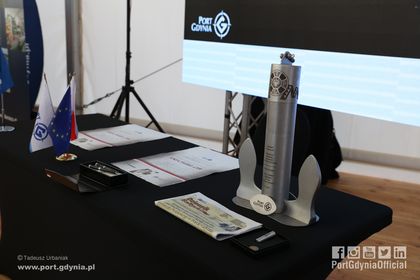 among other things, the construction of a ferry terminal with a volume of 30,000 cubic meters and a warehouse of 7,000 cubic meters, the reconstruction of quays with a length of approximately 600 meters, as well as the construction of squares and parking lots with a total area of 65,000 square meters. Furthermore, DORACO will carry out a rail connection between the quays, the reconstruction of existing road systems, and other infrastructure works. It is planned to use nearly 2,000 tons of steel and 20,000 cubic meters of concrete for the completion of the task.
– Work on the terminal construction is progressing according to schedule – says Karol Zduńczyk, President of the Management Board of DORACO. – We have currently reached the level of the ceiling above the ground floor of the terminal building. Previously, the facility was placed on piles – for this purpose, we used 182 piles with a total length of over 2,000 linear meters. In the same way, we prepared the ground for the foundations of the warehouse building. In parallel, sanitary, electrical, and telecommunications networks are being implemented on the square, as well as the laying of the first railway tracks. Hydrotechnical works are also underway, including the concreting of steel pipes. In the near future, we will be installing tie rods and backfilling the platform for the ro-ro ramp.
The completion of the work is scheduled for 2021, and the value of the investment is approximately 290 million PLN, of which the co-financing from European Union funds amounts to 116,837,137.67 PLN.