








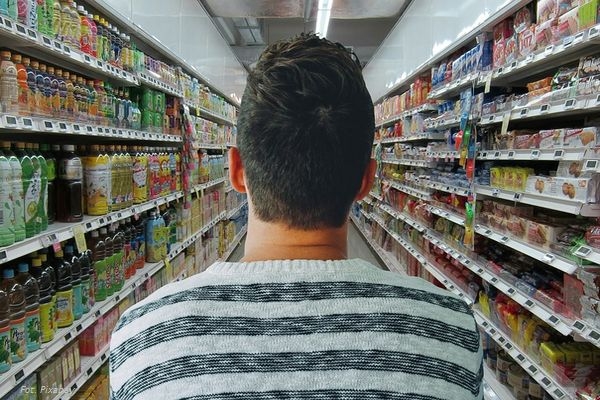
In accordance with the Act on Counteracting Food Waste signed by the President, owners of large stores are required to enter into an agreement for the free transfer of food that is no longer suitable for sale. For every kilogram thrown away, retailers will have to pay 10 groszy.
According to estimates by the Polish Economic Institute, Poland is among the leaders in food waste, ranking 5th in the European Union. So far, regulations regarding food donation have covered France, Italy, the Czech Republic, and Belgium. As Greenpeace points out, EU countries should aim to reduce food waste by 30 percent by 2025 and by 50 percent by 2030.
Wasted food
The report by the Federation of Polish Food Banks, “I don’t waste food 2018,” shows that 42 percent of the public admits to throwing away food. The most frequently discarded products are:
• bread (49 percent),
• fruit (46 percent),
• cold cuts (45 percent),
• vegetables (37 percent).
For several years now, the main reasons for throwing away food products have been overlooking the expiration date (29 percent) and buying too much (20 percent).
According to the Polish Food Banks report, 3.3 billion tons of greenhouse gases are released into the atmosphere annually due to food wasted globally. By releasing greenhouse gases into the atmosphere, we warm it, which causes an increase in the Earth’s temperature. The consequences can be droughts or floods, and we have already experienced changes related to higher temperatures this summer throughout Europe.
Changes in the law
Under the new regulations, owners of large stores are required to enter into an agreement with a non-governmental organization for the free transfer of food that meets food law requirements but is not intended for sale. Stores with a sales area of over 250 square meters, where revenue from food sales accounts for at least 50 percent of total sales revenue, will be required to enter into such an agreement.
The Act applies to products that have appearance defects or damaged packaging, as well as those nearing their expiration date, with the exception of alcohol. The agreement must include information on, among other things, the time and method of transferring these products, and the division of collection and distribution costs. Entities with which cooperation can be established include social welfare centers, including those providing assistance to families and individuals in difficult life situations, or charitable organizations, particularly those involved in donating food to people in need.
A food retailer is required to pay a fee for food waste. The fee rate is 0.1 PLN per 1 kg of wasted food. Under the new regulations, anyone who fails to enter into an agreement with a non-governmental organization for the free transfer of food is subject to a fine of 5,000 PLN.
How to take care of food
And how to prevent food waste in everyday life? First of all, it is worth going shopping with a list of products and paying attention to expiration dates. It is a good idea to arrange products in the refrigerator according to the FIFO principle, i.e., first in – first out. If there is too much bread at home, some can be frozen. You can make soup from soft vegetables, and from fruit that might spoil soon, you can make a smoothie or lemonade. It is worth planning meals reasonably and preparing them from what we have left. And if we have too much, we can always share.
In turn, wholesalers and stores should ensure proper storage and transport of food products. The priority is to maintain proper conditions in accordance with GHP/GMP and HACCP standards. It is also important to adjust the appropriate temperature for different products. If, according to the latest regulations, stores must establish food transport rules based on an agreement concluded with an organization, they should do so in such a way that the products do not spoil. A solution may be a system developed by Polish engineers from the company Blulog, which allows for constant temperature monitoring and immediate response if necessary.
– Our system enables an automatic measurement process. The temperature is under constant and strict control, and the measurement is carried out wirelessly, in real time. The loggers measure it with an accuracy of +/- 0.2°C in the range from 0 to 30°C and +/- 0.4°C in the remaining range. Depending on the needs, the reading can be made using any phone with NFC or dedicated readers. Data is also constantly stored in the cloud – says Jérémy Laurens, CEO of Blulog.
Modern technologies are an important support for the food and catering industry – they allow not only to improve the quality of services provided but can also effectively prevent food waste. The prestigious World Health Organization (WHO) certificate, in the E006 category: Temperature monitoring devices, was awarded to Blulog.