









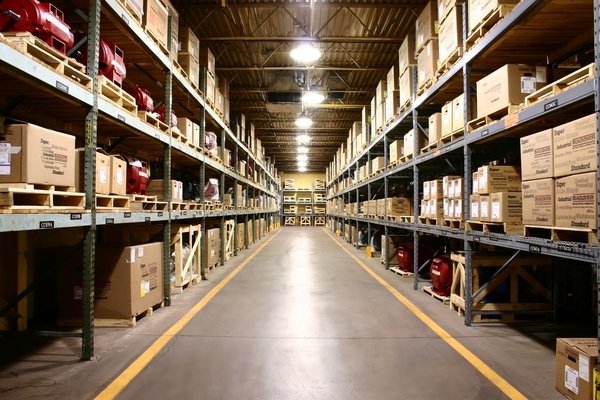
The importance of new locations should grow rapidly in the Polish market for modern warehouse and industrial space, according to the “Small town, big deal” report prepared by JLL in cooperation with Hillwood Polska and ManpowerGroup. The so-called Big Five remains the engine of growth and attracts the most investment, but cities such as Konin, Kielce, or Częstochowa are emerging stars of the Polish warehouse market.
Experts evaluated each of the selected locations based on five main thematic criteria: transport accessibility, labor market, financial conditions, regional competencies, and real estate market maturity. Each was assigned a weight reflecting its importance for a theoretical, universal type of tenant. JLL experts considered transport accessibility and the labor market to be the most important, accounting for a total of 60% of the overall location score.
In the analysis, which covered 34 centers with cities of over 100,000 inhabitants along with their surrounding counties, four locations from the Big Five were rated the best: Central Poland, Warsaw, Poznań, and Upper Silesia. Stryków received the highest total score of 79%. Less obvious locations also received high scores: Konin and Kraków (68% each), Kielce (67%), the Legnica-Głogów District (66%), and Zielona Góra, Częstochowa, and Bydgoszcz (65% each). The top ten most attractive new locations also included: Włocławek, Tarnów, and Rzeszów (64% each). Wrocław was missing from the top of the ranking, as its final score was affected by a low rating for the local labor market.
– In terms of the size of the warehouse market, we currently rank seventh in the European Union. Despite recruitment challenges or rising construction costs, the sector is developing dynamically, and with the development of road infrastructure, new expansion opportunities are emerging in locations previously outside the interest of market participants. Our analysis of key criteria for location selection by manufacturing and logistics companies has shown that – apart from the five main regional markets – Konin or Kielce, among others, have the most advantages. The potential applies not only to relatively large cities but also to perfectly located smaller towns, such as Kutno or Częstochowa – comments Tomasz Mika, Director of the Warehouse and Industrial Department at JLL in Poland.
The difference between the first and last place in the ranking is not large, and all emerging locations analyzed in the report possess a set of features that suggest international investors will build new facilities there, and local companies will be willing to use the newly created warehouses. Here are the 10 best-rated new locations:
Smaller players enter the game
The “Small town, big deal” report confirms that the regions forming the Big Five remain the pillars of the Polish warehouse market. However, their share in both demand and supply is systematically falling – from 90% in 2013 to 74% in 2018 in the case of leased space, and from 92% to 83% in terms of existing warehouse space resources.
– The growing share of smaller Polish cities in the warehouse and production space market is the result of the expansion of transport infrastructure, which in turn facilitates large-scale investments. The Big Five will maintain its dominant position, but there are many indications that in the coming years, warehouse halls will begin to spring up more often than before in smaller locations. Thanks to falling unemployment, especially in the largest cities, smaller centers are gaining an important advantage in the form of qualified labor reserves. The cost of land, which is much more attractive than in the case of major agglomerations, is also not without significance – says Hubert Michalak, CEO of Hillwood Polska.
In many new locations, local companies whose existing headquarters have ceased to meet quality, technical, or location requirements are becoming tenants of modern warehouse and production space. We can therefore speak of organic demand that has not had the opportunity to be realized until now.
Labor market as always key
The dynamic development of the industrial space market is possible in some smaller centers, which are characterized primarily by an attractive and accessible location and a sufficient number of potential employees.
– The richness of regional labor markets – this element currently speaks in favor of smaller or previously less popular locations. This is proven primarily by the unemployment rate, which has historically been the lowest in the largest agglomerations, such as: Warsaw, Poznań, Wrocław, or the Tri-City. Conversely, it was highest in smaller industrial cities where restructuring processes took place during the transformation period, e.g., in Radom, Elbląg, or Włocławek. Human resources in these centers are characterized not only by large numbers but also by high qualifications. However, due to the lack of jobs, many people left their place of residence, to which they would gladly return if interesting job offers appeared – notes Marek Wróbel, Key Account Director, ManpowerGroup.
According to ManpowerGroup data used for the assessment, recruiting a 100-person crew for a production plant will be fastest in Białystok and will take about 40 days. It will take 50 days in: Bielsko-Biała, Bydgoszcz, Częstochowa, Elbląg, Gorzów, Kalisz, but also in Kraków or the eastern outskirts of Łódź. The longest, at 90 days, will be recruitment in Wrocław and Warsaw and its surroundings.
Finding balance
A location decision for both a production facility and a strictly logistics one consists of a number of factors. Some of them result from the nature of the business, geographical criteria, and some from a simple economic calculation, in which one of the key elements is rental costs. These result primarily from the location and type of space and are shaped based on current supply and demand trends, land prices, and construction costs. These factors also show regional differentiation. The maturity of a given local market, which translates into a greater choice for tenants, is also significant. Additional advantages of a given market will be investment incentives, or more generally – the investment climate prevailing in a given region. It is worth noting, however, that of all the items making up the total cost of the supply chain, transport costs account for an average of about 50%. The choice of the optimal location for a distribution center or production plant is therefore of greater importance for the company’s operating result. According to the report’s authors, as the Polish economy develops, demand for modern industrial space will also be generated in smaller centers. The report points out the strengths of each location to create a tool for their assessment by potential investors.
– To make a rational location decision, one should analyze which of the criteria studied in this publication are of the greatest importance for the company’s operations. Finding the right balance between transport costs, employee availability, and rental costs is therefore crucial. With a certain amount of flexibility, taking advantage of the opportunities offered by smaller centers may prove to be an attractive alternative to the currently most popular Big Five markets – concludes Jan Jakub Zombirt, Director, Strategic Advisory Department, JLL.
The report is available at: https://magazyny.pl/blog/raporty/nowe-lokalizacje-magazynowe-w-polsce/