








Customer expectations and new technologies are making logistics processes increasingly complex. Another reason for this situation may be the growing division of labor, which in turn leads to greater differentiation of process participants and thus to greater interdependence of individual processes, permeating not only between companies and systems, but also across national and continental borders. Large logistics companies, which are organizers of supply chains for global enterprises, cooperate with hundreds of subcontractors or outsourcing firms and manage an increasingly extensive network of system partners. The solution is far-reaching cooperation and standardization of processes.
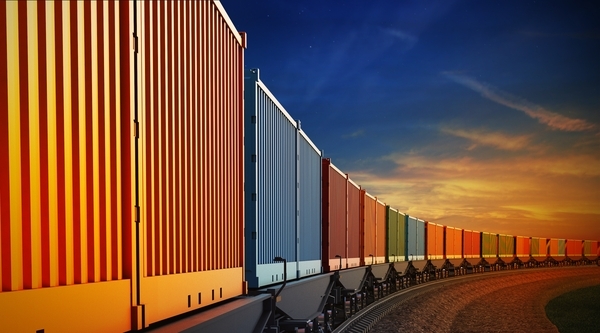
An example of standardization is the loading unit in intermodal transport. One of the support tools can be a central IT platform that connects the diverse world of freight forwarders, carriers, and various types of processes. We must remember that we live in times where the customer sets service standards and most often expects a single business partner. In the era of the information society, awareness and requirements regarding product availability are growing. Logistics, and therefore transport, plays a significant role in ensuring this. How to act effectively in this area while meeting increasingly higher requirements and the need to constantly look for new ways to reduce overall process costs?
Due to high competition among manufacturing or distribution companies, the reduction of logistics costs, and in particular transport costs, is essential. To this end, it is necessary to continuously analyze and change the way transport processes are implemented and to be open to new concepts of logistics management in the company, which contribute to the efficiency of these processes. One of the directions of action is certainly innovative solutions. When introducing innovative changes, it should be remembered that transport and the organization of logistics processes are not a source of profit for manufacturing companies. For customers of logistics services, price, service quality, and process reliability are what count. The safety of logistics processes and high availability of services require joint action, also long-term, which is based on an agreement between business partners regarding the constant exchange of information and cooperation. Most companies underestimate aspects related to optimization and long-term planning, focusing solely on their current operations. Entrepreneurs try to fulfill their customers’ orders frequently and quickly, mainly using road transport, while trying to keep transport costs at a minimum level. This approach may cause manufacturing and logistics companies – while achieving an immediate improvement in the processes carried out – to increase customer satisfaction in the short term. However, having the directions for transport development defined by the EU in the transport policy contained in the White Paper, in the longer term, they may lead to a deterioration in the level of customer service and product availability.
Significant priorities of the EU transport strategy certainly include shifting road transport to environmentally friendly modes of transport, including rail transport, and reducing the emission of harmful substances into the environment. In particular, the reduction of greenhouse gas emissions has a significant impact on the future actions of logistics companies in terms of choosing means of transport, where it is assumed that by 2050 their emissions will decrease by at least 60% compared to the 1990 level. The transport policy recommendations contained in the White Paper also state that by 2030, 30% of road transport over distances of more than 300 km should be shifted to other modes of transport, such as rail or water transport, and by 2050 this should be 50%.
Frequent and fast deliveries by road transport require the involvement of more means of transport, which leads to increased traffic congestion and deterioration of road safety. As a result of growing congestion, the average technical speed at which vehicles move decreases, which results in longer delivery times and reduced safety. This can lead to customer dissatisfaction and, as a result, the loss of some orders. It should also be remembered that frequent shipment of goods in a less-than-truckload system is much more expensive and economically unjustified than transporting these goods in larger batches. Increased demand for transport services may result in road carriers raising freight rates. Companies wanting to develop and operate effectively in the long term, and not just make a profit in the coming years, should look for alternative solutions for organizing transport processes with future, preferred directions of development in mind.
The article contains 16,800 characters.
Source: Logistyka Magazine
Innovative solutions as an important element of rail transport development