








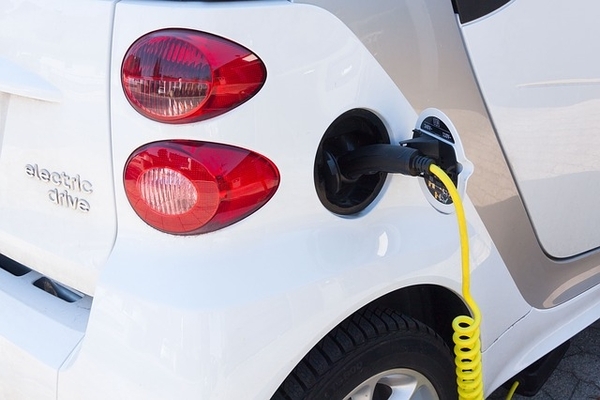
Do you remember how many years hybrid cars have been mass-produced worldwide? At least since 1997, when a certain Japanese automotive group introduced the “Prius” model to the market. Where does the name come from? In Latin, this word means “Prior,” and the appearance of this hybrid in showrooms was far ahead of the times when environmental awareness began to set trends in the automotive industry. Before that, the manufacturer of the “Prius” also developed hybrid vehicle propulsion technology, known by the now-popular acronym HSD (Hybrid Synergy Drive), with which it has already sold millions of different models worldwide. In the following years, other major players in the global automotive market also followed the hybrid path.
Another question for today: when did the electric car appear? Well, much earlier than the hybrid, as early as the 1830s (!), when – as one can read on Wikipedia – Scottish entrepreneur Robert Anderson constructed the first electric carriage… The idea of an electric vehicle was then continuously developed, although for many decades it was overshadowed by the rapid progress of internal combustion engine technology in the automotive industry. However, it was not until the 1980s that a renaissance of electric cars occurred in one of the world’s major automotive markets, the USA, where preferential tax regulations were applied to this vehicle segment. We are observing their rapid development worldwide today, and for example, in Norway, electric cars are soon expected to replace combustion engine vehicles entirely…
And the last question: since when – at least in the European Union – should electric and hybrid cars also be safe for other road users, i.e., pedestrians and cyclists, as well as blind and visually impaired people? Since July 1, 2019. Since then, all electric and hybrid cars homologated in the EU must be equipped with sound emitters, warning pedestrians and cyclists of an approaching vehicle in urban traffic. In two years, this obligation will apply to all such cars registered for the first time in the EU. This concerns the AVAS (Acoustic Vehicle Alerting System), which warns pedestrians and cyclists of an approaching electric or hybrid car with a continuous sound, resembling, for example, the sound of combustion engine cars (with a volume of 56 – 75 decibels). AVAS must be active up to 20 km/h and when reversing.
In conclusion: how many years have electric and hybrid cars been produced – at least on a mass scale? About twenty. What mainly drives their promoters? The elimination of harmful exhaust fumes and noise generated by internal combustion engines. And since when has anyone thought about the fact that a quiet vehicle might be inaudible, and therefore unnoticeable to a significant portion of (urban, though not only) traffic users? Only recently. And what happens? The roar of engines will return, this time coming from electric emitters…
Another example of the lack of foresight regarding the consequences of the widespread introduction of certain transport solutions in urban traffic is the increasingly frequent collisions of pedestrians with speeding scooters on sidewalks. Their users know how dangerous it can be on the road, where they have no chance against cars, so they speed along paths intended primarily for pedestrian traffic. Our traffic law codifiers only began to notice the problem of scooters on sidewalks after a series of accidents that the media reported on. Perhaps these two-wheelers should also be equipped with warning sound emission systems? Well, perhaps not necessarily resembling the roar of a combustion engine, so as not to fray the nerves of pedestrians who might think they are already on the road. It is a pity that this was not thought of earlier either…
It seems that there are plenty of examples where comprehensive thinking about consequences lags far behind the implementation of various solutions and devices on a wider scale. Perhaps it is worth talking about them to avoid further problems that could have been prevented earlier? Earlier, that is – as the ancient Romans used to say – prius…
You can read about other electric vehicles here:
– Triggo – innovative Polish vehicle during track tests
– DHL Express begins testing electric vehicles in Poland
– Dachser electric bikes in an increasing number of cities
– Kutno orders Solaris electric buses
– E-buses on the European market – competition increasingly fierce