









According to the Global Telematics Market report, the compound annual growth rate of this sector will reach 28% by 2022, with its value hitting 233 billion dollars. That is the future, but what is the current situation in international road transport? Telematics solutions have already permanently settled into truck cabs and the headquarters of TSL industry companies. The increasingly diverse range of driving parameter measurement systems and the growing Internet of Things market mean that more transport companies are investing in telematics technologies. Research conducted by Inelo shows that more than half of the surveyed companies have already decided to implement them, and nearly 20% are installing them en masse in their vehicles. There is, therefore, a clear upward trend from which there will be no turning back. Why?
A piggy bank
First, the most obvious issues, namely costs. The Inelo report indicates that among the benefits of using telematics, 38% are savings related to more precise destination determination, and 17% are lower fuel consumption.
– Telematics solutions, which measure various driving parameters such as fuel consumption and provide functions for sending this data to the company in real-time, allow for significant cost reductions. Data flowing from such devices is a goldmine of useful knowledge for all transport companies. They enable more effective route planning and allow for determining whether a driver is driving economically.1 An additional benefit is the possibility of using them in internal training programs. Furthermore, they allow for monitoring the work of both the driver and the vehicle, and contribute to a significant reduction in potential abuse – says Adam Kapuściński from Inelo, a company providing IT solutions for international road transport.
Technologies such as GPS or geofencing are also useful in creating fleet management systems. The status of every HGV can be monitored remotely thanks to them, which allows for planning appropriate stops and potential repairs without the need to look for a workshop along the way.2
Without fear
In addition to cost reduction, the issue of safety and work comfort is also important. This is one of the most significant reasons why companies decide to invest in telematics – 87% of carriers surveyed by the manufacturer of the telematics and GPS monitoring system, GBOX, pointed to this very aspect. Employee safety also translates into the financial sphere. All systems that facilitate the work of drivers can prove to be worth their weight in gold, as convenience and work comfort are among the factors that determine the choice of an employer. The employee market in the industry means that transport companies are competitively fighting for the best truckers. However, this can no longer be done solely through wage increases, so increasing job satisfaction through the use of the latest technologies will become increasingly important.
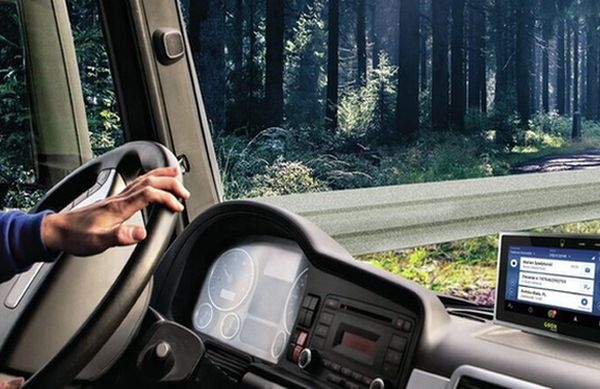
– There are solutions on the market, among others, that support information exchange with the driver, planning appropriate routes, or handling documents. For example, an important element of the GBOX ASSIST system is a special terminal for communication with the driver, whose convenient and intuitive operation is less demanding for the driver, which ensures their greater safety on the road. Thanks to such devices, convenient, two-way information exchange with the driver is possible with confirmation of its delivery and receipt. Additionally, it becomes possible to efficiently manage documentation, such as: proof of delivery, waybills, invoices, timesheets, receipts, logs, or mileage reports, e.g., thanks to dedicated devices for sending documents by drivers – explains the Inelo expert.
Integration
The future of telematics technology looks optimistic. According to the Global Telematics Market report, the compound annual growth rate of this sector will reach 28% by 2022, and its value will then reach 233 billion dollars.3 It is therefore clear that the market will grow dynamically. However, this does not mean that the industry can rest on its laurels and simply consume the fruits of this growth. A great deal remains to be done regarding the integration and handling of huge amounts of data from all devices installed in transport vehicles. There are many companies on the market offering equipment that controls various elements of vehicle operation, but along with their development and market growth, there will also be a need to develop appropriate systems for analyzing this data. The Internet of Things (IoT) and the idea of connected cars, which allow for their direct and simultaneous transmission, provide invaluable services here. However, transport companies must face the problem of storing them. An obvious solution in such a case is cloud computing. Smaller companies could already use those existing on the market, but for larger players, this is a completely new potential for the development of IT services intended specifically for handling telematics data. Setting up one’s own specialized cloud, which can be rented to other companies, is, however, only one of many possibilities. A separate area, still to be discovered, is the creation of a unified environment integrating the work of individual systems and sensors into one easily readable stream of data, which can then be used in creating applications or monetized as residual data.
1 https://www.worktruckonline.com/323081/why-data-is-the-future-of-fleet-management
2 Ibidem.
3 Ibidem.