









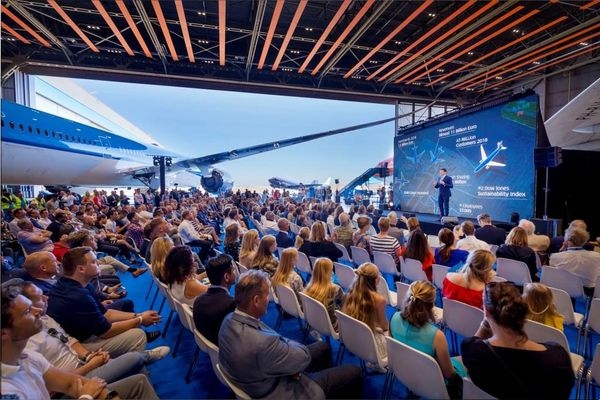
Royal Dutch Airlines, exactly 100 days before its centenary, has ceremoniously launched its anniversary celebrations. During the event, which took place at Amsterdam’s Schiphol Airport and brought together company employees, led by CEO Pieter Elbers, company partners, the Dutch Minister of Transport, and journalists from around the world, the oldest airline in the world decided to focus the world’s attention primarily on the future of civil aviation in the context of climate and the environment. KLM has set its mission as a leader of change towards sustainable aviation of the future, inviting other airlines, customers, shareholders, and the entire industry to cooperate under the slogan “Fly Responsibly”.
On October 7, 2019, KLM will turn 100, becoming the first “centenarian” among airlines that still operate under their original name. Despite a turbulent history and immense competition, the company has managed not only to survive but to build one of the leading and recognizable brands in the European sky. This was possible thanks to the ability to take on challenges and seize emerging opportunities, the capacity for dialogue with partners, and openness to innovation and new technologies. You can learn more about the rich history of KLM on the special anniversary website klm100.com, which is full of trivia, fascinating stories, photos, and videos.
Throughout its history, KLM has repeatedly been a precursor to innovative solutions in the industry and has set trends for the future. Now, in the face of growing climate problems, the airline—being one of the fathers of aviation—feels responsible for the impact that aviation has globally on the planet.
The aviation industry is responsible for two to three percent of CO2 emissions generated by human activity on Earth. This number is growing, mainly due to the increase in the world’s population and the fact that more and more people want to discover the world, and for an increasing number of people, travel has become accessible. Like any other industry, aviation must do everything possible to 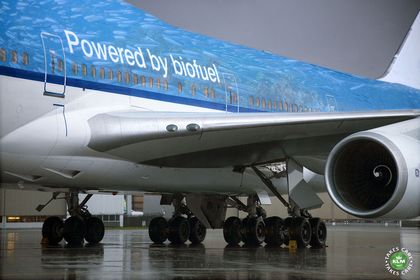 minimize its impact on the natural environment while maximizing its positive impact on society.
As the first airline to celebrate 100 years of operation, KLM is widely recognized as a pioneer in the aviation industry. 100 years ago, the greatest concern of aviation, and thus KLM, was flight safety. Over the years, the aviation industry has worked together to implement standards and improve overall safety. 100 years later, KLM feels obligated to do everything to ensure that future generations still have something to explore on Earth. That is why the company is calling on the entire aviation industry to cooperate, just as it cooperated a hundred years ago on safety issues. Once again—only together—can airlines face the new challenges that are now climate and planet protection.
As part of the “Fly responsibly” initiative, the website flyresponsibly.klm.com was created, where you can learn about KLM’s achievements and what the company is working on regarding sustainable aviation. These are primarily efforts to further use sustainable aviation fuel, which allows for a reduction in CO2 emissions during every flight by up to 85%. KLM was the first airline in the world to perform the first commercial flight on biofuel in 2011. Since then, the airline has been successfully using biofuels and is currently involved in creating Europe’s first factory producing sustainable aviation fuel, which will be built by 2022 in the Netherlands. Secondly, by creating the “KLM Corporate BioFuel Programme”, KLM has engaged partners in the form of large corporations and government institutions to raise funds to cover the still significant price difference between sustainable fuel and traditional fossil fuel. Thanks to this, the use of biofuels on a larger scale by airlines can be economically justified. Meanwhile, the CO2ZERO program created by the airline allows KLM customers to compensate for the CO2 emitted during their air travel, thanks to which the carrier can invest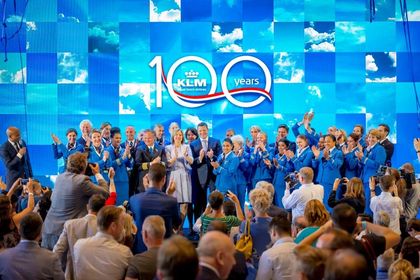 the collected donations into initiatives such as reforestation. For example, since 2017, 500 hectares of tropical forests have been planted, which positively affect the CO2 balance in the atmosphere.
Besides this, KLM is taking other numerous actions for the sake of the environment, such as proper waste management through advanced onboard waste segregation and recycling, replacing diesel-powered airport infrastructure with environmentally friendly electric devices, and even working together with the Delft University of Technology on the “V-Flying” aircraft of the future.
KLM invites other airlines to all these initiatives, promising support in integrating sustainable development activities with their business. Furthermore, the airline encourages its customers and all passengers to travel responsibly. In the “What you can do” section of the flyresponsibly.klm.com website, we can find tips on how each of us can contribute to improving the state of the climate and the environment. KLM encourages minimizing the carbon footprint by offsetting CO2 on every trip, packing responsibly to reduce the weight of luggage—thereby reducing CO2 emissions—and even considering an alternative, more ecological means of transport, such as a train, especially for short-distance travel.
– Over the last hundred years, KLM’s entrepreneurial spirit and drive for innovation have played an important role in the aviation industry. The round anniversary is an opportunity to reaffirm our commitment to realizing KLM’s ambition: to become the most customer-centric, innovative, and efficient European carrier, characterized by a strong determination to meet the challenges that lie ahead at every stage of our operations. Starting today, we will encourage our competitors to cooperate and share with them our experience, tools, and everything we have learned about sustainable development. Sustainability in aviation and caring for the planet is a field where we do not want to compete, but join forces in pursuit of the common good. From today, we are offering our CO2ZERO emission compensation tool to all other airlines for free. In return, we invite airlines to engage in dialogue and share their best practices with others for a greener aviation of the future – said Pieter Elbers, CEO of KLM.