








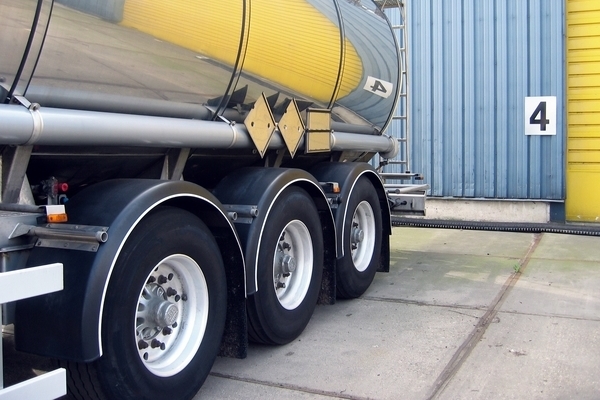
One of the fundamental principles of proper vehicle operation is the pursuit of achieving the lowest possible fuel consumption while simultaneously minimizing the wear intensity of vehicle components, i.e., the engine, drivetrain, chassis, etc. (the principle of economical driving). Fuel consumption depends on the distance traveled, the calorific value of the fuel, the energy intensity of the movement, and the efficiency of the drive system. The energy intensity of movement depends on motion resistance related to the road profile (inclines, curves), atmospheric conditions (precipitation, wind, temperature), vehicle properties (rolling resistance), vehicle load (actual vehicle mass), and the driving cycle implemented by the driver (driving speed, adjustment of gear ratios to engine load, method of acceleration and braking).
Drive efficiency depends on the nominal parameters of the vehicle and its technical condition (actual properties). Factors affecting fuel consumption related to the vehicle include: body type (aerodynamic drag), number of axles, type and design of the engine, type and design of drivetrain components, vehicle mass (inertia mass), tire type (rolling resistance), and additional equipment (air conditioning, parking heater).
Assuming that the actual properties of the vehicle are known and the vehicle will be driven according to the principles of proper use, i.e., minimizing the wear of vehicle systems and fuel consumption, the main factor affecting the energy intensity of the trip will be its route.
When choosing a route, one can take into account the minimization of costs, travel time, fuel consumption, and exhaust emissions. Fuel consumption by a vehicle while performing transport tasks is a significant factor affecting the costs of transport services. It directly affects the level of carbon dioxide emissions and other substances contained in exhaust gases. The level of fuel consumption during a transport task depends on many factors, including: route length, terrain, vehicle design, the ratio of engine power to the vehicle’s loaded mass, driving style, road infrastructure, and traffic intensity.
When planning a route for a vehicle, factors such as the time in which the transport task should be completed, the length of the route, and estimated costs are taken into account. The amount of fuel that will be consumed during the trip depends on the vehicle’s traction properties, the average fuel consumption of a given vehicle for various road conditions, the road infrastructure on the planned route, i.e., the number and types of intersections, the length of straight sections, speed limits, traffic fluidity related to traffic intensity, and the occurrence of traffic obstructions.
An important issue is also the impact of route selection and the associated speeds and travel times at specific speeds on exhaust emissions. Shortening travel time by choosing a different route is not always synonymous with reducing fuel consumption or limiting the emission of individual exhaust components.
Route selection
Route selection is closely related to the execution of a transport task. For this reason, transport tasks can be divided into: simple – consisting of transporting people or cargo (traveling) between given points (stops) without the possibility of choosing a route (e.g., public transport), simple with route selection – consisting of traveling between stops in a specific order, but with the possibility of choosing the route between consecutive stops (e.g., long-distance transport), complex – consisting of traveling between stops or along designated road sections without a specific order (e.g., newspaper distribution, municipal waste collection, snow removal).
Assuming the driver’s driving style is consistent with the principles of economical driving, in the case of simple tasks, fuel consumption during transport will be influenced by the vehicle’s technical parameters (constant), cargo load (constant or variable), road length and profile (constant), traffic regulation infrastructure (constant), traffic intensity (variable), and climatic conditions (variable). For a simple task with selection, there is a possibility of additional selection of routes of different lengths with known road parameters and infrastructure. In a complex task, the basic variable is the length of the route.
In the case of optimizing the length of the route between given points, the problem can be reduced to an Euler task. The task can be solved using heuristic methods, such as the nearest neighbor method, using evolutionary algorithms or immunological algorithms.
The article contains 17,020 characters.
Source: Logistyka Magazine