









Logistics and net working capital are currently two management elements whose impact on market security, competitiveness, and the financial standing of enterprises is enormous. Logistics is the process of managing supplies and inventory storage. In recent years, the most spectacular business successes have been achieved by companies that were able to deliver products to customers quickly and effectively thanks to efficient supply chain management, i.e., they had a well-organized logistics system.
J.B. Ayers argues that “efficient supply chain management is the foundation that guarantees a company’s success.” Enterprises that use the supply chain management method consider it a determining factor for success. This group includes, for example: Amazon, Dell, Shell Chemical, and Airbus. However, they claim that this management method requires continuous improvement. Business managers are interested in creating the most efficient delivery system and goods storage process possible, which will translate into improved financial results and an increase in their market position. The basis for building a competitive advantage is the management of net working capital. To improve the financial situation of an enterprise, managers should focus on this specific area of finance and examine the impact that logistics has on the individual elements that make up net working capital. Does logistics actually have even a minimal impact on the level of net working capital?
Net working capital in an enterprise
The term working capital is most often associated with two concepts: gross working capital and net working capital. Gross working capital is current assets, and therefore it includes: inventory, receivables, short-term investments, and short-term prepayments and accruals. Simply put, net working capital is defined as the difference between current assets and current liabilities. It is, therefore, the capital that finances only that part of current assets which has not been financed by short-term liabilities.
Net working capital in an enterprise performs the following roles:
– it is a measure of financial liquidity,
– it acts as a buffer protecting the enterprise against operating losses; the surplus of current assets over current liabilities enables the renewal of the operating cycle,
– it reduces the negative impact of the environment on the enterprise’s operations and protects against supply volatility.
Working capital protects against supply volatility, so it is related to logistics. The value of net working capital can be determined in two ways. It can be calculated using a short-term or long-term approach. In the short-term, or so-called balance sheet approach, net working capital (NWC) is the surplus of current assets (CA) over current liabilities (CL).
NWC = CA – CL
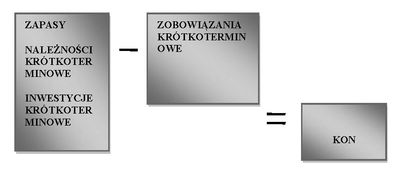
Fig. 1. Net working capital in the balance sheet approach
Source: own elaboration
In the long-term, or capital approach, it is the surplus of permanent capital (PC) over fixed assets (FA). Permanent capital is the sum of equity and long-term liabilities.
NWC = PC – FA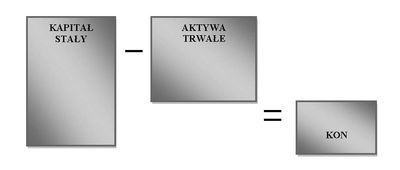
Fig. 2. Net working capital in the capital approach
Source: own elaboration
Net working capital can be positive, negative, or theoretically zero. Positive working capital occurs when current assets are higher than current liabilities.
CA > CL = positive net working capital
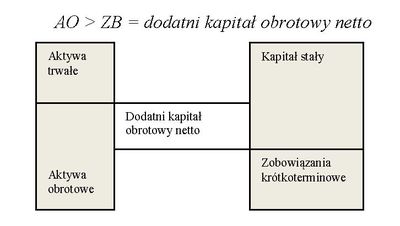
Fig. 3. Positive working capital
Source: own elaboration
Positive working capital means the security of the enterprise. Current assets are financed through short-term liabilities as well as through equity and long-term liabilities. And that part of permanent capital that finances current assets is called positive net working capital. Negative net working capital appears when current liabilities exceed current assets. This situation represents a level of current liabilities that, in addition to financing current assets, also finances fixed assets. This is unfavorable because it is associated with the risk of the entity’s bankruptcy caused by the loss of financial liquidity. The reason for this is an increase in the level of short-term liabilities, the extension of their repayment terms, and the taking out of new loans.
The article contains 16,810 characters.
Source: Logistyka Magazine