









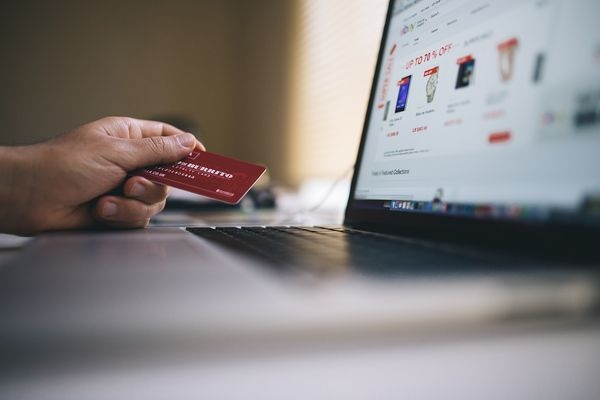
Strong competition between online stores makes customers increasingly demanding and less forgiving of shortcomings. They expect not only cheap and good products, but also low shipping costs, free returns, and perfect store organization, which ensures the entire purchasing process runs lightning-fast.
Improvements that an online store can implement can be divided into two main categories. One involves activities related to broadly defined marketing, including the visual side of online shopping. The second category is related to the entire logistics chain. You can have a perfectly refined website that effectively encourages purchases, while failing on such sensitive issues as delivery timeliness or return handling. The result of poor organization can be negative reviews online and, ultimately, a decline in the number of customers.
Marketing – what the customer sees
Much has been written about e-commerce marketing, and the topic is likely far from exhausted. However, let’s look at a few simple ways to improve an online store from the side that customers interact with.
Very often, online store owners try to have the largest possible offer, hoping that this way “everyone will find something for themselves.” In practice, however, it doesn’t work that way. A proverbial “mixed bag” will satisfy neither fans of peas nor cabbage. A business bookstore that also offers romance novels will not be perceived as a business store, even if it boasts the largest offer of management and finance books on the market.
Furthermore, too much choice can cause so-called decision paralysis. Customers like to have a choice, but when the choice is too large, it sometimes happens that the best solution is… leaving the store. Therefore, it is worth taking care of a carefully selected assortment and eliminating from the offer those products (or even entire categories) that enjoy the least popularity.
Once the store’s offer has been organized, it is worth introducing cross-selling and up-selling. The first method involves suggesting to the customer what they can add to their current order, e.g., in a bike shop, it is worth suggesting that when buying a bike, the customer should also buy a helmet, lighting, or a rack – elements that will make the purchase more complete.
Up-selling, on the other hand, is a proposal to change the customer’s first choice to something slightly better and slightly more expensive. Sticking to the bike example, the customer might be willing to pay more for a model equipped with better-class derailleurs or one that already has lighting and a rack as standard. In a traditional store, the task of “suggesting” to the customer belongs to the salesperson. In an online store, it is enough to ensure appropriate software that will suggest the right proposals, e.g., based on statistical customer preferences.
A real nightmare for online stores is abandoned shopping carts. A lot of people enter the store’s website, spend a lot of time choosing products, and then the purchase is not finalized. Why? Research shows that for customers, the most common problem is higher-than-expected delivery costs or unacceptable payment methods. It is therefore worth ensuring the lowest possible delivery costs and the ability to pay for the order in many ways (including payment on delivery). The more options available, the higher the sales.
The issue of free returns is also becoming an increasingly important argument for customers. Some customers check even before purchasing whether, in the event of a return, they will be able to send the purchases back in a convenient way and at the seller’s expense. However, the topic of returns already touches upon logistical challenges…
Logistics – what the eyes don’t see
E-commerce is not just a website. Whether a given store succeeds or fails is heavily influenced by processes that customers usually care little about – at least until everything works like clockwork. It is worse when something goes against expectations. For example, when the product does not meet expectations and the customer decides to return it.
While free returns are increasingly becoming a standard in large stores, for small and medium-sized ones, such a solution may prove too expensive. When estimating the costs of such a decision, one should calculate the average number of returns per year and multiply it by the shipping costs.
In automating the process of sending and receiving returns, using parcel lockers can help. Additionally, in large online stores, sorters work well, which facilitate the sorting of returns and thus speed up the possibility of re-introducing returned products for sale.
It is also worth paying attention to delivery timeliness. To ensure efficient flow of goods, one must have up-to-date information on current orders, availability of individual products from suppliers, as well as the status of complaints and returns. Business Intelligence software will help in efficiently connecting and analyzing all information.
Some stores try to handle the entire logistics process themselves. The advantage of such a situation is independence from external companies and the ability to ensure one’s own service standards. However, when the store grows, at some point, selling, warehousing, packing, and shipping goods on one’s own becomes too time-consuming and expensive. Then it is more profitable to establish cooperation with a logistics company.
More and more online stores are using external warehouses. For a small store, renting a few or a dozen shelves in a large-area warehouse is often enough. Thanks to outsourcing, an e-commerce company will pay only for the actually rented space, thanks to which costs will be relatively low.
Logistics companies, however, offer both individual services adapted to the capabilities of small and medium-sized online stores (e.g., warehousing) and so-called fulfillment. This term means full outsourcing of tasks related to logistics. Fulfillment includes warehousing, packing, and shipping purchased goods. Additionally, it may also include many other tasks, including handling returns or even personalized packing of goods (e.g., a product ordered as a gift).
– In logistics companies that have a comprehensive offer for e-commerce, a store can outsource almost everything. From picking up goods from its suppliers (wholesalers, manufacturers, importers), through warehousing products, to delivering goods to customers via courier companies or even handling returns and complaints – says Urszula Rąbkowska from the logistics company XBS Group. – Before we commit to a given logistics company, it is worth making sure right away how wide a range of services it offers. Even if today the store serves only customers from Poland, in the future, the availability of international shipping and its duration may prove important. For us, the time of such delivery is from 4 to 6 days, depending on the country – emphasizes the XBS Group representative.
Yet another solution is dropshipping. In that case, the online store does not have to deal with logistics matters at all, because the supplier will take care of everything. In such a situation, the store’s actual tasks are only sales, marketing, and maintaining the website. Everything else remains at the discretion of the wholesaler or another supplier. Obviously, the success of the dropshipping operator will also depend on which logistics company they partner with.
In practice, efficient organization of the supply chain in an online store is no less important than marketing and sales processes. It is logistics that very often determines the future of a given store, which is why it is worth carefully selecting partners to whom the store will entrust outsourcing in this area.