









The efficiency of the order picking process has a significant impact on the performance of distribution systems, which are required to be: timely, complete, compliant, and of appropriate delivery quality. These requirements force companies to seek increasingly effective picking systems in terms of organizational and technological solutions. This article compares two picking models in terms of organization and efficiency: single-stage picking (by order) and two-dimensional picking (by order).
To determine the efficiency of the single-stage and two-stage picking process, the KMA software application developed at the Institute of Logistics and Warehousing (ILiM) was used, the operation of which has been described in articles in “Logistyka” (No. 5/2012, No. 1/2014, and 2/2014). Using the application, simulation studies were conducted on the impact of the variability of the number of documents and items on documents on picking efficiency. The description of single-stage picking, the adopted assumptions, and the basic organizational schemes were presented in the previous article published in Logistyka No. 2/2014.
A bit of theory
Two-dimensional picking (by order). Two-dimensional picking (by order) is a less common model of picking used in warehouses. The method of implementing two-dimensional picking is presented in Table 1, and the functional diagram of the two-dimensional picking zone is shown in Figure 1.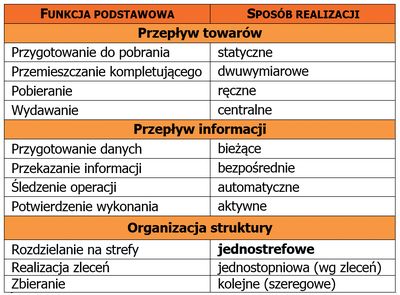
Tab. 1. Organization of two-dimensional picking (by order).
(Source: own elaboration)
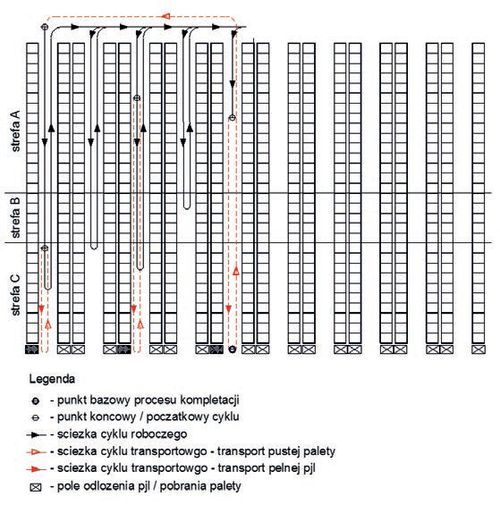
Fig. 1. Functional diagram of the two-dimensional picking zone.
(Source: own elaboration)
When implementing two-dimensional picking, the following basic organizational assumptions are made:
1. The size of the picking zone results from the number of stored product assortments, storage technology, and parameters of load units,
2. When determining the parameters of the picking zone, a length-to-width ratio of 2 (L/B = 2) was assumed,
3. The number of storage levels results from the adopted technology and the height of the stored load units of individual product groups A, B, and C and is limited by the available clear height of the warehouse facility (in the picking zone),
4. The capacity of the picking address depends on the adopted frequency of their replenishment,
5. The widths of the working aisles result from the technological requirements for the warehouse trucks used,
6. The picking process uses:
• order picking trucks with rotating-sliding forks (for direct picking of shipments)
• front-loading forklifts – for transporting completed load units from the front of the racks to the dispatch zone and empty pallets from their storage location to the front of the racks
• in the picking zone,
7. The picking zone occupies a designated part of the warehouse facility area and includes all available product locations,
8. The reserve storage zone, occupying a separate area of the warehouse, is located in the immediate vicinity of the picking zone,
9. The product location address consists of:
• for group A goods – pallet slot number
• for groups B and C – shelf location number,
10. The implementation of picking takes place according to the following principles:
• orders are prepared sequentially according to the order of entry (request), which is consistent with the dispatch (loading) schedule
• the basis for picking is the system document “Picking List” corresponding in terms of subject matter to the “Dispatch Order” document
• in the case where the volume of the “Dispatch Order” exceeds the assumed capacity of the picking load unit, several “Picking Lists” will be created (for example “Picking List 1/2”, “Picking List 2/2”),
11. A “Picking List” with a capacity not exceeding the assumed permissible value for the picking load unit is carried out in one travel cycle of the picker,
12. The path of the picking route in each working aisle has a “comb” layout,
13. The movement of the picking truck in the working aisle takes place in two directions:
• driving “forward” – during the working picking cycle (pickups) or transport of the unit to the front of the rack
• driving “backward” – during the return to change the working aisle,
14. Product assortments are picked from locations on both sides of the working aisle,
15. Completed load units are placed on a drop-off area or a cantilever slot located at the front of the nearest rack. From the same rack front, but from a different cantilever slot, subsequent (empty) pallet carriers are picked,
16. Only one picking truck can be in the working aisle at a time,
17. Picking trucks move sequentially through the entire picking zone while fulfilling orders,
18. Replenishment of picking locations takes place during a different shift, from the reserve storage zone located directly behind the picking zone,
19. Load units of replenished goods are in the form of:
• for group A goods – homogeneous load units
• for groups B and C – heterogeneous load units containing assortments located within one working aisle of the picking zone.
Comparing the adopted assumptions for single-stage and two-dimensional picking, differences occur only in the organization of the process, while the storage and internal transport technologies used are similar.
The article contains 13,560 characters.
Source: Logistyka Magazine