








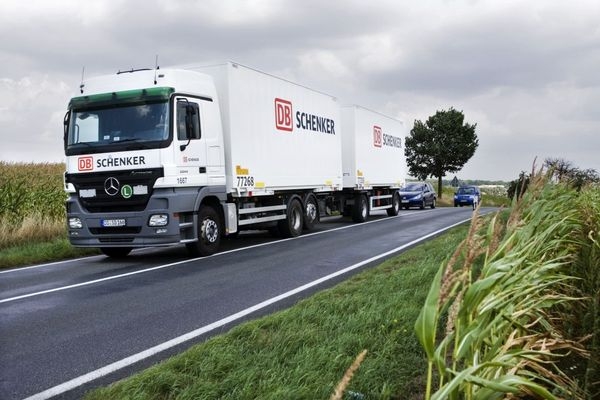
Every week, DB Schenker implements 10 swap bodies into its domestic network. The investment enables more efficient use of the fleet, as well as a reduction in CO2 emissions.
The implementation of swap bodies (BDF) is the most important project for DB Schenker’s land transport business this year.
– Step by step, we are implementing a plan to introduce 800 swap bodies. This is one of the elements of realizing our ambition to be the best and largest operator in international transport, as well as a leader in the domestic market – says Marlena Dorniak, Head of Business Development for the North-East Europe Cluster at DB Schenker.
Currently, the logistics operator has 280 containers moving throughout Poland, with another 79 already waiting to be integrated into the network. Eight DB Schenker branches, including those in Warsaw, Poznań, and Kraków, have been equipped with terminal tractors – Kamags, which streamline the process of handling containers within the logistics operator’s facilities. The company is cooperating with carriers who have purchased the latest generation equipment to handle the swap bodies, and discussions with other interested parties are ongoing.
– As part of the project, we are modernizing our terminals: securing surfaces, adapting maneuvering areas, and expanding parking spaces by designating dedicated areas for swap bodies. In parallel, IT work is underway, including modifying our operating system and implementing new applications for yard and container fleet management. All this is to fully utilize the potential of swap bodies – explains Marlena Dorniak.
The use of a modern swap body system allows for more efficient achievement of not only operational goals but also environmental ones. Double-deck swap body sets have a larger volume than traditional semi-trailers, which means fewer vehicles on the roads and, consequently, lower exhaust emissions. Thanks to the implementation of swap bodies in goods transport within its domestic network, DB Schenker can reduce carbon dioxide emissions by approximately 1,100 tons per year.