








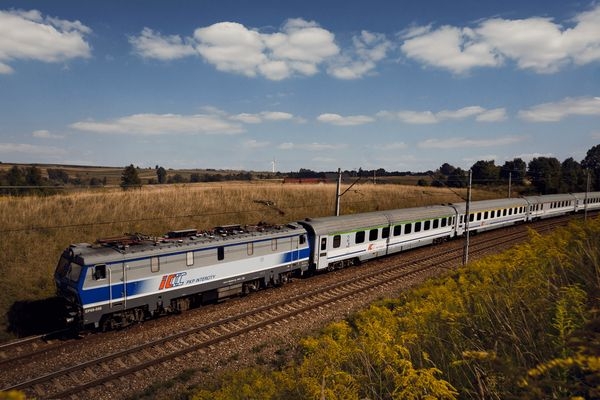
PKP Intercity has signed a contract worth PLN 5.8 million with SESTO sp. z o.o. for the supply, installation, and commissioning of DC electricity meters in the company’s electric traction vehicles. This will allow the carrier to pay for actual energy consumption, improve driving efficiency, and demonstrate how much energy is returned to the grid. This is another pro-ecological investment by PKP Intercity in 2019.
The contract signed by PKP Intercity covers a total of 370 meters – the carrier decided on the delivery of 316 devices but secured an option to increase the order by another 54 units. In such a case, the value of the contract, fully financed from PKP Intercity’s own funds, would increase to PLN 6.7 million. The meters are intended to provide PKP Intercity with, among other things, lower energy purchase costs and indirectly contribute to the protection of the natural environment.
Greater energy efficiency
The largest number, 137 meters, will be installed in EP07 locomotives. The devices will also be installed in, among others, EU07 and EP09 locomotives, as well as in all PesaDART and FLIRT3 vehicles in the PKP Intercity fleet. The devices are to be installed within 12 months of signing the contract. It also assumes the provision of service and maintenance services for the metering and billing systems by SESTO sp. z o.o. for a period of 48 months from their commissioning.
The installation of the meters will allow PKP Intercity to improve operational efficiency in terms of energy management. The data on actual energy consumption received by the carrier will allow for the rationalization of its use, which means benefits for both the company and the environment.
Measurable savings
Until now, electricity consumption by electric traction vehicles without meters was calculated based on forecasts derived from the volume of transport work performed. Thanks to the installation of meters, which will also be equipped in the newly ordered Griffin locomotives, PKP Intercity will be able to pay the Distribution System Operator and the Electricity Supplier for actual, rather than forecasted, energy consumption, which means real savings – of up to several percent annually. Furthermore, the meters will not only indicate the actual level of energy consumption but also how much of that energy a given vehicle can return to the traction grid. The PesaDART and FLIRT3 electric multiple units, which will also be equipped with meters, have a system for recovering energy generated during braking.
A step towards energy efficiency
The meters will provide PKP Intercity with precise information on which trains and on which routes generate the highest electricity consumption. This, in turn, is intended to help introduce further solutions that contribute to greater driving energy efficiency. Such as, for example, training for train drivers in more efficient vehicle operation. The gentler and smoother the ride, without sudden acceleration and braking, the lower the electricity consumption. And this, in the case of a carrier operating over 380 trains every day, can mean a significant reduction in energy demand.
In the spirit of ecology
The installation of DC meters in PKP Intercity’s electric vehicles is another pro-ecological investment implemented by the carrier. Recently, PKP Intercity signed a contract worth over PLN 7.4 million for the supply and installation of a washing device for the railway rolling stock washing station at the Warszawa-Grochów siding. The first of seven planned year-round automatic car washes is to largely replace manual washing, shorten the time of washing rolling stock, save water, and reduce the amount of cleaning agents used. In 2019 alone, the company planned 76 infrastructure investments in the area of parking stations and accompanying infrastructure, amounting to PLN 93 million. As part of the PKP Intercity investment program, over 100 investments worth over PLN 739.5 million are planned by 2023. Many of them take environmental aspects into account, which is expected to translate into, among other things, lower emissions of exhaust fumes, noise, and harmful substances.