








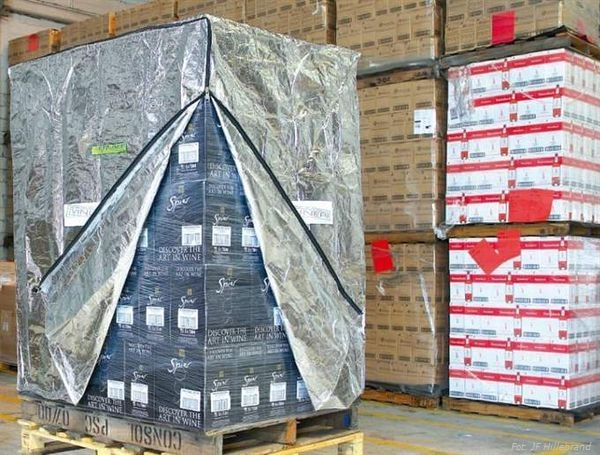
The JF Hillebrand Group – a logistics operator specializing in the alcohol and beverage market – organizes the transport of temperature-sensitive drinks using its own technologies, which it also applies in the Polish market. This is VinLiner – a thermostatic foil that allows for maintaining a constant product temperature during transport. It is used for wine shipments in both less-than-container load (LCL) and full-container load (FCL) deliveries. The foil can be used in all modes of transport – sea, air, road, and rail.
The pre-holiday periods are a time of intense work for logistics professionals due to increased freight traffic in the FMCG market, and a harvest season for traders. In the case of wine or other alcohol deliveries from distant countries, the quantity of goods does not always increase during this time, but deliveries are more individualized, often involving a few bottles or 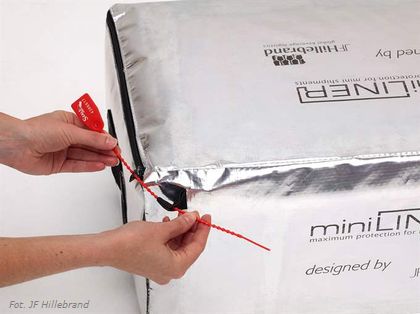 cartons. The transport process, which often must take place under special conditions while maintaining the appropriate temperature so that the drinks do not lose quality, keeps sellers awake at night. Renting a refrigerated container (reefer) or temperature-controlled packaging in such a case would significantly increase transport costs, and neither sellers nor consumers would likely want to bear these costs. JF Hillebrand, having specialized exclusively in the logistics of alcohol and beverages for 175 years, has created a unique solution – a kind of thermostatic cover – VinLiner, which has quickly gained recognition in the wine market.
– We decided on the VinLiner solution because the quantities of wine imported by our company are not always large enough to fill an entire container with a cooling system. Both we and the producers we work with want the wine to be transported under optimal conditions, ensuring an appropriate, constant temperature. VinLiner makes this possible, so we no longer worry about losing wine quality, especially with less-than-container load orders – says a representative of Tłuste Wina Sp. z o.o.
What is VinLiner?
It is an alternative to transport in refrigerated containers – a thermal insulation foil installed inside a container or on individual pallets or crates. VinLiner is available in 8 different sizes – from single wine cartons to a High Cube container.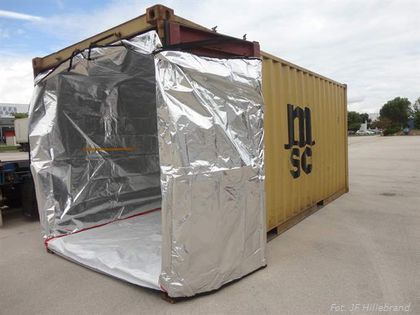 Each VinLiner has a zipper and a seal, which provide additional protection once closed. VinLiner is made of materials that comply with Food and Drug Administration (FDA) requirements and are fully recyclable. Installation time in a 20′ container takes one person about 10 minutes, and for a 40′ container, two people can install a VinLiner in a maximum of about 12 minutes. Applying thermal insulation to a pallet or crate takes a few minutes.
– VinLiner was designed, tested, and manufactured by JF Hillebrand to ensure a high standard of transport for all types of beverages in various climatic conditions. It is a thermostatic foil that reduces the thermal effects of radiation, conduction, and convection. It minimizes condensation and water leaks, and also provides protection against contamination and odors. It also reduces numerous environmental risks, allowing for the maintenance of quality indicators at 100 percent – explains Izabela Dąbrowska, freight & operations manager at JF Hillebrand Poland.
VinLiner+ for manually packed cartons
For more sensitive shipments, VinLiner+ is used, which is additionally equipped with bubble wrap that provides so-called Extra Air Gap protection and slightly increases insulation. Here, the air trapped in plastic bubbles creates a very good heat insulator.
– This insulation becomes an almost ideal solution for individual containers or manually packed cartons, or where additional protection for sensitive cargo is required in extreme conditions – explains Izabela Dąbrowska.
The premium alcohol market is becoming increasingly individualized and includes smaller and smaller quantities of goods, imported even from the most remote corners of the world. JF Hillebrand’s VinLiner is currently the most optimal solution, allowing for the preservation of the quality of beverages and alcohol transported from afar without increasing transport costs.