








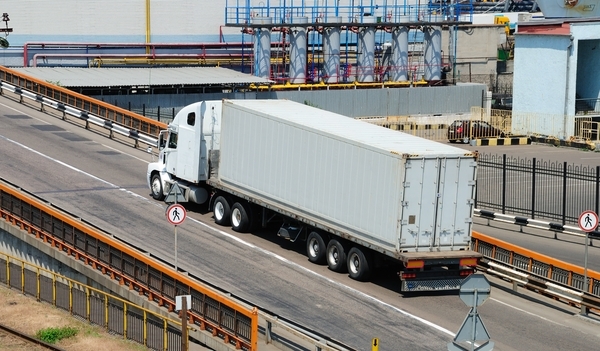
Transport costs are rising, and the outlook for the industry is not comforting. Due to the changing economic environment, experts predict an 11% increase in corporate bankruptcies and restructurings, and they list the transport industry as one of two, alongside construction, most exposed to solvency problems1. What are the most important and highest costs in a Polish transport company, and how can they be effectively monitored and reduced?
A study conducted by Heriot-Watt University showed that the breakdown of costs in transport companies in Poland consists of, among other things, fuel prices, accounting for about 38%, expenses related to hiring drivers – about 20% (including salaries), and so-called other monetary outlays, estimated at 42%. The 155 surveyed carriers assessed that money spent on fuel accounts for between 1/4 and even 1/3 of all company costs. The acronym TCO (Total Cost of Ownership) stands for all expenses associated with operating a company-owned vehicle – from the moment of purchase until the last moment of use. It consists of many elements: administrative fees, employee costs, fuel, insurance, servicing, inspections, repairs, parking, toll roads or environmental fees, and many others. All these variables create a significant sum, which is increasingly becoming a “to be or not to be” issue for the entrepreneur.
– The research we conducted in 247 companies from the TSL sector clearly showed that to control the finances of a transport company, it is worth investing in a telematics system. Why? Because it provides the ability to monitor vehicle operating parameters. At any time, the carrier or the person managing transport can download a summary or report covering the period of interest, draw conclusions, and react. Moreover, key information can be presented in the form of an alert, which will help to react in an undesirable situation, e.g., when a vehicle exceeds the speed limit, which causes an increase in fuel consumption. More than 30% of the transporters we asked confirm that telematics solutions generate savings, of which as many as 43% of respondents notice fuel savings at the level of 10%, and this directly translates into business profitability – says Kamil Korbuszewski, an expert at the GBOX brand, which designs and manufactures modern tools and telematics systems for the transport industry.
Increasingly expensive
The most important group of transport costs, because it is subject to high risk, is independent of the company, and conditions its functioning on the market, is fuel prices2. Their fluctuations greatly complicate the process of cost management in a company. Meanwhile, according to a report by the Polish Organization of Oil Industry and Trade, retail margins on fuels in the first two months of 2019 reached record highs3. Consequently, their cost is also rising drastically. In the case of diesel fuel, we recorded an increase in margins of as much as 222.2%.
– Furthermore, since January 1st of this year, a new tax called the “emission fee” has been added to the price of diesel fuel, which – despite assurances from fuel concerns about relieving retail customers of it – is reflected on every receipt and every invoice issued when refueling – adds Korbuszewski from GBOX.
For 100 liters of diesel fuel, we will pay on average4:
• in Austria – 520 PLN;
• in Belgium – 663 PLN;
• in the Czech Republic – 514 PLN;
• in Denmark – 608 PLN;
• in Finland – 620 PLN;
• in France – 635 PLN;
• in Spain – 534 PLN;
• in the Netherlands – 630 PLN;
• in Germany – 542 PLN;
• in Norway – 698 PLN;
• in Poland – 509 PLN
• in the UK – 650 PLN;
• in Italy – 655 PLN.
Savings
An opportunity to reduce the costs of running a transport company is to decrease fuel expenses. How to do it? Parameters that allow for reducing costs related to fuel consumption during driving and stops, as well as choices of an incorrect, longer or shorter, more or less congested route, have an impact on savings.
– Modern telematics systems help in monitoring driving style. They not only record data but also allow measuring the profitability of each vehicle, thanks to which fleet managers can analyze the situation and more effectively plan the work of drivers and vehicles – explains Kamil Korbuszewski. – Proof of the effectiveness of these solutions is in the numbers. As a result of implementing a telematics system and introducing a procedure for recording fuel consumption, a transport company can achieve a monthly saving of up to 10,000 liters of diesel fuel in a fleet of about 50 vehicles. A GBOX system user, utilizing 30 devices, estimated monthly savings at the level of 15,000 PLN – says the expert. – Our research shows that as many as 67% of surveyed carriers indicate that the use of telematics systems allowed them to significantly reduce fuel consumption – he adds.
Areas where expenses fell thanks to telematics also include limiting private trips by drivers using a company car (54%) and increasing fleet utilization (25%).
Empty to full
– An important cost, related not only to remuneration for work performed, incurred by transport companies, is also so-called empty runs. This is a problem that carriers are constantly struggling with. According to statistical data from the Central Statistical Office (GUS), they account for 33% of all trips in Poland and 15% of international trips5. As shown by a study conducted among users of the GBOX telematics system, nearly 20% of them indicated that the implementation of modern solutions allowed for the reduction of more than half of trips without cargo.
Thanks to a view of the entire fleet on an online map, dispatchers can effectively use vehicles, planning routes taking into account the current traffic situation and reducing “empty kilometers”. It is also an analytical tool, thanks to which, by verifying history, an entrepreneur can calculate how much trips without cargo cost them in a given billing period and take steps to eliminate such situations in the future – says the GBOX expert.
Work smarter, not harder
Forecasts for 20196 show that the growth in employee wages, favorable from the point of view of domestic demand, exerts pressure on many entities, especially in the transport industry. For some companies, this may mean solvency problems. Entrepreneurs are therefore looking for ways to automate more activities. More and more transport companies are reaching for new technologies to optimize time and expenses. Information collected from carriers shows that 24.24% of transporters using these types of solutions notice an increase in effective fleet utilization, 30.09% of respondents note optimization of fuel consumption, and there is also a noticeable decrease in private trips by drivers (25.11%). Telematics, through the automation of data transmission between the driver and the company, allows for minimizing the risk of human error.
– It is at this point that a company can find a lot of savings – thanks to telematics systems that download data from the driver card and digital tachograph, they precisely indicate the exact dates of border crossings, the location of overnight stays, and other data. One mistake in calculating the lump sum for accommodation can result in remuneration being overstated by about 150 PLN. And if there are many such errors, in the case of a large company, they can generate tens of thousands of zlotys of unjustified costs per year – says Kamil Korbuszewski, GBOX expert.
1 https://www.kuke.com.pl/serwis-ekonomiczny/upadlosci-firm/prognoza-upadlosci-i-restrukturyzacji-na-2019-rok,32.html
2 http://www.wneiz.pl/nauka_wneiz/frfu/77-2015/FRFU-77-349.pdf
3 http://www.popihn.pl/struktura_cen.php?news_id=251
4 The summary includes fuel prices in selected European countries. Average prices determined based on NBP currency exchange rates as of 2019-03-13.
5 GUS data from the report “Transport – results of activity in 2016”, http://stat.gov.pl/obszary-tematyczne/transport-i-lacznosc/transport/transport-wyniki-dzialalnosci-w-2016-r-,9,16.html.
6 https://www.kuke.com.pl/serwis-ekonomiczny/upadlosci-firm/prognoza-upadlosci-i-restrukturyzacji-na-2019-rok,32.html