








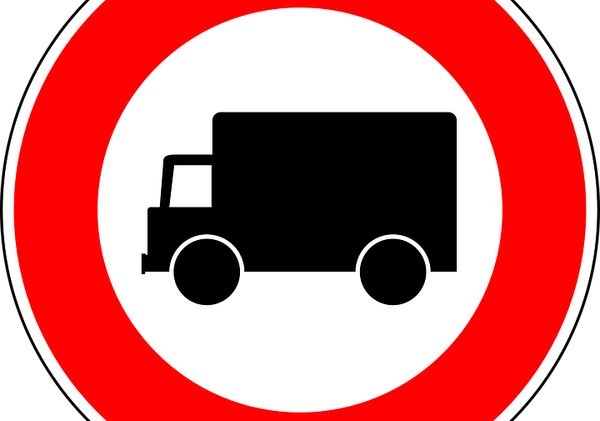
A company can lose a total of three and a half thousand zlotys for driving a truck during a restricted period. Beware, as the vehicle driver and the transport manager can also be penalized. Experts from the National Center for Driver Settlement (OCRK) remind that the period between April 20 and 22 are days when truck traffic will be significantly restricted due to traffic bans issued for vehicles with a GVW exceeding 12 tons.
In Poland
In Poland, the regulation of the Minister of Transport of July 31, 2017, defines the addressees and the days of the truck traffic ban. Restrictions issued for heavy goods vehicles apply to those vehicles whose gross vehicle weight exceeds 12 tons, excluding buses and vehicles belonging to:
• police
• Road Transport Inspection (ITD)
• Border Guard
• Customs Service
• Armed Forces of the Republic of Poland
• Government Protection Bureau
Fire protection units, chemical rescue services, radiological protection services, and other vehicles specified in the act are also not covered by these regulations.
– The regulation does not apply to, among others, carriers transporting food products and those defined as perishable, such as: meat, fish, dairy products, or flowers, so drivers of these vehicles can move without worry. However, most others should count on the risk of a fine ranging from 200 to 500 PLN. Since September last year, a fine of 1000 PLN also threatens the transport manager, and the carrier will have to pay twice as much for violating traffic restrictions. The total loss for driving during bans will therefore amount to 3,500 PLN, not counting the prohibition of further driving, and in extreme cases, even the removal of the vehicle from the road to a safe place – says Jakub Ordon, an expert at the National Center for Driver Settlement. – It should be remembered that on a statutory non-working day, the truck traffic ban is in effect from 8:00 AM to 10:00 PM, while on the day preceding a holiday, these vehicles cannot move between 6:00 PM and 10:00 PM.
In 2019, holiday traffic bans are in effect in Poland on:
• April 21 – Easter
• April 22 – Easter
• May 1 – Labor Day
• May 3 – National Holiday
• June 9 – Pentecost
• June 20 – Corpus Christi
• August 15 – Assumption of the Blessed Virgin Mary
• November 1 – All Saints’ Day
• November 11 – Independence Day
• December 25 – Christmas
• December 26 – Christmas
In Germany
In our western neighbor’s country, traffic bans cover the entire road network on all Sundays and public holidays from midnight to 10:00 PM. The restrictions apply to heavy goods vehicles with a gross vehicle weight exceeding 7.5 tons, as well as all vehicles with trailers, regardless of weight.
– In Germany, some public holidays apply only in specific states, such as Whit Monday, which falls on June 10 this year, and is celebrated in Bavaria, Hesse, North Rhine-Westphalia, Rhineland-Palatinate, and Saarland – notes the OCRK expert.
Trucks performing combined transport (road-rail or port-road) are exempt from the ban, as are vehicles carrying goods that may spoil quickly. What bans should drivers expect during holidays this year?
• April 19 – Good Friday
• April 22 – Easter
• May 1 – Labor Day
• May 30 – Ascension Day
• June 10 – Whit Monday (selected states)
• October 3 – German Unity Day
• October 31 – Reformation Day (selected states)
• November 1 – All Saints’ Day (selected states)
• December 25 – Christmas
• December 26 – Christmas
In France
Traffic bans in France, similar to Germany, apply to trucks and vehicle combinations with a GVW exceeding 7.5 tons. When traveling through this republic, one should expect that the rule is no driving on Saturdays from 10:00 PM and on the eve of a holiday – also from 10:00 PM until Sunday or the holiday at 10:00 PM, although there are exceptions.
• April 20 – Holy Saturday from 10:00 PM to midnight
• April 21 Easter – all-day ban
• April 22 Easter
• May 1 – Labor Day
• May 8 – Victory Day
• May 29 – from 10:00 PM to midnight
• May 30 – Ascension Day
• June 8 – from 10:00 PM to midnight
• June 9 – Pentecost – all-day ban
• June 10 – Pentecost
• July 13 – from 10:00 PM to midnight
• July 14 – Bastille Day – all-day ban
• August 14 – from 10:00 PM to midnight
• August 15 – Assumption of the Blessed Virgin Mary
• October 31 – from 10:00 PM to midnight
• November 1 – All Saints’ Day
• November 11 – Remembrance Day
• December 24 – from 10:00 PM to midnight
• December 25 – Christmas
• December 31 – from 10:00 PM to midnight
In Europe
Every European country regulates issues related to issuing bans for heavy goods vehicles on its own. In areas of countries such as Belgium, Denmark, the Netherlands, or Great Britain, there are no nationwide bans, only local ones. In Greece, truck traffic bans apply to vehicles with a load capacity exceeding 1.5 tons and are in effect on specific roads. In the Czech Republic and Hungary, the bans cover vehicles and combinations with a GVW exceeding 7.5 tons. One should also observe vertical signs – such additional restrictions for certain types of vehicles have been introduced by Polish cities, including Warsaw, Wrocław, Toruń, Gliwice, or Sopot.
Summer is also different
In Poland, from the last weekend of June to September 1, you cannot drive a truck on:
• Fridays 6:00 PM – 10:00 PM
• Saturdays 8:00 AM – 2:00 PM
• Sundays 8:00 AM – 10:00 PM
Germany introduced a summer ban from July 1 to August 31. It applies to certain motorways and federal roads. During this period, trucks cannot move on Saturdays between 7:00 AM and 8:00 PM. Hungarians introduced a driving ban during the summer from Saturday at 3:00 PM to Sunday at 10:00 PM. In the Czech Republic, restrictions apply on Fridays between 5:00 PM and 9:00 PM and on Saturdays between 7:00 AM and 1:00 PM. Truck traffic bans are a real nightmare for drivers. No wonder, given that they are established separately in each country, and even within one country, it can look different.