









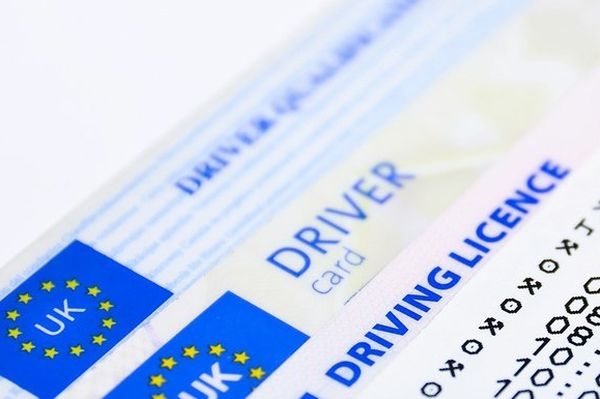
A meeting held by CORTE, The Confederation of Organisations in Road Transport Enforcement, has revealed a number of concerns regarding the implementation of the new generation of tachographs. Their installation in new factory-built vehicles is scheduled for mid-June this year. Other vehicles, according to the idea proposed by MEPs, should be equipped with smart recorders by 2034.
How will Brussels solve the problem in a situation where – less than three months before the date the new law enters into force – only one European manufacturer is ready to launch a new device on the market? What about carriers from outside the Community who, while performing transport operations under the AETR, will not have to meet the requirements of the smart tachograph regulations? Will the workshops calibrating these devices be ready in time to carry out the necessary work, and why is the Netherlands demanding a six-month postponement of the implementation of smart recording systems for professional drivers’ working time?
On June 15, 2019, new generation tachographs will enter the market, characterized by, among other things, the ability to perform remote checks, automatic recording of the vehicle’s location at the start and end of the journey, and every three hours of driving. The main task of 4.0 recorders is to reduce the number of cases of device record manipulation, which enforcement services across Europe have been fighting for a long time. It turns out, however, that the topic of these smart systems raises many doubts not only among carriers, but also among IT manufacturers and suppliers for transport, MEPs, and TSL market experts in Poland.
– Representatives of Community countries point out that they are encountering problems on the way to implementing the new devices related to their certification, accreditation of service points, and the issuance of workshop cards. The state of implementation of the new smart systems for recording professional drivers’ working time does not inspire optimism. Problems are visible on the legislative path, but there is also a clear indication of technical difficulties, because the fourth-generation device is a combination of the existing tachograph with new functionalities – says Jakub Ordon, an expert at the Nationwide Center for Driver Settlement (OCRK).
There will be nowhere to calibrate
Driver, company, and control cards issued for older versions of recorders will, according to the assumptions, work with the new devices. Workshop cards used so far are the only ones not compatible with smart devices. What does this mean? So-called smart tachos can only be put into use after calibration in service centers. Facilities authorized to carry out such work must have workshop cards issued specifically for this version of the device. Meanwhile, for example in Sweden, where there are 285 entities involved in the installation, inspection, and calibration of tachographs, only one workshop card has been issued so far.
– This shows the scale of the problem. And it lies in the necessity of equipping workshops with the appropriate equipment for checking and calibrating new recorders. Before a workshop obtains a card, it is required to train its staff. It must also undergo an audit and accreditation of the appropriate equipment, which generates additional costs – notes Jakub Ordon. – According to cautious estimates by one of the manufacturers of smart tachographs – by June, about 50% of workshops in Germany will have the appropriate equipment needed to calibrate tachographs, however, it is not known whether they will be equipped with the workshop cards that are necessary – adds the OCRK expert.
Where is fair competition?
The International Road Transport Union (IRU) also draws attention to the problem of fair competition and the functioning of uniform rules for all carriers on the European market. Carriers from outside the EU, performing transport operations under the AETR agreement, will not be obliged to have smart tachographs.
– Such a situation will lead to an increase in the market advantage of transport companies from beyond the eastern border, which will be able to carry out freight using new fleets with older generation tachographs – notes Jakub Ordon.
And yet, has someone already prepared?
– While the Netherlands is demanding a 6-month postponement of the date for introducing smart tachographs, the only country that has demonstrated its readiness for their introduction turns out to be Great Britain. However, if a so-called hard Brexit occurs, the situation of the British will deceptively resemble the position of third countries. Consequently – new generation devices will not be required for them within the EU – comments Piotr Żółty from Inelo.
Despite the problems and delays, there is currently no talk of postponing the date for introducing new tachographs. Experts are cautiously observing the processes preparing for the implementation of smart devices within the EU. It is worth emphasizing that these issues only concern new trucks, because according to regulation 165/2014 – other heavy goods vehicles are to be equipped with 4.0 tachographs by 2034, meaning they have as much as 15 years to do so.